




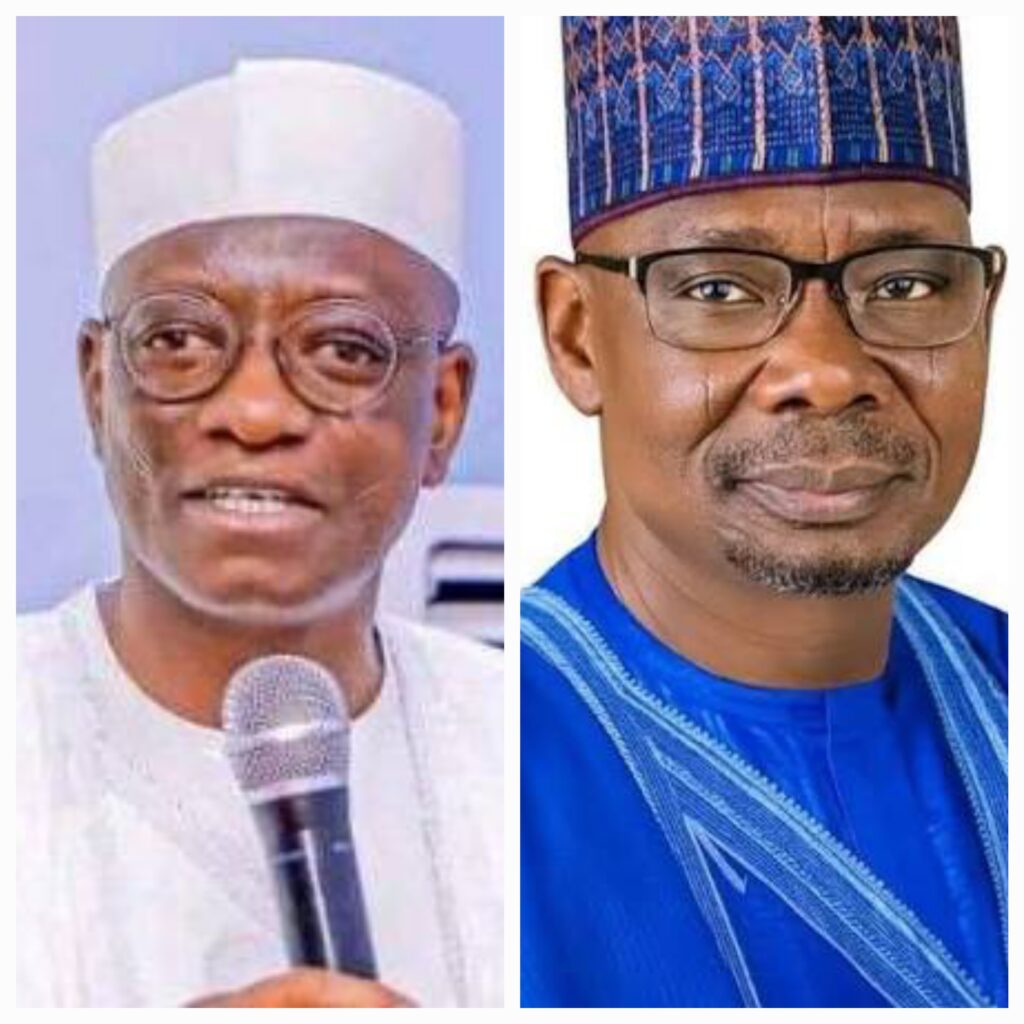
In this piece, SANI IBN SALIHU examines the emerging succession debate in Nasarawa State and argues that Senator Aliyu Ahmed Wadada possesses the legislative experience, private sector background, grassroots appeal and political maturity required to consolidate the achievements of Governor Abdullahi Sule while advancing the state’s development agenda
Leadership succession in a democracy should never be driven merely by sentiment, political rotation or emotional loyalty. The true test of leadership lies in competence, continuity, vision and the capacity to sustain development while expanding opportunities for the people.
As Nasarawa State gradually moves toward another political transition, the central question should not simply be who desires power, but who possesses the preparation, experience and maturity required to lead the state into its next phase of development.
From every objective assessment, Senator Wadada appears to stand out as one of the most suitable individuals to succeed Governor Sule. His political journey, administrative exposure, private sector understanding and grassroots connection collectively present the image of a leader who is adequately prepared for the enormous responsibilities of governance.
Nasarawa State has witnessed visible progress under the administration of Governor Sule, particularly in infrastructure development, investment attraction, industrialisation and fiscal discipline. However, sustaining such gains requires more than political rhetoric.
It requires a leader who understands governance systems, public finance management and the realities of economic development. In this regard, Wadada’s experience at the National Assembly becomes highly significant.
As Chairman of the Senate Committee on Public Accounts, he occupies one of the most sensitive oversight positions in the country. The committee is responsible for scrutinising public expenditure, examining financial accountability and ensuring transparency in the management of government resources.
Such a role demands discipline, technical understanding and administrative competence. A leader exposed to these responsibilities naturally develops a deeper appreciation of prudent resource management and accountability in governance.
Beyond financial oversight, Wadada’s years in the National Assembly have also exposed him to the complexities of intergovernmental relations and policy coordination. Governance today is increasingly dependent on strategic partnerships between states and the federal government.
A governor with established networks within federal institutions is often better positioned to attract projects, interventions and development partnerships to his state. Wadada’s political and institutional relationships therefore place him in a potentially advantageous position for Nasarawa.
Economic direction, development continuity
Another important strength associated with Wadada is his private sector background, particularly in publishing and media. Governance in the modern era cannot rely solely on political instincts.
States require leaders who understand investment realities, business confidence and economic sustainability. The private sector orientation often encourages efficiency, innovation and long-term planning, qualities necessary for a state seeking to deepen industrial growth and economic expansion.
Governor Sule’s administration has already laid strong foundations in industrialisation and investment promotion. The next administration will therefore require someone capable not only of preserving those gains but also expanding them into new sectors.
Nasarawa’s strategic proximity to Abuja presents enormous opportunities in logistics, agro-processing, technology and commerce. Harnessing these opportunities demands leadership that appreciates both public administration and private enterprise.
Wadada’s supporters believe his economic mindset positions him to reduce bureaucratic bottlenecks, strengthen investor confidence and encourage policies capable of generating employment and increasing internally generated revenue.
Such an approach would help move the state from foundational development into accelerated economic growth.
The issue of continuity is equally important. One of the major setbacks in Nigerian politics is the tendency for incoming administrations to abandon ongoing projects simply because they were initiated by previous governments.
This disrupts development and weakens public confidence in governance. A successor must therefore possess the maturity to consolidate existing achievements while introducing fresh ideas and reforms.
In Wadada’s case, there are indications that he understands the importance of balancing continuity with innovation. Areas such as digital economy expansion, agricultural value chains, technical education reform and intelligence-driven security strategies offer significant opportunities for Nasarawa’s future development.
A leadership that combines stability with reform would help the state avoid the damaging “start-stop” governance cycle that has slowed progress in many parts of the country.
Grassroots appeal, political maturity
Nasarawa State remains one of the most politically and socially diverse states in the country. Managing such diversity requires a leader capable of building trust across ethnic, religious and regional lines. Political leadership in such an environment demands patience, inclusiveness and strong grassroots legitimacy.
Wadada’s political growth from the House of Representatives to the Senate reflects years of grassroots mobilisation and sustained public engagement. He is widely perceived as accessible and connected to ordinary people, particularly young people and community stakeholders.
His relationship with traditional institutions also reflects an understanding of the important role traditional rulers continue to play in conflict resolution, rural mobilisation and peacebuilding.
Therefore, the challenge before Nasarawa today is not merely about electing another politician. It is about choosing a leader capable of protecting public trust while steering the state toward greater stability and prosperity. Leadership character therefore becomes just as important as political experience.
In an era where citizens increasingly demand transparency and accountability from public officials, leaders must demonstrate discipline, accessibility and credibility. Wadada’s public image as a calm, consultative and media-aware politician has contributed significantly to his acceptability across different political and social groups.
Certainly, Nasarawa has other capable political figures and aspirants. However, the question of succession should ultimately be determined by preparedness and suitability for the task ahead. Experience, institutional exposure, economic understanding and political maturity remain essential factors in assessing leadership readiness.
As the state approaches another defining political moment, stakeholders including political leaders, youth groups, women organisations, civil society groups and traditional institutions must carefully examine not just political slogans but actual records of competence and leadership capacity.
Governor Sule has undeniably laid an important developmental foundation for Nasarawa State. The next challenge is ensuring that such progress is not only sustained but expanded to reach every local government area and every community. Achieving that objective will require a leader with both administrative depth and grassroots connection.
From the available evidence, Senator Wadada appears well positioned to offer that continuity with competence. His combination of legislative experience, economic understanding, political maturity and grassroots acceptance presents him as a serious contender in the evolving conversation about Nasarawa’s future leadership.