




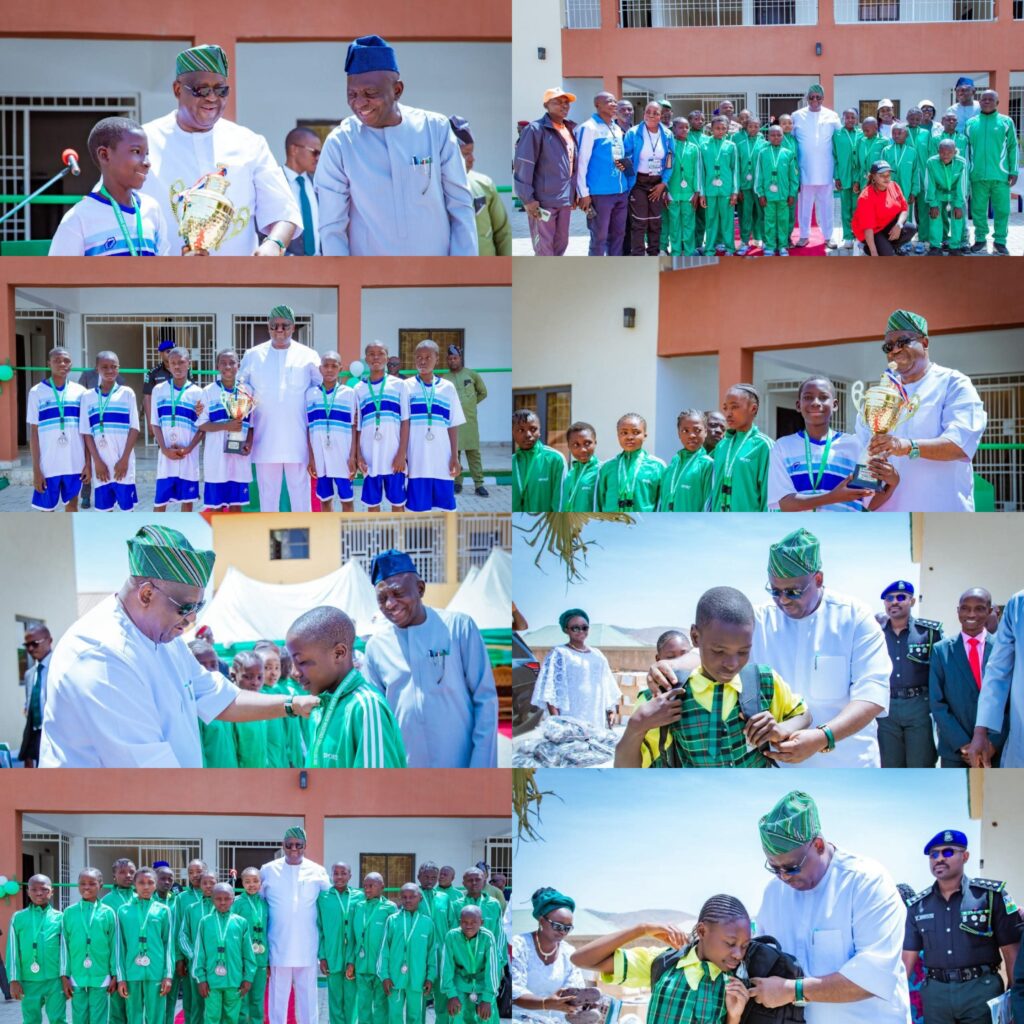
LOIS DADUUT examines the sweeping reforms in Plateau State’s basic education sector under Governor Caleb Mutfwang, highlighting the role of SUBEB in driving improvements in school infrastructure, teacher development, digital learning, funding management and community participation. The report captures a broad picture of ongoing efforts to rebuild public primary education through classroom expansion, solar-powered facilities, enhanced welfare for teachers and ICT integration, while also acknowledging persistent challenges such as limited funding, security concerns and infrastructural gaps across the state
The administration of Governor Caleb Mutfwang has continued to reshape basic education in Plateau State through wide-ranging reforms implemented via the Plateau State Universal Basic Education Board (SUBEB). From school infrastructure upgrades and teacher capacity building to digital learning expansion and improved financial management, the government’s interventions reflect a sustained drive to reposition public primary education for better outcomes.
SUBEB Chairman, Bldr. Sunday Amuna, highlighted in an interview with THE NIGERIA STANDARD that the administration is committed to restoring public confidence in basic education while building a modern, inclusive learning environment for children across the state.
Massive infrastructure drive, school modernisation
One of the most visible gains of the Mutfwang administration in the education sector is the large-scale construction and rehabilitation of classrooms across Plateau State. According to the SUBEB Chairman, “More than 400 classrooms have either been constructed or renovated under the current administration,” with over 300 completed within the last three years and more than 100 additional contracts awarded this year alone.
He explained that a distinctive feature of the projects is the use of durable metro roof tiles, which have become a signature of the government’s education infrastructure interventions. These upgrades, he noted, have significantly improved the learning environment in both rural and urban communities.
The administration has also integrated renewable energy solutions into public schools.
“Solar panels are now being installed in many schools to provide electricity for digital learning tools, especially in communities without access to the national power grid,” Amuna said.
This, according to him, enables pupils and teachers to power tablets, laptops and other ICT devices, supporting the government’s vision of a modern learning system.
In addition, the government has introduced more durable school furniture sourced from Osun State.
“The new desks and chairs are made from virgin plastic materials designed to last throughout a child’s primary education cycle,” he stated, noting that although costlier, the investment is intended to ensure long-term value and sustainability.
SUBEB has also installed solar-powered motorised boreholes in several schools and surrounding communities.
“These boreholes provide access to clean water, improve sanitation, and reduce operational costs by eliminating the need for fuel-powered water pumping systems,” Amuna said, adding that communities such as Kerker and Gangare have already benefited.
However, he acknowledged that challenges persist, particularly given that Plateau State has over 2,800 primary schools and limited financial resources continue to slow down expansion efforts to underserved areas.
Strengthening teachers, governance, digital learning
Recognising that infrastructure alone is insufficient, the administration has placed strong emphasis on teacher development and school leadership training.
Amuna said, “More than 600 head teachers and principals have undergone leadership and management training in batches of 100,” with support from UNESCO aimed at improving instructional delivery and policy implementation.
He added that teacher training programmes have also been conducted across 37 cluster centres statewide, focusing on pedagogy, classroom management and subject-specific instruction, particularly mathematics. These efforts, according to Amuna, are designed to improve overall learning outcomes.
To further boost enrolment, SUBEB has intensified social mobilisation campaigns across all 17 local government areas, encouraging parents and communities to support education, especially in areas affected by insecurity and illegal mining activities.
On digital learning, Amuna disclosed that model schools in Pankshin, Shendam and Obasanjo schools have received tablets, desktop computers and other ICT tools.
“Several smart classrooms powered by solar energy and equipped with interactive smart boards are being established to gradually replace the traditional chalk-and-board system,” he disclosed.
Through collaboration with the Universal Basic Education Commission (UBEC), Plateau State has also received 30 smart boards for deployment in selected schools.
“This initiative is expected to improve learning delivery and expose pupils to modern educational technology from an early age,” he added.
He stressed the need for ICT-compliant teachers to fully maximise these investments, noting that continuous training in digital education remains a priority.
Funding, welfare, sustainability challenges
Another major achievement highlighted is the restoration of financial credibility in the education sector.
According to the SUBEB Chairman, “The government paid outstanding UBEC counterpart funds totaling about ₦4.9 billion, clearing arrears from 2021 to 2024,” which enabled the state to access previously delayed federal education grants.
He further noted that the payment cleared six quarters of backlog, placing Plateau State among states up to date with counterpart obligations.
However, he expressed concern over declining federal allocations, explaining that while the state initially expected about ₦6.7 billion for 2026 projects, this was reduced to approximately ₦2.3 billion, affecting project scale and implementation.
Despite these constraints, Amuna said the administration has continued to prioritise education through phased implementation and careful resource management.
On teacher welfare, the SUBEB Chairman stated that the government has stabilised salary payments, implemented minimum wage adjustments and cleared salary arrears for about 600 teachers. He noted that these steps have restored confidence in the education workforce and ended prolonged disruptions experienced in the past.
Promotion processes for teachers are also being finalised with internal checks to ensure fairness and transparency.
Community participation, road ahead
The administration has also emphasised community involvement in protecting education infrastructure. Amuna said local governments and community leaders are being encouraged to safeguard school facilities, especially digital equipment and furniture, amid reported cases of theft and vandalism.
He added that collaboration with security agencies is ongoing to address these challenges and ensure the sustainability of government investments in education.
On the whole, the SUBEB Chairman said the reforms under Governor Mutfwang reflect a long-term vision for rebuilding Plateau’s basic education system.
“From classroom construction and digital learning to teacher development, salary stability, and improved funding access, the administration has laid a strong foundation for sustainable educational development,” he enthused.
While acknowledging ongoing financial and security challenges, he maintained that the reforms have restored hope in public education and placed the state on a steady path toward a more inclusive and modern system where every child can access quality learning opportunities regardless of background or location.