


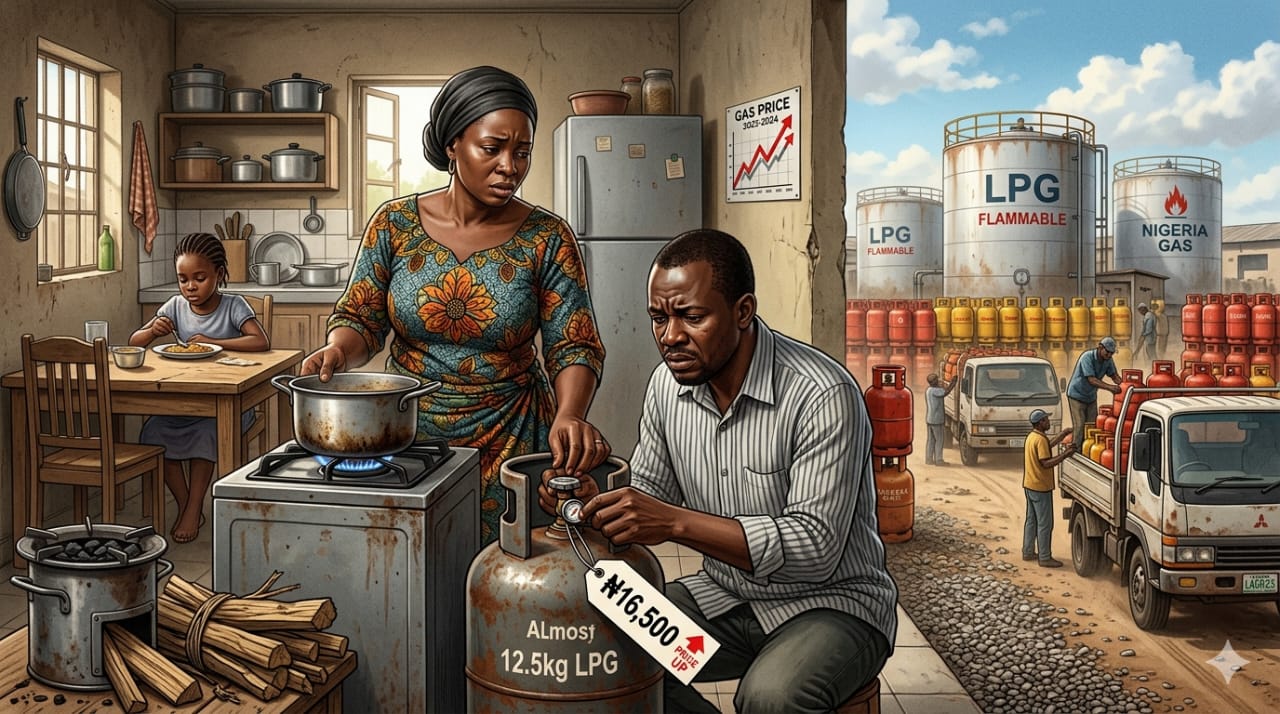

THE rising cost of Liquefied Petroleum Gas (LPG), popularly known as cooking gas, has once again exposed the vulnerability of Nigeria’s energy market and the painful consequences of overreliance on unstable supply channels. Reports that gas marketers are now paying between N29.5 million and N30 million for 20 metric tonnes of LPG, coupled with retail prices ranging from N1,800 to N2,000 per kilogram in many urban centres, paint a grim picture for millions of households already struggling under the weight of inflation and a rising cost of living.
WHAT is particularly troubling is that the current situation is not being driven by increased consumer demand alone but by a worsening supply shortage. Industry operators have openly admitted that the supply situation is deteriorating rather than improving. The result is predictable: scarcity, higher prices and greater hardship for consumers.
FOR many Nigerians, cooking gas is no longer a luxury but a necessity. Over the years, governments at various levels have encouraged households to abandon firewood, charcoal and kerosene in favour of cleaner cooking fuels. Considerable resources were invested in promoting LPG as a safer, healthier and more environmentally friendly energy source. However, the continued rise in gas prices threatens to reverse these gains, forcing many families back to traditional fuels that are harmful to health and the environment.
THE revelation that supply challenges at the Dangote Refinery have significantly reduced its contribution to the domestic LPG market is particularly worrying. When the refinery entered the market aggressively in 2025, its large-scale supply reportedly helped stabilise prices and reduced the country’s dependence on imports. Marketers and consumers alike benefited from increased competition and improved availability. Today, however, production challenges and competing contractual obligations appear to have reduced that positive impact, leaving a supply gap that importers have been unable to fill adequately.
THE dangers of such a development extend beyond household kitchens. Small restaurants, roadside food vendors, bakeries, hotels and numerous micro-enterprises depend heavily on cooking gas for daily operations. As prices continue to rise, many businesses will either pass the additional costs to customers or scale down operations. In either case, ordinary Nigerians will bear the burden. The situation also raises broader questions about Nigeria’s energy security. It is unacceptable that a nation blessed with vast natural gas reserves should repeatedly experience shortages of a product derived from those resources. Nigeria possesses one of the largest gas reserves in Africa, yet domestic consumers continue to face scarcity and unaffordable prices. This contradiction reflects longstanding structural weaknesses in the nation’s energy value chain.
GOVERNMENT regulators and policymakers must therefore move beyond reactive measures and implement sustainable solutions. First, efforts should be intensified to encourage more domestic LPG production. Reliance on a limited number of suppliers leaves the market vulnerable to disruptions whenever one major producer experiences difficulties. Second, regulatory agencies should work with industry operators to establish strategic LPG reserves that can be released during periods of supply disruption. Such reserves would help cushion sudden shortages and prevent extreme price spikes.
THIRD, the Federal Government must create a more predictable environment for LPG importation whenever local supply falls short. Foreign exchange constraints and port-related bottlenecks often increase costs unnecessarily. Addressing these challenges would help stabilise supply and moderate prices. Fourth, investment in gas infrastructure, including storage facilities, transportation networks and distribution systems, should be accelerated. A more efficient supply chain would reduce operational costs and improve product availability across the country.
FURTHERMORE, transparency within the LPG market must be strengthened. Consumers deserve clear information regarding the factors driving price increases. Market manipulation, hoarding and speculative practices should not be allowed to worsen an already difficult situation. While government and industry stakeholders work towards long-term solutions, consumers must also adopt practical coping strategies. Households can reduce waste by ensuring burners are properly maintained and adjusted for efficient combustion. Families should develop meal plans that minimise prolonged cooking times and make greater use of pressure cookers, which significantly reduce gas consumption. Regular checks for leaks and faulty regulators can also prevent unnecessary losses.
IN addition, households may consider cooperative purchasing arrangements within neighbourhoods where feasible. Bulk purchases often attract lower prices than frequent small-volume purchases. Consumers should also compare prices across reputable outlets and avoid panic buying, which often fuels artificial scarcity.
ULTIMATELY, the recurring crisis in the cooking gas market underscores the urgent need for Nigeria to translate its abundant natural gas resources into tangible benefits for its citizens. A country blessed with enormous gas reserves should not subject its people to perpetual shortages and escalating prices. The present challenge should serve as a wake-up call for government, regulators and industry players to work together in building a resilient, competitive and consumer-friendly LPG market.
UNTIL decisive action is taken, millions of Nigerians will continue to face the painful choice between paying exorbitant prices for cooking gas or reverting to less efficient and environmentally harmful alternatives. Neither option should be acceptable in a nation so richly endowed with natural gas resources. The time to act is now.