



By Rev. JOHN OKWII
Grace and peace be with all who hear and read this message in the name of the Father, the Son and the Holy Spirit. Amen.
Nigeria is bleeding. Across the nation, children are being kidnapped from schools, farmers are murdered on their farms and entire communities are displaced from ancestral lands. Widows cry through the night while orphans struggle to understand why their parents never returned home.
Pastors are abducted, traditional rulers attacked, retired military officers kidnapped and travellers now approach many highways with fear and uncertainty. Villages that once bustled with life have become deserted and countless citizens can no longer sleep with both eyes closed.
Yet, even as graves multiply across the country, political campaigns have begun. While citizens are dying, some leaders are calculating votes. While communities mourn their dead, corruption continues to weaken the very structures designed to protect lives and property.
The question before us today is not whether insecurity exists. The reality is obvious to all. The pressing question is who will rise like Deborah, who will rise like Barak and who will become God’s instrument for national healing and restoration.
God’s call to the Church, the state
The fourth chapter of Judges opens with Israel living under severe oppression. For twenty years, the people suffered under King Jabin and his military commander Sisera. The enemy possessed superior military strength. Fear dominated society. Roads became unsafe, villages were abandoned and travellers feared movement. The similarities with many parts of present-day Nigeria are striking.
Judges 5:6-7 declares: “The highways were abandoned; travellers took winding paths. Villagers in Israel would not fight.” Fear had paralysed an entire nation.
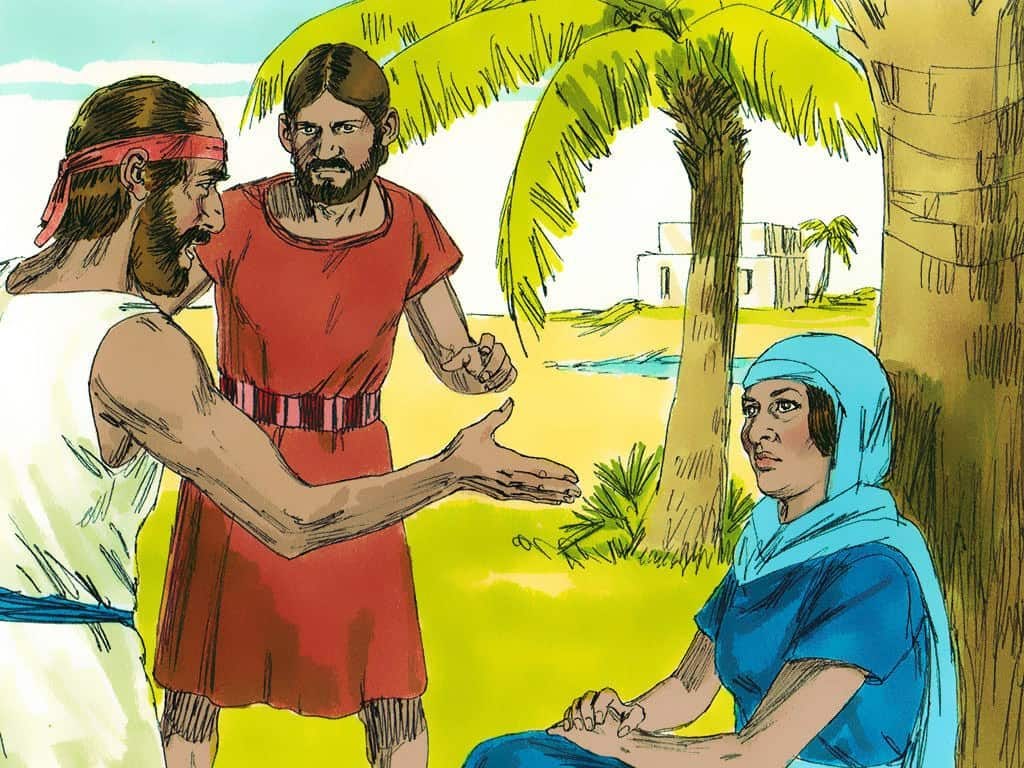
Yet God raised Deborah. She was not a prophetess who remained silent in the face of national crisis. She did not limit herself to delivering sermons while society collapsed around her. She spoke God’s truth into the realities of her time. She confronted fear, challenged leaders, mobilised society and partnered with those entrusted with public responsibility. She summoned Barak, rallied the tribes, inspired citizens and called the nation to accountability.
The contemporary Church must learn from Deborah’s example. While the Church cannot replace government, it must speak prophetically to government. It must defend truth, expose corruption, advocate for victims and care for widows and orphans.
The Church is called not only to pray but also to act. Silence in the face of evil eventually becomes cooperation with evil.
Government, on the other hand, was never intended by God to abandon its responsibility to protect life and maintain justice. Romans 13:4 reminds us that governing authorities are God’s servants for the good of society. Government is not merely a political institution. It is an instrument ordained by God for the preservation of justice and order.
Security is not a luxury. It is a sacred responsibility. Therefore, a government that cannot protect the lives of its citizens has failed one of its most fundamental divine assignments. This matter transcends political parties, ethnic identities and religious affiliations. It concerns justice, human dignity and the sanctity of life itself.
Schools cannot function where children are abducted. Businesses cannot thrive where roads are unsafe. Agriculture cannot prosper where farmers are constantly attacked. Development cannot survive where fear dominates daily existence.
Equally troubling is the sin of indifference. The greatest threat may not always be the bandit, the kidnapper or the terrorist. Sometimes it is the silent witness, the official who knows the truth but refuses to act, the citizen who profits from violence or the individual who chooses comfort over conscience.
Proverbs 24:11 commands: “Rescue those being led away to death.” God condemns passive neutrality. Many know where criminals hide. Many know those who finance violence, supply weapons, launder ransom payments or leak sensitive security information. Yet, truth is often buried beneath politics and personal interests. God is calling Nigeria back to moral courage.
The relationship between Deborah and Barak provides a powerful model for national renewal. Deborah possessed spiritual authority while Barak carried military responsibility. Neither could succeed alone.
Prayer without action would not have defeated Sisera. Military action without divine wisdom would not have produced lasting victory. God joined prophetic insight with strategic action.
The lesson remains relevant even today. Church and government are not enemies. They are distinct institutions entrusted with complementary responsibilities. The Church provides moral vision while government exercises lawful authority. When both fulfil their God-given mandates, society flourishes.
Practical responsibilities for national renewal
The Church must intensify prayer and spiritual warfare. Ephesians 6 reminds believers that behind visible violence are deeper spiritual realities. Congregations should establish prayer watches, community intercession teams, fasting programmes and family prayer networks. However, prayer must never become an excuse for inaction.
Churches must also train their members in civic responsibility. Christians should report suspicious activities, refuse to harbour criminals, reject any form of ransom profiteering and actively promote truth and accountability within their communities.
Care for victims must become a central ministry. James 1:27 reminds believers of their responsibility towards widows and orphans. Churches should therefore establish widow support funds, orphan sponsorship programmes, trauma counselling ministries, food assistance initiatives and scholarship opportunities for children affected by violence and displacement.
Many congregations are blessed with retired soldiers, police officers, immigration personnel, DSS operatives and Civil Defence officers whose expertise remains invaluable. Churches should create security advisory committees that can provide guidance, awareness and support within local communities.
Government, likewise, has urgent responsibilities. Political protection of criminality must end. No criminal should enjoy sponsorship because of political interests. No terrorist financier should be protected. No violent group should be tolerated for electoral advantage. Justice must be impartial, unwavering and total.
Intelligence gathering must become proactive rather than reactive. Most kidnappings and violent attacks are carefully planned long before they occur. Security agencies must be empowered to identify threats before lives are lost.
Government must also invest heavily in modern technology, including surveillance systems, drone technology, digital intelligence platforms, satellite monitoring and forensic laboratories. Criminals increasingly utilise sophisticated tools and methods. Security agencies must remain ahead of those they seek to stop.
Above all, leaders must place citizens above elections. Every election season produces new promises, but God will ultimately ask leaders what they did with the lives entrusted to their care. The next election should never be considered more important than the next child at risk of abduction.
Universities also have a critical role to play. Institutions such as the University of Jos and other centres of higher learning should become laboratories for practical solutions. They must conduct security research, develop technological innovations, study conflict prevention, provide policy recommendations and train future leaders in ethics and responsible governance. Knowledge must serve society.
Telecommunication companies such as MTN Nigeria, Airtel Nigeria and Globacom possess technological capacities that can assist lawful investigations. Within constitutional and legal frameworks, cooperation with security agencies can help disrupt criminal communication networks and enhance public safety. Technology should be used as an instrument of protection rather than exploitation.
Financial institutions must also strengthen mechanisms against money laundering and suspicious transactions associated with ransom payments. Criminal networks survive because financial channels often enable their operations. Ethical vigilance within the banking sector can save lives.
Markets, hospitals, transport operators and local communities likewise have responsibilities. Hospitals frequently encounter unusual injuries, markets observe suspicious transactions, transport workers notice unusual movements and communities are often the first to detect unfamiliar activities.
Security truly is everybody’s business. When citizens become vigilant and responsible, the space available for criminal operations shrinks significantly.
Challenge to Plateau State, Church leaderships
Plateau State has endured repeated cycles of violence over many years. Entire communities have suffered unimaginable losses. Lives have been cut short, properties destroyed and families displaced from their homes.
The solution cannot be revenge. It cannot be hatred. The future of Plateau State must be built upon justice, reconciliation, security, truth and accountability. Lasting peace cannot emerge from perpetual retaliation. It can only emerge from righteousness.
The Church must also confront its own failures. Many pulpits have become too comfortable. Some leaders fear losing political access or influence. Others avoid difficult truths altogether. Yet throughout Scripture, God’s servants confronted power when necessary. Nathan confronted David. Elijah confronted Ahab. John the Baptist confronted Herod Antipas.
The Church loses moral authority whenever it becomes afraid of political authority. The message of the Cross demands moral courage. The Gospel is not merely preparation for heaven. It is also God’s instrument for transforming society. The Gospel defends the vulnerable, confronts injustice, protects life, proclaims truth and produces courageous citizens.
Jesus declared: “Blessed are the peacemakers.” Peacemakers are not passive observers. They actively pursue justice, reconciliation and protection for those at risk.
As we conclude, God’s question echoes across Nigeria today. Where are the Deborahs within the Church? Where are the Baraks within government? Where are the righteous judges, courageous legislators, honest military officers, truthful governors, fearless pastors, ethical bankers, responsible professors and vigilant citizens?
Nigeria’s future will not be secured by prayers without action, nor by action without God. Like Deborah and Barak, heaven and earth must work together. Prayer must meet policy. Faith must meet responsibility. Truth must meet courage. Justice must meet mercy.
Then the enemies of peace shall fall. Then the displaced shall return home. Then widows shall rejoice. Then orphans shall laugh again. Then highways shall become safe. Then schools shall become secure.
Only then shall Nigeria experience the promise of Psalm 85:10: “Mercy and truth have met together; righteousness and peace have kissed each other.”
May God raise Deborahs and Baraks across Nigeria. May He expose every work of darkness. May He comfort every bereaved family. May He protect our children and communities.
May He grant wisdom to leaders and courage to citizens. And may righteousness once again exalt Nigeria.
Amen.
Rev Prof John Brown Okwii, the
Serving Pastor, Assemblies of God Church, Hwolshe, opposite Model Academy, near Plateau State Polytechnic, Jos Campus, along Yakubu Gowon Way, writes via johnbrownokwii@gmail.com