



In this tribute, SANI IBN SALIHU reflects on the historic ascension of Justice Ubangari Alaku I to the throne of Aren Eggon, examining the rare convergence of judicial excellence, traditional statesmanship and royal responsibility that has shaped his journey
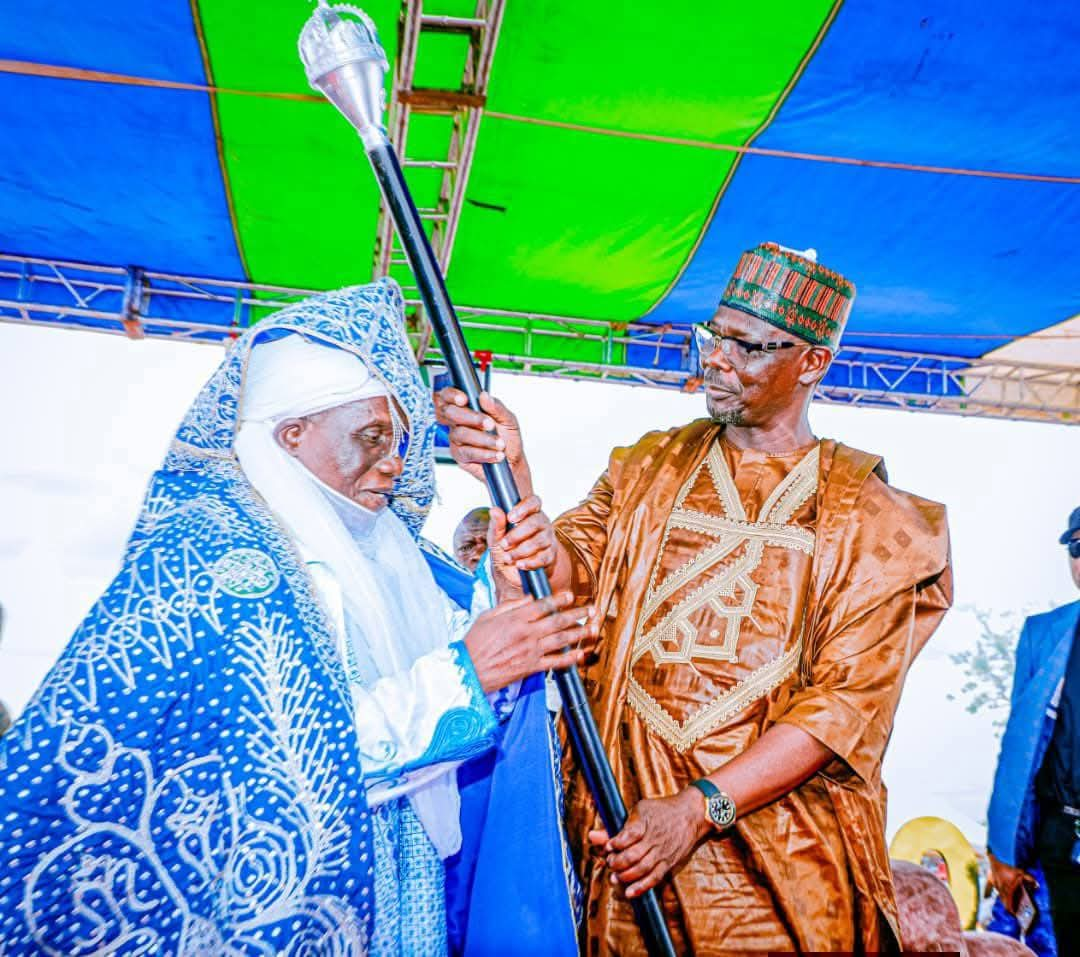
Saturday, June 13, 2026, will be recorded in the annals of Eggon history with the same significance attached to 1982. Forty-three years ago, the Staff of Office was presented to the late Dr Bala Angbazo, ushering Eggon land into an era remembered for dignity, stability and restraint.
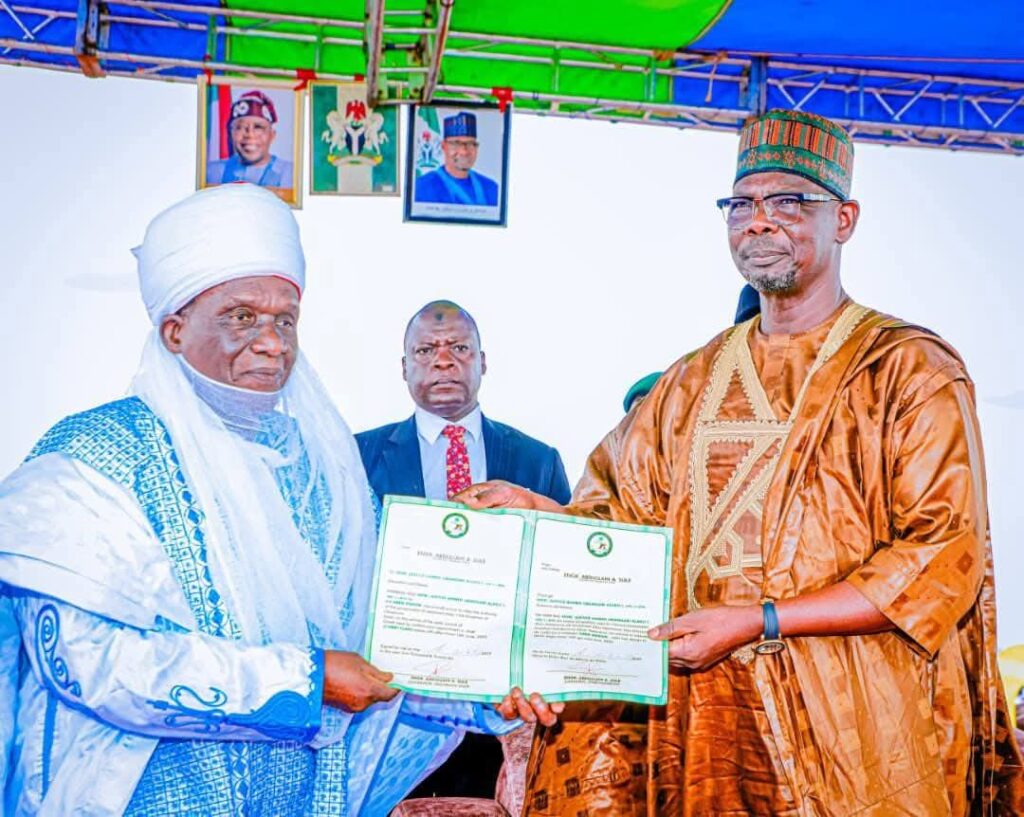
On this historic day, that same staff, now bearing the weight of decades of memory and expectation, was placed in the hands of Justice Ahmad Ubangari Alaku I as the new Aren Eggon.
Yet, this moment is not merely a repetition of history; it is its evolution. The man ascending the throne is neither unfamiliar with authority nor inexperienced in leadership. He becomes the first person in Nasarawa State to wear three distinguished robes before receiving a crown: the black robe of a judge, the flowing robe of a Waziri, and now the royal robe of the Aren Eggon.
His journey reflects a rare convergence of institutions and traditions. It is the story of a man shaped by the courtroom, refined in the council chamber and ultimately called to the palace. It is also a tribute to a life spent serving justice, preserving culture and strengthening the foundations of community leadership.
Jurist whose service strengthened the judiciary
Before becoming ‘Your Royal Highness’, he was addressed as ‘My Lord’. Justice Ahmad Ubangari Alaku served as Chief Justice of Nasarawa State, occupying the highest judicial office in the state. In a nation where public service is often tested by controversy and political pressure, he completed his tenure with a reputation that remained largely unblemished.
His years at the High Court of Justice in Lafia were characterised by quiet but meaningful reforms. He prioritised effective case management, ensuring that long-abandoned files were reassigned, monitored and diligently concluded. Guided by the belief that delayed justice amounts to denied justice, he worked to improve the efficiency of the judicial system.
His administration also stood out for its commitment to judicial independence. During election petition periods, when courts frequently come under intense pressure, his court maintained fidelity to legal principles. His decisions were recognised for their clarity, precision and adherence to precedent rather than political sentiment.
Perhaps most importantly, he invested in the next generation of judicial officers. Many magistrates and legal practitioners who worked under him remember his consistent message that the law is not an instrument of power but a vehicle of service.
He left the bench not as a celebrity jurist seeking acclaim but as a mentor whose influence continues through those he trained.
This judicial background gives him a distinctive advantage as a traditional ruler. In many parts of Nigeria, traditional institutions struggle to navigate the intersection between custom and constitutional authority. Justice Alaku enters the throne with a deep understanding of both worlds.
He understands the legal framework governing traditional institutions and the constitutional boundaries within which they operate. He appreciates the importance of evidence, making him particularly suited to handling sensitive matters such as land disputes, inheritance issues and boundary disagreements.
Equally important, he values proper documentation and due process. A man who spent decades issuing court orders is unlikely to govern a palace through speculation or hearsay. Rather, he is expected to bring structure, accountability and order to traditional administration.
In this sense, his coronation is not merely a cultural event. It is also an institutional milestone, symbolising the meeting point of judicial discipline and traditional authority.
Four decades of service as Waziri, custodian of tradition
Among the Eggon people, titles are not mere honours. They are responsibilities acquired through years of service and experience. The position of Waziri of Eggon, regarded as the Prime Minister and principal adviser to the Aren Eggon, occupies a place of immense significance within the traditional hierarchy.
Justice Alaku held this title for decades while simultaneously serving in the judiciary. That dual service afforded him an uncommon education in both formal law and customary governance.
Where legal training teaches statutes and procedures, the office of Waziri teaches the complexities of human relationships and communal harmony. Through years of involvement in family settlements, clan reconciliations and traditional mediations, he came to understand customary law not as an academic concept but as a living reality.
His experience taught him that while law seeks justice, peace often requires wisdom, patience and understanding. In council deliberations, consensus is valued above confrontation. Elders speak, perspectives are considered and collective decisions emerge through patient engagement. Such experiences provided leadership lessons that no formal institution can fully replicate.
As Waziri, he also became a custodian of collective memory. While applying statutory law in the courtroom, he simultaneously preserved the oral traditions, historical agreements and cultural heritage of the Eggon people. He knows the stories behind settlements, the origins of alliances and the historical experiences that continue to shape communal relations today.
His ascension to the throne is, therefore, not the beginning of his relationship with Eggon culture. It is the continuation of a lifelong commitment to it.
His legitimacy extends beyond formal selection processes. The elders know him. The traditional institutions know him. The market women know him. The youth know him. He has participated in the joys and sorrows of the community, attended ceremonies, settled disputes and contributed to communal development long before discussions about succession began.
His emergence also provides continuity with the reign of the late Bala Angbazo. Having served closely during that era, he understands both its achievements and its unfinished aspirations. Rather than beginning an entirely new chapter, he inherits a story whose previous pages he helped write.
Equally significant is his ability to move comfortably between different worlds. He speaks the language of constitutional governance with ease and understands the language of traditional leadership with equal fluency. Such dual competence is increasingly rare in contemporary Nigeria.
Historic opportunity for new era of leadership
History often remembers individuals who successfully unite seemingly different spheres of influence. Justice Ahmad Ubangari Alaku I joins a distinguished category of leaders whose professional accomplishments and traditional responsibilities converge in unique ways.
His journey places him at the intersection of written law and unwritten custom, state authority and communal trust, modern governance and ancestral heritage. He embodies a bridge between institutions that often operate separately but are ultimately intended to serve the same people.
The burden of leadership he inherits in 2026 differs significantly from that faced by his predecessor in 1982. Contemporary Eggon land must contend with issues such as mineral exploration, youth migration, economic transformation, security concerns and the challenge of preserving cultural identity in an increasingly digital world.
These realities present both responsibilities and opportunities.
One of his foremost responsibilities will be safeguarding communal interests in matters relating to land and natural resources while encouraging responsible investment and development. His judicial experience equips him with the analytical skills necessary to navigate such complex issues.
He will also be called upon to strengthen unity across the various sub-clans and communities that make up the Eggon nation. The consensus-building skills acquired during his years as Waziri will prove invaluable in this regard.
Another important challenge will be ensuring that traditional institutions remain relevant to younger generations. The palace must continue to serve not only as a symbol of heritage but also as a centre for mediation, education, community engagement and development.
At the same time, his reign presents remarkable opportunities. He possesses the capacity to introduce greater documentation, transparency and administrative efficiency into traditional governance. Such reforms could strengthen institutional continuity for future generations.
His unique background also positions him to become a respected national voice on issues affecting traditional institutions, governance and community development. Few traditional rulers possess the ability to engage both constitutional discourse and cultural preservation with equal authority.
Most importantly, he has an opportunity to build upon the legacy of the late Bala Angbazo. While the former monarch is remembered for dignity and stability, Justice Alaku I has the potential to complement those virtues with enduring institutional reforms that strengthen the foundations of the Eggon nation.
A crown tested twice, a people served twice
As the white horse moved through Nasarawa Eggon and the Staff of Office changed hands, two significant events unfolded simultaneously. The Eggon people crowned their Waziri as their new Aren Eggon, while Nigeria witnessed one of its distinguished jurists assume the role of custodian of culture and tradition.
Justice Alaku I is not a judge who accidentally became king. Rather, he is a leader who spent four decades serving as a king in counsel before becoming a king in title.
He ascends the throne carrying two enduring instruments of leadership: the restraint learned from years on the bench and the wisdom acquired through decades of listening to elders and communities. Together, these qualities equip him to lead with fairness, patience and vision.
Forty-three years after the coronation of Bala Angbazo, history has not merely repeated itself. It has matured. In 1982, Eggon land received a dignified king. In 2026, it receives a dignified king who also brings the discipline of the law, the wisdom of tradition and the experience of public service.
May the reign of His Royal Highness Justice Ubangari Alaku I be long, peaceful and prosperous. May his palace remain a place of equity and wisdom, and may his legacy demonstrate that tradition and constitutional order can indeed sit harmoniously upon the same throne.
Ustaz Salihu is the Director-General, Media & Publicity, Fityanul Islam of Nigeria