



From DANMALE ABDULMUMIN, Abuja
As Nigeria grapples with rising transnational crimes, irregular migration and emerging security threats along its vast frontiers, key stakeholders have converged in Abuja to explore practical strategies for strengthening border governance.
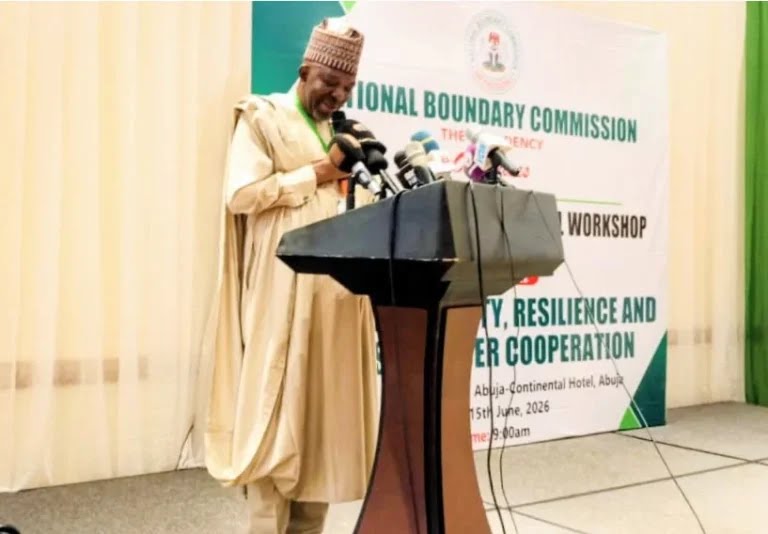
At a high-level workshop organised by the National Boundary Commission (NBC), participants underscored the importance of collaboration, technology and regional partnerships in enhancing border security, resilience and cross-border cooperation.
The National Boundary Commission (NBC) on Monday held a high-level workshop on border security, resilience and cross-border cooperation at the Abuja Continental Hotel.
In his opening remarks, Chairman of the NBC, Surveyor Adamu A. Adaji, welcomed participants and noted that the session was timely in view of rising transnational threats, irregular migration, smuggling and pressures arising from climate change and economic challenges.
“As we know, borders are not just lines of separation. They are also critical frontiers of cooperation, stability and national prosperity,” he said.
The commission, he explained, is mandated to define and determine Nigeria’s territorial borders, monitor trans-border relations with neighbouring countries to identify areas of tension, and facilitate the equitable use of transboundary resources while promoting cross-border cooperation.
Nigeria shares about 4,454 kilometres of land borders with Benin, Niger, Chad and Cameroon, as well as an 853-kilometre coastline.
Adaji stressed that effective border governance cannot be achieved by the commission alone but requires collaboration with sub-national governments and other institutions.

He noted that under the African Union Convention on Cross-Border Cooperation, the NBC has established platforms across all of Nigeria’s international borders to provide structured engagement among border communities, traditional institutions, local governments, security agencies, civil society organisations and their counterparts across the borders.
“Collaborative dialogue, trust-building, information sharing, joint problem-solving and community participation help address the root causes of insecurity, prevent conflicts, facilitate lawful cross-border trade and movement, and promote social cohesion,” he explained.
Adaji added that the workshop brought together border state governments, security and intelligence services, and relevant ministries, departments and agencies to deepen dialogue and develop practical strategies that would strengthen border security while promoting resilience and cooperation.
“Resilient borders are not just about protection. They are about opportunity. Properly managed borders can become gateways for trade, cultural exchange and regional integration,” he said.
Minister of Defence, General Christopher Musa (rtd), urged stakeholders to be proactive in strengthening border security and cooperation.
He said the workshop’s theme speaks directly to Nigeria’s priority of securing its borders while supporting national development.
“Nigeria’s borders are living spaces and zones of interaction, trade and shared heritage.
“They are also frontline areas where we confront transnational crime, irregular migration, smuggling and emerging security threats,” Musa said.
He stressed that effective border management requires clearly demarcated borders, cooperation with neighbouring countries and strong institutional coordination.
The defence minister highlighted the need for early warning and early response mechanisms and recommended the deployment of drone technology and other innovative tools for smart border management.
Musa added that Nigeria’s security is closely linked to that of its neighbours and that stronger bilateral and regional frameworks for intelligence sharing, joint patrols and coordinated responses would enhance collective resilience.
He urged stakeholders at the federal, state and local levels to translate the workshop’s outcomes into concrete action, assuring them that the Federal Government remains committed to strengthening border governance, enhancing security architecture and promoting resilience across border communities.