



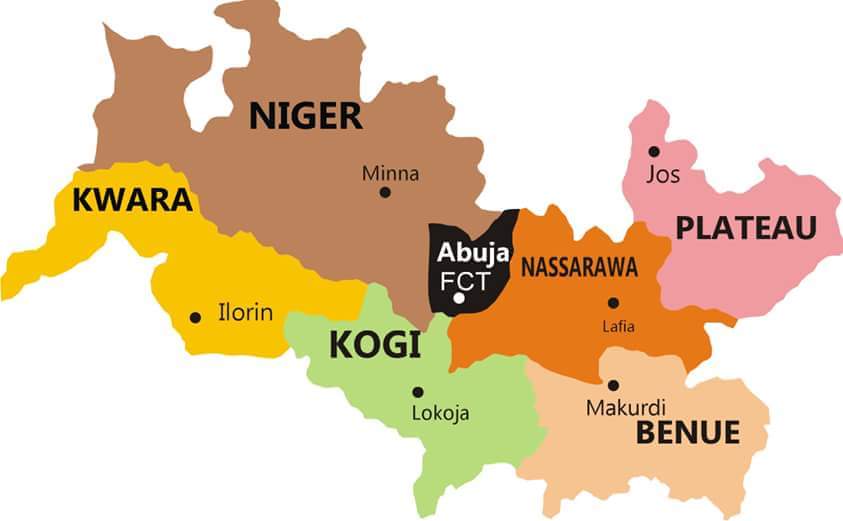
By Forum of Leaders of Middlebelt Ethnic Nationalities in Plateau State
The recent judgment of the Plateau State High Court directing the issuance of an indigene certificate to Fatima Baba Akawu has once again brought Nigeria face-to-face with one of its oldest and most unresolved constitutional contradictions.
For decades, successive governments and policymakers have pretended that there is no distinction between citizenship and indigeneity; between the rights of residence and the rights of ancestral ownership; between belonging to a place and originating from a place. The result has been a persistent refusal to confront difficult questions whose avoidance has repeatedly fuelled conflict across the federation.
As an organisation committed to justice, national stability, constitutional order, and the protection of indigenous communities across Nigeria’s Middle Belt, the Forum of Leaders of Middle-Belt Ethnic Nationalities in Plateau State (FLMNP) has carefully studied the judgment, reviewed the legal history surrounding Jos, examined the findings of multiple commissions of inquiry, and considered comparable international practices relating to indigenous peoples.
Our position is clear and unequivocal.
The Forum of Leaders of Middle-Belt Ethnic Nationalities in Plateau State (FLMNP) stands in full solidarity with the indigenous peoples of Plateau State under PIDAN, the Plateau Initiative for the Advancement of the Natives, particularly with the indigenous ethnic nationalities of Jos North Local Government Area, the Afizere, the Anaguta and the Berom, who are also part of the Middle-Belt Ethnic Nationalities.
We believe the judgment raises profound questions that extend far beyond the circumstances of one individual. At stake is the future of indigenous identity, ancestral rights, cultural survival and historical justice, not only in Jos but throughout Nigeria.
The issue before Nigeria is not whether every citizen should enjoy equal constitutional rights. They should.
The issue is whether citizenship automatically confers indigeneity.
The answer, historically, legally, culturally and internationally, is no.
No nation on earth has successfully preserved indigenous communities by abolishing the distinction between citizenship and indigeneity. Indeed, the preservation of indigenous peoples depends precisely on recognising that distinction.
A CURIOUS PHENOMENON UNIQUE TO JOS
Our research has revealed a striking and troubling pattern.
Across Nigeria, millions of Nigerians reside permanently outside their ancestral homelands.
Yoruba communities have lived in Kano, Kaduna, Jos and Maiduguri for generations.
Igbo communities have lived in Lagos, Jos, Kaduna and Abuja for decades.
Urhobo, Tiv, Michika, Idoma, Nupe, Igala, Kagoma, Jukun, Kanuri and numerous other groups have established thriving communities throughout the federation.
Even within Plateau State itself, numerous Plateau ethnic groups reside in local government areas other than their ancestral homelands.
Yet nowhere have we found sustained demands by these groups to be officially recognised as indigenes of the territories in which they settled.
No Yoruba organisation is demanding indigene certificates in Kano.
No Igbo organisation is demanding recognition as indigenous to Ibadan.
No Urhobo community is seeking certificates of indigeneity in Sokoto.
No Mwaghavul community is demanding recognition as indigenous to Pankshin.
No Tarok community is seeking recognition as indigenous to Riyom.
The persistent contestation over indigeneity in Jos appears uniquely centred around claims advanced by sections of the Hausa-Fulani community.
This reality raises legitimate questions.
Why is Jos different?
Why is there sustained pressure to redefine indigeneity in a manner not demanded elsewhere in Nigeria?
Why should the ancestral homeland of the Afizere, Anaguta and Berom be subjected to a standard that is not being imposed upon other indigenous communities across the federation?
These are questions that deserve honest answers.
THE COURTS HAVE ALREADY SPOKEN ON THE OWNERSHIP OF JOS
The history of Jos is not legally ambiguous.
The matter has been examined repeatedly by commissions of inquiry, reviewed by governments, adopted in official white papers and subjected to judicial scrutiny.
One of the most significant judicial pronouncements came in the case of Agwom Atang Azi & Another v. The Governor of Plateau State & 4 Others, Suit No. PLD/J334/2003.
On 13 February 2009, Hon. Justice Yargata B. Nimpar, then of the Plateau State High Court and now a Justice of the Court of Appeal, delivered what remains one of the most authoritative judicial examinations of the issue.
The court held:
“Another established fact is that the 3 tribes of Berom, Anaguta, and Afizere are the indigenous tribes of Jos North. This was made out by the evidence of all the witnesses, also by Exhibit 2, which has the force of law.”
This was not a casual observation.
It was a judicial finding arising from evidence presented before the court.
The court relied heavily on Exhibit 2, popularly known as the Plateau Resolves, the Report of the Peace Conference of all Ethnic Groups in Plateau State, which was subsequently gazetted as Gazette No. 2 of 11 November 2004.
That document defined an indigene of Jos as a person whose ancestors were natives of Jos “beyond living memory.”
It further recognised the Afizere, Anaguta and Berom as the indigenous ethnic groups of Jos.
Other ethnic groups resident in Jos were recognised as citizens of Jos, entitled to constitutional protections and rights, but not as indigenes.
This distinction is fundamental.
It does not diminish citizenship.
It does not deny residence rights.
It does not prohibit participation in economic, political or social life.
It simply acknowledges historical reality.
MULTIPLE COMMISSIONS ARRIVED AT THE SAME CONCLUSION
The significance of Justice Nimpar’s judgment lies not merely in her personal conclusion.
Rather, the judgment gave judicial recognition to the findings of several commissions established at different periods to investigate crises in Jos.
These included:
The Aribiton Fiberesima Commission of Inquiry into the 1994 Jos Crisis.
The Niki Tobi Commission of Inquiry into the 2001 Jos Crisis.
The Bola Ajibola Commission of Inquiry into the 2008 Jos Crisis.
The Plateau Peace Conference of 2004.
These bodies examined extensive historical records, heard testimony from stakeholders and evaluated competing claims.
Despite being separated by years and constituted under different administrations, they reached remarkably consistent conclusions.
The Afizere, Anaguta and Berom were identified as the indigenous ethnic communities of Jos.
The Hausa-Fulani community and other settler populations were recognised as citizens with constitutional rights but not as indigenous owners of the land.
Notably, the Niki Tobi Commission advised the Hausa-Fulani community to accept the ownership of Jos by the Afizere, Anaguta and Berom as a pathway to lasting peace.
This recommendation was not made to humiliate anyone.
It was intended to resolve a conflict that had already claimed countless lives.
THE SUPREME COURT AFFIRMED THE PROCESS
The legitimacy of these commissions did not go unchallenged.
The work of the Aribiton Fiberesima Commission became the subject of litigation.
In Suit No. PLD/J382/91, the exercise was challenged before the Plateau State High Court.
The challenge failed.
The High Court upheld the powers of the Governor to establish the commission.
The Court of Appeal, Jos Division, subsequently affirmed the decision in CA/J/76/99 on 22 November 2000.
The matter ultimately reached the Supreme Court of Nigeria.
On 24 April 2009, the Supreme Court, in a judgment delivered by Justice Walter Samuel Nkanu Onnoghen, JSC, affirmed the decisions of the lower courts.
The importance of this judicial history cannot be overstated.
Nigeria’s highest court effectively validated the legal processes through which these commissions were established and their findings adopted.
Consequently, the conclusions regarding the indigenous status of the Afizere, Anaguta and Berom cannot simply be brushed aside as political opinions.
They form part of an extensive body of historical, administrative and judicial recognition.
INDIGENESHIP IS NOT THE SAME THING AS CITIZENSHIP
Perhaps the greatest confusion in contemporary discussions is the tendency to treat indigeneity and citizenship as identical concepts.
They are not.
Citizenship relates to membership of a nation-state.
Indigeneity relates to ancestral connection to a particular homeland.
The two can coexist without contradiction.
Indeed, they do so across the world.
A person can be a full citizen of Nigeria while not being indigenous to every community in Nigeria.
Likewise, a person can be a citizen of the United States without belonging to one of the indigenous Native American nations.
No serious constitutional democracy confuses these concepts.
THE UNITED STATES EXAMPLE
Advocates of abolishing indigeneity often invoke foreign democracies.
Ironically, one of the strongest examples supporting indigenous recognition comes from the United States itself.
The United States formally recognises hundreds of indigenous nations through a government-to-government relationship.
Today, 574 Tribal Nations enjoy official federal recognition.
These nations possess powers of self-government and self-determination.
They determine their own membership and citizenship criteria.
They maintain cultural and territorial rights.
Native Americans are simultaneously citizens of the United States and citizens of their respective Tribal Nations.
The existence of American citizenship has not erased indigenous identity.
Neither has the United States Supreme Court ordered the extension of indigenous status to every citizen who happens to reside in indigenous territory.
The distinction remains preserved because indigenous identity is understood to be historical, ancestral and collective.
If one of the world’s oldest constitutional democracies can recognise such distinctions, why should Nigeria be expected to abolish them?
THE DANGERS OF JUDICIAL REDEFINITION
The consequences of redefining indigeneity through judicial interpretation rather than historical evidence could be profound.
If ancestral ownership ceases to matter, what becomes of minority indigenous communities?
What protections remain for numerically vulnerable ethnic groups?
What prevents larger and more politically influential populations from eventually overwhelming smaller indigenous communities?
The Afizere, Anaguta and Berom are not merely ethnic labels.
They represent centuries of history.
They are custodians of ancestral lands, sacred sites, cultural institutions and traditional authority structures.
To dilute their indigeneity is not an act of inclusion.
It risks becoming an act of historical erasure.
No people should be expected to surrender their identity in order to prove their commitment to national unity.
OUR POSITION
We therefore state the following:
1. We, the Forum of Leaders of Middle-Belt Ethnic Nationalities in Plateau State, hereby reaffirm our full solidarity with the indigenous people of Plateau, under the leadership of PIDAN, Plateau Initiative for the Advancement of the Natives, which is the umbrella body for the 56 ethnic nationalities in Plateau State.
2. We recognise and respect the constitutional rights of every Nigerian to live, work, invest, marry and participate fully in national life anywhere within the federation.
3. We reject the proposition that citizenship automatically translates into indigeneity.
4. We affirm the findings of the numerous commissions of inquiry and judicial pronouncements that have consistently recognised the Afizere, Anaguta and Berom as the indigenous peoples of Jos.
5. We call for a national conversation aimed at resolving the contradiction between citizenship rights and indigenous protections without sacrificing either.
6. We urge policymakers to establish a clear constitutional distinction between citizenship and indigeneity, similar to frameworks that exist in several multicultural democracies around the world.
7. We equally urge all residents, community figures, faith leaders, youth organisations, civil society groups and other stakeholders to stay calm, respect the law and remain dedicated to the peace and unity of Plateau. Together, we must push back against any effort to politicise, distort or exploit this issue in ways that could harm social harmony and peaceful coexistence.
CONCLUSION
Nigeria cannot build unity by pretending history does not exist.
Nor can peace be achieved by asking indigenous peoples to abandon ancestral identities that have survived for generations.
The rights of citizens must be protected.
But so too must the rights of indigenous communities.
The challenge before Nigeria is not choosing one over the other.
It is finding a framework that respects both.
In Jos, the historical record, the findings of commissions, the government white papers and judicial pronouncements have consistently identified the Afizere, Anaguta and Berom as the indigenous peoples of the land.
That reality should not be casually discarded.
Justice must be fair.
History must be respected.
And peace must be built on truth, not convenience.
E-Signed: Prof. Abraham Dogo
For FORUM OF LEADERS OF MIDDLEBELT ETHNIC NATIONALITIES IN PLATEAU STATE
June 17, 2026
Absolutely.