



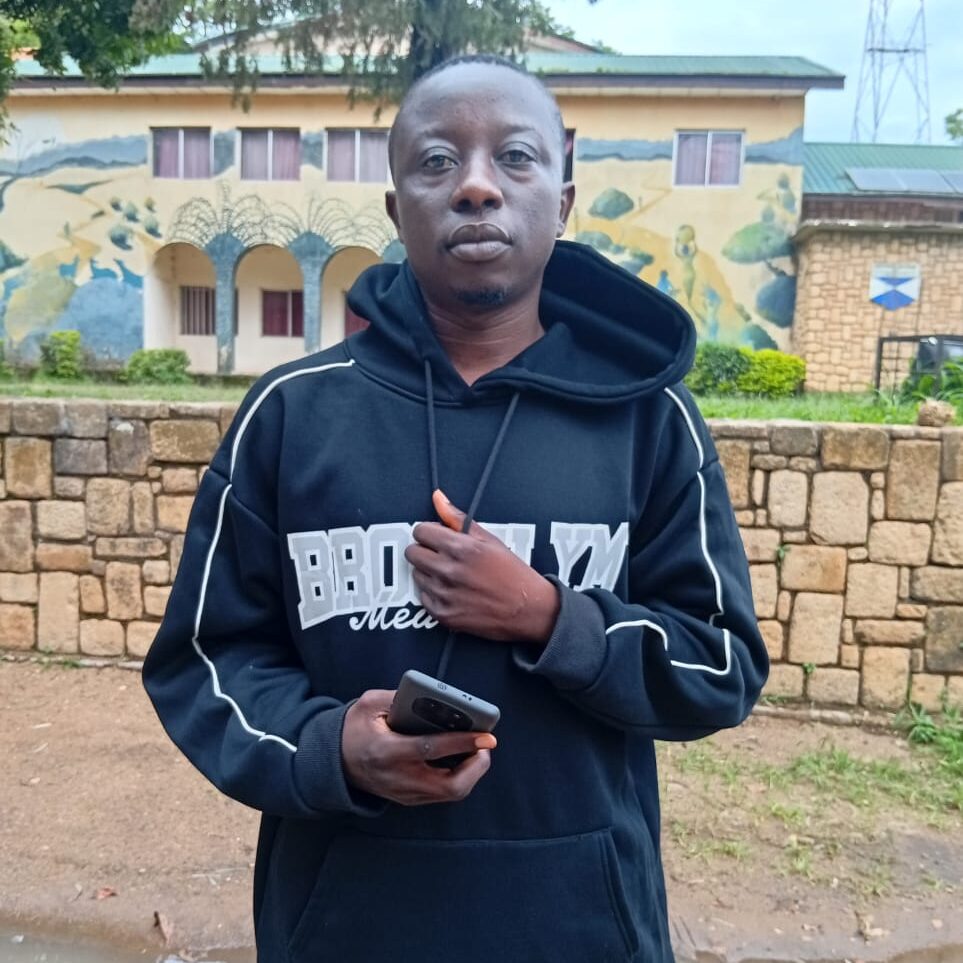
What began as a routine business engagement for a Jos-based sound technician turned into a harrowing journey into captivity, betrayal and survival. Lured by a seemingly genuine repair request and reassured by an advance transport payment, Arum John Azi travelled hundreds of kilometres only to find himself in the hands of kidnappers. In this report by JENNIFER YARIMA & MARIE-THERESE NANLONG, he reflects on the deception that led to his abduction, the suffering he endured in a Zamfara forest, the strange contradictions of his captors, the kindness that greeted him after his release and the unforgettable final words of the man who allegedly betrayed him
Of all the things a kidnap survivor might expect to hear after spending nearly two weeks in captivity, a request for prayers is probably not one of them.
Yet as Arum John Azi, a sound technician from Jos, Plateau State, prepared to leave a forest in Zamfara State where he was held captive, beaten and ransomed, the man who allegedly lured him there had one final message.
“John, no bad prayers for me.”
The words were brief, almost casual.
But for Arum they have become one of the most unforgettable memories from an ordeal that began with what appeared to be a routine business call and ended deep inside a forest hundreds of kilometres away from home.
Arum, a graduate of Child Psychology from the University of Jos, was kidnapped on April 9, 2026, and regained his freedom on April 22 after his family paid ransom to secure his release.
Weeks after returning home, he still struggles to understand the contradiction contained in that final plea. The man who allegedly played a key role in delivering him into the hands of kidnappers seemed concerned not about the suffering he had caused, but about the prayers of the man he had betrayed.
The experience has left Arum with not just memories but difficult questions and a fresh appreciation for both the fragility and resilience of human life.
A call that sounded genuine
The ordeal began in early April 2026 when Arum received a phone call from a man claiming to have a faulty sound system that required urgent repairs for use at a wedding in an undisclosed location.
As someone who earns a living as a technician, such requests were not unusual. However, the caller insisted that Arum travel to carry out the repairs personally.
Initially, Arum resisted.
Rather than embark on a long journey, he suggested that the equipment be brought to him.
But the caller persisted.
“He called repeatedly, negotiated the trip and even transferred ₦15,000 for transport, and added that payment for the job when done will not be a problem,” Arum recalled.
Looking back, he admitted there were moments when he felt uneasy about the arrangement.
“I was even having doubts, but what gave me courage was the transport they sent,” he explained.
He feared that refusing to travel after receiving the money might make him appear dishonest.
“I had to honour the invitation so I would not be seen as a fraudulent person.”
The payment reassured him. After all, scammers rarely send money before a job is done, he thought.
Convinced the assignment was genuine, he set out from Jos on a Saturday morning. What he believed would be a simple repair job soon became a carefully orchestrated trap.
From Jos to Zaria and onward, the caller remained in constant communication. At every stage of the trip, instructions were provided, the driver was directed and locations were clarified.
Everything appeared organised and convincing and, by the time Arum arrived at Kidandan village in Kaduna State, he had little reason to suspect he was walking into danger.
There, a man met him and introduced himself as the individual who had been making the arrangements. Concerned about the work ahead, Arum immediately asked about the faulty sound system.
The man reassured him that “it was something you would just fix quickly and go back.”
As the pair mounted another motorcycle and travelled deeper into the bush, it was during that journey that Arum’s confidence began to fade.
He said he noticed a man carrying a firearm. The sight immediately raised concerns but before he could understand what was happening, armed men emerged and surrounded him.
Within moments, the assignment that had brought him there ceased to exist.
His phone was seized, his work tools were confiscated and his freedom taken.
The kidnappers changed his clothes and transported him for many hours before arriving at a camp in Zamfara State.
Only then did the full reality of his situation become clear.
Life inside the camp
The days that followed were marked by fear, uncertainty and physical suffering.
Arum said he was beaten repeatedly and denied food on his first day in captivity.
When food eventually came, it was leftovers from meals already eaten by the kidnappers.
The conditions were harsh, the emotional burden was equally devastating and he requested that he be killed so he could rest.
Videos were recorded and sent to his family as pressure mounted for ransom payments. His relatives watched helplessly as he appeared in recordings made by the men holding him captive.
For Arum, the experience became almost unbearable as he denied his faith, thinking that might cushion the severity of his agony.
“I thought if I said I was a pagan it might be a better option than Christianity that is hated. When I became worn out, I shouted Jesus, which gave them the clue of my faith. I was nicknamed pastor at the camp.”
At one point, exhausted by pain and uncertainty, he reached a breaking point.
“Because of the pains I went through, I told them to just kill me and let me rest,” he recalled.
Despite everything, he refused to completely surrender hope. Prayer became one of the few things that sustained him.
While the physical environment offered little comfort, his faith helped him endure each passing day.
Strange contradictions of captivity
One of the most disturbing aspects of Arum’s account is the contradictory behaviour of his captors.
Like many kidnapping survivors, he found himself dealing with people capable of both cruelty and conversation. The same men who beat him also chatted with him with their faces unmasked.
The same people demanding millions of naira in ransom sometimes discussed religion. The same individuals responsible for his suffering occasionally attempted to reassure him.
According to Arum, the kidnappers spoke mainly in Hausa and Fulfulde languages.
After discovering that he was a Christian, some of them began calling him “Pastor”. One individual repeatedly assured him that he would not be killed because, “We only need money.”
Whether intended as justification or merely an observation, the statement stayed with him.
It did not excuse the violence, lessen the beatings, nor erase the fear. But it revealed something unsettling about the nature of the people holding him captive.
They did not appear to see themselves simply as villains. Some of them seemed to view their actions through an entirely different lens.
For Arum, this complexity remains difficult to understand. How could people inflict such suffering while still discussing faith?
How could they seek mercy while denying it to others?
How could they fear negative prayers while causing pain?
These questions continue to linger long after the freedom he got at a negotiated price which eventually exceeded ₦10 million.
At the time he was released, the kidnappers arranged transportation. A motorcycle rider was paid to take him away from the camp.
Freedom was finally within reach.
But before he departed, one final encounter would leave a lasting impression.
As arrangements were being completed, the man Arum identified as the person who lured him from Jos approached him.
There was no apology, no expression of remorse, no acknowledgement of wrongdoing and no explanation for why he had been targeted.
Instead, there was a request.
“John, no bad prayers for me.”
For Arum, the statement was startling.
After days of captivity, beatings and humiliation, he found himself listening to a plea from the very person who had allegedly delivered him into the hands of kidnappers.
The words revealed a contradiction that remains difficult to comprehend.
The man appeared concerned about spiritual consequences, yet seemingly untroubled by the suffering he had helped create.
For Arum, the statement raised profound questions.
Did the man recognise the gravity of his actions?
Was he seeking forgiveness?
Was he afraid of divine judgement?
Or was he simply trying to ease his own conscience?
Arum may never know. But the request remains one of the most remarkable moments from his entire ordeal.
Kindness of strangers, a new beginning
Freedom did not immediately solve all of Arum’s problems. After leaving the camp, he faced another challenge.
He had no money to find his way home.
But what happened next provided a striking contrast to the cruelty he had experienced in captivity.
As he travelled, he encountered ordinary Nigerians who chose to help. Some had seen videos of him circulating online during the ransom negotiations.
Others recognised his face from reports shared on social media. Moved by his story, they contributed money to assist him.
At the motor park, strangers pooled resources together so he could afford transportation back to Jos.
Again, Arum noted that the experience became one of the brightest moments in a very dark chapter.
After spending days among people who had stripped him of his dignity, he encountered others willing to restore it.
The kindness of strangers reminded him that compassion still exists. Their generosity became proof that humanity endures.
Although he is now free and the physical wounds are gradually healing, some memories remain deeply embedded.
Even now, weeks after his release, certain images and conversations continue to linger.
Weeks after regaining his freedom, Arum acknowledged that the experience has changed him.
He is more cautious, more vigilant and, for now, is very reluctant to accept service calls that require travelling outside his location.
The trust that once came naturally now requires careful consideration.
Yet despite everything he endured, he refuses to allow the experience define the rest of his life.
He said, “I still feel like there is hope.”
Perhaps most remarkably, he said he has chosen not to carry bitterness.
Instead of focusing on revenge, he speaks about forgiveness.
He hopes those involved in his abduction will abandon crime and choose a different path.
That decision may not erase what happened, but it reflects a determination to move forward rather than remain trapped by the past.
He also believes government and security agencies must do more to tackle kidnapping and protect citizens.
According to him, stronger coordination among security agencies is essential if the growing threat is to be effectively addressed.
For now, he is focused on rebuilding his life as he ponders the sentence he may never forget: “John, no bad prayers for me.”