



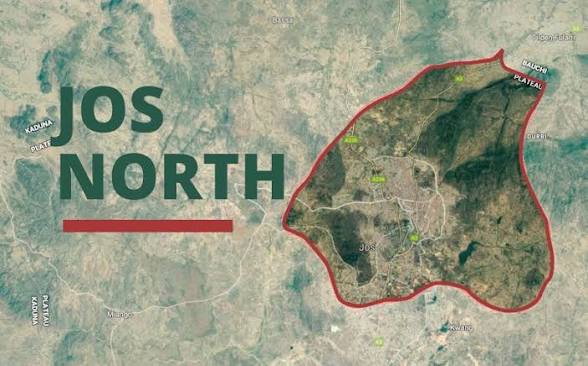
By NANCY TUAMMEN
Last week, we examined the issue of indigeneity or indigeneship in Jos North. Today, we take the discussion further by looking at the relationship between indigeneship and inclusivity.
Recently, the word inclusivity has become a mantra within the Plateau political class. One wonders what meaning has been given to the word by politicians. One also wonders whether they intend to set the state on fire, knowing fully well how sensitive the issue of inclusivity is, especially on the Plateau.
Unless we choose to give our own meaning to the word, inclusivity has nothing to do with politics and representation. Likewise, equal opportunities remain not only a local but also a global political myth because, while everybody may be equal, some are clearly more equal than others.
Nobody understands this better than politicians. Inclusivity, therefore, should remain nothing more than political rhetoric.
The mere fact that Nigeria has been structured along the lines of states and local governments, villages and towns which are geographic spaces, while taking into account ethnic-birth origins (indigeneity) in determining citizenship by birth, is a clear expression of our differences along geographic, linguistic, birth and ethnic lines.
It also means that we cannot be included where we do not belong, nor can we be granted equal opportunities with those who originate from a state, local government, village or town through the bio-ethnic connections their parents have with the land.
We cannot suddenly wake up and declare that political inclusivity is possible merely because a settler has lived in a particular area for a long time despite not originating from there. Plateau State has over 50 indigenous tribes.
We all speak different languages. Some of us who were born in Jos know no other home. However, we are not indigenes of Jos North or Jos South.
My parents are not Afizere, Anaguta or Berom by tribe or ethnicity. Therefore, even though I was born and raised in Jos North, I cannot be issued an indigene certificate based on Section 25 of the Nigerian Constitution and the Supreme Court decision on the indigeneship of Jos.
I simply have the right to reside in Jos North as a citizen of Nigeria. If I have the means, I can buy land or rent a house. I can benefit from good roads and healthcare if I pay my taxes.
But I am not an indigene of Jos North alongside the Afizere, Anaguta and Berom simply because I fall within the same state delineation as they do.
The Nigerian birth certificate issued by the National Population Commission identifies indigenous origins and requests several pieces of information relating to the birth being registered. It seeks details of the village, town, sex, local government and state of origin of the child and ties these to the parents.
It also indicates the place of issue. The place of issue is different from the state of origin of the parents. The form explicitly asks for information on state of origin, which is distinct from place of issuance or registration. It requests the names of the father and mother of the child, thereby tying the child to the father’s state of origin.
This means that being born in a state, village or local government area does not automatically confer citizenship of that place on the child, based on the information required on the birth certificate, which clearly differentiates between place of birth and state of origin.
Citizenship, birth, indigenous origins
The registration of a birth is primarily an exercise to capture data on births and population growth in Nigeria. It confers citizenship only to the extent of the indigenous origins of the mother and father. It does not confer indigeneity or indigeneship of a geographic area such as a village, town or local government on a child born there unless either or both parents are ethnic indigenes of that locality by indigenous ethnicity and birth.
Both conditions must be present before a child can be declared an indigene of a local government area and a citizen of Nigeria. This applies to Jos North.
Section 25 of the 1999 Constitution is very clear concerning indigeneity by birth and citizenship.
Citizenship by birth under Chapter III of the Constitution states: “(1) The following persons are citizens of Nigeria by birth, namely—
(a) every person born in Nigeria before the date of independence, either of whose parents or any of whose grandparents belongs or belonged to a community indigenous to Nigeria:
Provided that a person shall not become a citizen of Nigeria by virtue of this section if neither of his parents nor any of his grandparents was born in Nigeria.
(b) every person born in Nigeria after the date of independence either of whose parents or any of whose grandparents is a citizen of Nigeria; and
(c) every person born outside Nigeria either of whose parents is a citizen of Nigeria.”
Section 25(1)(a) ties citizenship not only to birth but also to parents or grandparents who belong or belonged to a community indigenous to Nigeria. This means citizenship is connected to indigeneity. Consequently, we cannot deny the importance of indigeneity in citizenship.
As far as indigeneity by birth is concerned, one or both parents must be indigenous to a community. This is why the indigene form was designed—to confirm and affirm that a person’s parents have been recognised as indigenous to a particular ethnic and geographic area in Nigeria, thereby making that person an indigene of a local government and a citizen of Nigeria by indigenous birth.
Citizenship by birth is therefore linked to indigeneity, which itself is tied to ethno-geographic origins and originality.
It is safe to say that, as far as citizenship by birth is concerned in Nigeria, indigeneity remains the principal determinant and cannot simply be granted to anyone based on place of birth or how long a settler group has lived in a locality.
The Constitution reinforces this point in Section 25(1)(a), which provides that a person shall not become a citizen of Nigeria if neither parent nor grandparent was born in Nigeria.
This also means that a person may seek citizenship through other means, such as naturalisation, but indigeneity by birth is conferred only through the indigeneity of parents and grandparents who belong to an indigenous community.
Indigeneity has been defined as the fact of occurring or originating naturally in a particular place. In an article written on October 13, 2025, by Mathias Risse of Harvard University, he stated that “being Indigenous is about having roots to a place that precede those of later invaders.” He further argued that indigenous peoples share a special relationship with their environment.
The way forward
The fact that citizenship by birth is tied to the indigeneity of parents and grandparents in a community, in my view, annuls the judgment of Justice Chris Donglong.
For as long as the parents of the plaintiff are not ethnic and original indigenes of Jos North by bio-ethno-geographic origins, no matter how many years they have lived there, Fatima Baba Akawu’s birthplace does not confer even Nigerian citizenship on her, let alone indigeneity or indigeneship of Jos North, because her father was allegedly issued an indigene certificate whose authenticity is yet to be verified.
It has not been established that either of her parents is Anaguta, Berom or Afizere. However, it has been established that her father is Hausa. If indeed he was issued an indigene certificate, the authenticity of that certificate should be verified and, if found inconsistent with constitutional provisions, withdrawn. Nullified. The same argument would apply to her certificate.
Likewise, other indigene certificates issued by local government areas in Plateau State to persons whose parents are not indigenous to Plateau State should also be reviewed.
It is the duty of the Supreme Court to protect the Constitution. In carrying out this responsibility, the Supreme Court declared that the land known as Jos belongs to the Berom, Afizere and Anaguta peoples.
The default judgment of High Court 7 of Plateau State, which held that a person of Hausa origin born and raised in Jos North Local Government Area is entitled to be recognised as an indigene of the area, is, in my opinion, inconsistent with Section 25 of the 1999 Constitution and the decision of the Supreme Court because the only basis for becoming an indigene of Jos North is if the person’s parents are Berom, Afizere or Anaguta.
The Supreme Court recognises only the Afizere, Anaguta and Berom as indigenes of Jos. Even an Ngas man whose ancestral roots are in Pankshin Local Government Area is not regarded as an indigene of Jos North.
Consequently, since Fatima Baba Akawu’s father is Hausa, she is also Hausa by origin. There is, therefore, in my view, no basis for issuing her or others in a similar situation with indigene certificates of Jos North.
A High Court judgment, particularly a default judgment, cannot supersede the Constitution or a Supreme Court decision. Therefore, the default judgment should be set aside by the Court of Appeal.
Having stated the foregoing, I conclude that the inclusivity being promoted by some politicians is a myth and, in my opinion, a violation of the Constitution, especially Section 25. I urge political leaders to desist from interpreting the Constitution in a manner capable of creating confusion and chaos in Plateau State, particularly considering the fragile security situation.
The belief that equal opportunities and inclusivity can become an absolute reality anywhere in the world is political naivety and a dangerous mirage. Equality, in its absolute sense, remains a mirage.
Concluded