




By MARIE-THERESE NANLONG
When Senator Oluremi Tinubu, wife of Nigeria’s President, Bola Tinubu, urged citizens to consider small ventures such as frying akara, roasting corn or producing kulikuli, her remarks sparked widespread public backlash.
Beneath the controversy, however, lies a long-standing reality. For decades, women across Nigeria have built and sustained their households through exactly these kinds of micro-enterprises.
Mrs Tinubu made the remarks last week while highlighting the work of the Renewed Hope Initiative in supporting vulnerable Nigerians through grants and other interventions.
While critics viewed her comments as dismissive, many women already engaged in such businesses saw them as a reflection of the reality they live every day.
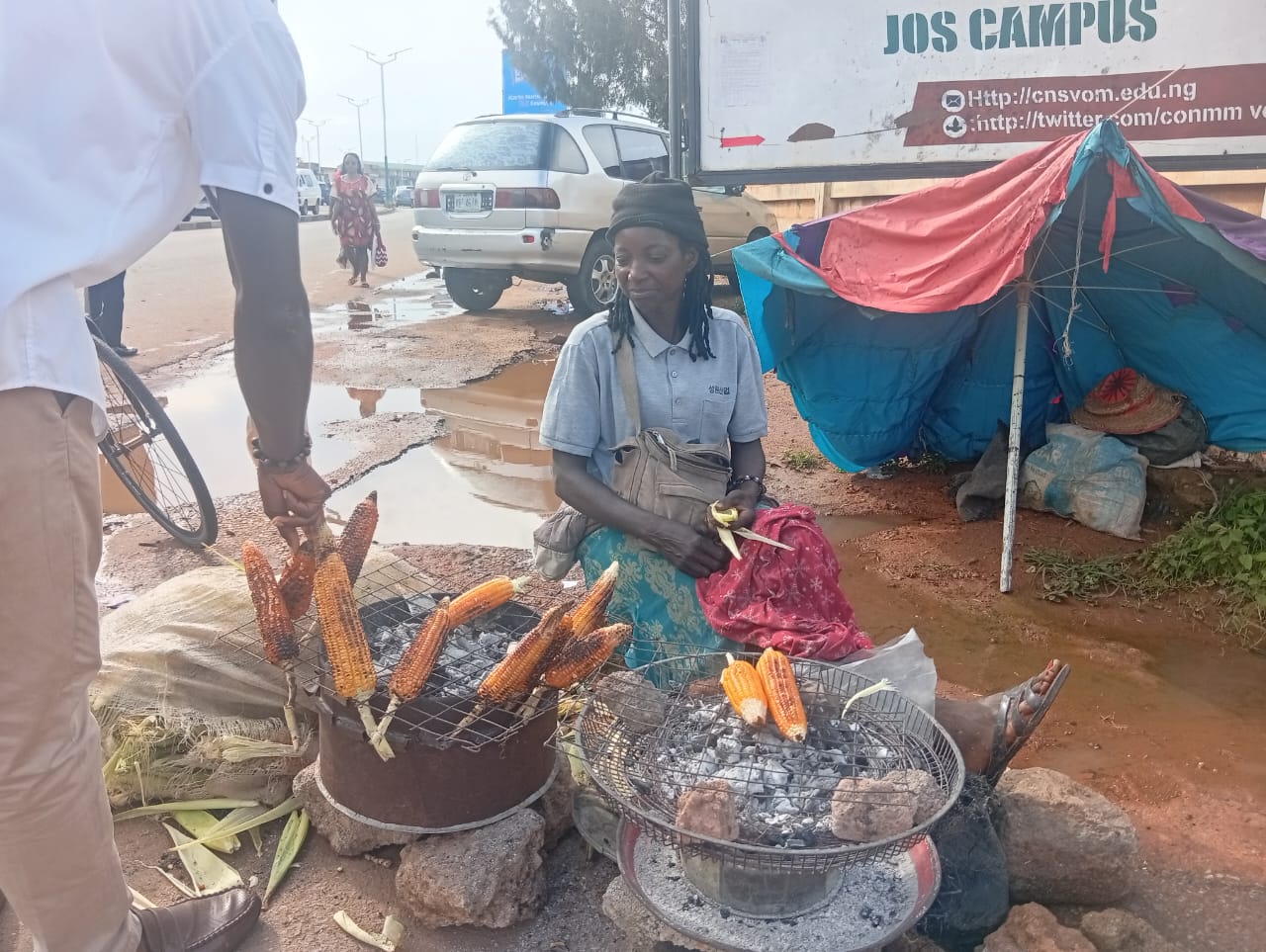
Mrs Rose Alumiasunya, who sells roasted corn along Murtala Mohammed Way in Jos, is one of them. She has spent the last three rainy seasons selling roasted corn, while switching to small-scale poultry farming and selling drinks at event venues during the dry season.
“There is nothing wrong in what she said,” Alumiasunya says. “These are ways I am helping my family, though I will not want my children to continue like this.”
Her response reflects the tension at the centre of the debate. Across Plateau State, busy junctions are lined with women and girls operating similar businesses. Yet, for many of them, sustainability remains elusive due to limited financial literacy, inadequate business skills and poor resource management.
The proliferation of informal sales points has also contributed to the state’s sanitation challenges, as makeshift stalls continue to crowd already congested roadsides.
Harnessing digital opportunities
The bigger question, however, is not whether these businesses are valuable, but whether they can evolve to meet the demands of a changing economy.
Today’s business environment has changed dramatically, and the same creativity that keeps these small enterprises running daily could, with the right knowledge and tools, open access to markets far beyond neighbourhood streets and roadside junctions.
Social media has emerged as one of the most powerful tools for achieving this transformation. It offers smarter, more affordable and wider-reaching ways of marketing products without requiring women to abandon the businesses that have sustained their families for years.
The observance of World Social Media Day, launched in 2010 by Mashable founder Pete Cashmore to recognise the growing influence of social media on communication, business and culture, provides an opportunity to reflect on both the enormous possibilities these platforms present and the challenges that continue to limit their benefits.
Observed annually on June 30, the day also draws attention to issues such as digital inclusion, online safety and equitable access to technology.
For Alumiasunya, however, those opportunities remain beyond reach. She says she would like to market her products online but lacks a suitable smartphone, while the cost of internet data would consume a significant portion of her already modest earnings.
Her experience reflects the reality faced by countless women and girls, particularly in rural communities. While social media can generate substantial sales, its benefits remain inaccessible to those without smartphones, reliable internet connectivity or digital skills.

Bridging the digital gap
Hauwa Temine, Acting Managing Director of Unijos Consultancy Ltd, believes the solution lies in deliberate and structured support that enables small business owners to expand their customer base through digital platforms.
While acknowledging that small businesses provide an important starting point for many women, she insists that entrepreneurs must be equipped with practical digital marketing skills. According to her, many women are excluded simply because they have never been exposed to these technologies or informed about the opportunities available, largely due to inadequate publicity.
Temine explains that Unijos Consultancy Ltd regularly organises Information and Communication Technology (ICT) training programmes, including courses specifically designed for women outside formal employment. However, she argues that access to training is only part of the challenge.
According to her, the greater obstacle is psychological. Many women fear unfamiliar technology, lack confidence in their ability to learn and remain reluctant to adopt new approaches to business.
She believes bridging this gap requires taking digital education directly to women within their communities.
Temine therefore calls on government to organise women into groups while urging the private sector to simplify digital training programmes to match the educational backgrounds and existing knowledge of rural women. She also advocates creating greater awareness of social media marketing through familiar community platforms such as churches, mosques and other public gatherings.
Radio and television, she adds, remain highly effective channels for reaching those who are not yet online.
“Social media should be a very welcomed tool for business because it cuts costs while enhancing widespread adverts,” she says, urging women to embrace digital platforms as a means of expanding and strengthening the businesses they already operate.
A future beyond the roadside stall
The akara seller, the roasted corn vendor and countless other women running micro-enterprises are not symbols of a struggling economy.
Rather, they represent the foundation of a grassroots economy that, with improved access to technology, digital skills and appropriate support, can be strengthened instead of overlooked.
The real conversation, therefore, is not whether women should continue selling akara, roasted corn or kulikuli.
It is how to ensure they are not left behind in a digital marketplace that is increasingly shaping the future of small businesses across the world.