



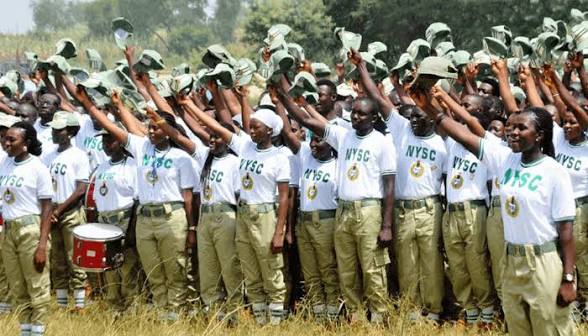
The Federal Government’s decision to overhaul the National Youth Service Corps (NYSC) has been widely welcomed as a bold attempt to align the scheme with the realities of a rapidly changing economy. However, while the reforms promise to make the NYSC more skills-driven and productivity-oriented, NICK DAZANG argues that meaningful and lasting impact can only be achieved if the changes are complemented by far-reaching reforms in Nigeria’s education system. He contends that the country’s demographic advantage can only be transformed into economic prosperity through deliberate investments in practical education, technical training and entrepreneurship from the grassroots
Following a meeting of the Federal Executive Council (FEC) on Monday, June 29, 2026, the Federal Government approved sweeping reforms to the National Youth Service Corps (NYSC).
Under the reforms, coming 53 years after the scheme was inaugurated, the NYSC will henceforth be led by a civilian, while the military will continue to provide security for corps members across the country.
Hadiza Bala Usman, Special Adviser to President Bola Ahmed Tinubu on Policy Coordination, who spoke on the implications of the impending reforms, said they were designed to reposition the NYSC as a skill-oriented, productivity-driven and youth empowerment institution.
She explained that the NYSC orientation camp would, in due course, be structured into three phases. The first two weeks will focus on civic responsibility. The second phase, also lasting two weeks, will cover career mapping, financial literacy, business planning and access to finance.
The final two weeks will concentrate on specialised training based on each corps member’s chosen career path.
Under the new framework, corps members will select from 11 specialised streams. These include Agric Corps, Medical Corps, Education Corps, Tech and Digital Corps, Legal Corps, Public Service Corps, Infrastructure Corps, Creative Economy Corps, Green Corps, Enterprise Corps and Paramilitary and Security Corps.
According to the Federal Government, the reforms are aimed at promoting youth empowerment, skills development and national productivity while preserving the NYSC’s core mandate of fostering national unity.
These reforms are inevitable. Indeed, they ought to have come much earlier, given the country’s present realities and challenges. As far back as 2014, population experts projected that Africa’s demographic profile would change dramatically, with countries such as Nigeria experiencing what they described as a ‘youth bulge’.
In 2022, the United Nations projected that Nigeria’s population would reach about 375 million by 2050, making it the fourth most populous country in the world.
As of 2026, about 70 per cent of Nigeria’s population, estimated at over 230 million, is under the age of 30. Generation Z and Millennials account for 50.1 per cent of the country’s population.
Ordinarily, this demographic reality should have represented both a demographic dividend and a wake-up call. Nigeria ought to have harnessed the energy, creativity and innovation of its youthful population to drive national development.
Unfortunately, successive governments have failed to effectively tap into this enormous potential and channel it into productive ventures.
The consequence of this failure is evident in the millions of unemployed young Nigerians. A 2025 report by Plan International Nigeria and ActionAid estimated that about 80 million youth were unemployed. This figure excludes those who have become easy recruits for insurgency and other forms of criminality.
While the need to amend the NYSC Act to reflect present-day realities is widely acknowledged, questions remain as to whether placing the scheme under civilian leadership is the solution. The NYSC was established in 1973 under a military administration, but Nigeria now operates a democratic system.
Nevertheless, the country continues to grapple with worsening insecurity that has persisted for about 17 years. Ironically, one of the newly approved specialised streams is the Paramilitary and Security Corps, underscoring the continued relevance of security concerns.
The missing link
It is also worth noting that all previous directors-general of the NYSC have been drawn from the Nigerian Army Education Corps. They are scholar-soldiers who understand the academic environment and are well acquainted with the aspirations and challenges of graduates.
For these reforms to be truly holistic, they must begin at the roots rather than at the branches. If youth unemployment is partly the result of a disconnect between educational curricula and the realities of the labour market, then meaningful reform should begin from primary education, continue through secondary schools and extend to tertiary institutions.
In essence, Nigeria needs a bottom-up approach to curriculum reform rather than the reverse.
School curricula should be enriched with practical, skill-based subjects and digital competencies that prepare students either for paid employment or self-employment by the time they complete their studies and participate in the NYSC scheme. In that regard, the NYSC should merely serve as the final stage where corps members refine and strengthen the skills they have acquired throughout their educational journey.
Our tertiary institutions should be mandated to teach entrepreneurship from the first year through to graduation, just as they currently offer General Studies (GST) courses. Experience has shown that GST has broadened students’ perspectives beyond the confines of their respective disciplines. Entrepreneurship education can play an equally transformative role.
Building skills for national development
Beyond this, state governments and the Federal Capital Territory Administration should revive and adequately equip technical colleges. Ideally, every senatorial district should have at least one well-funded technical college.
Likewise, skills acquisition centres should be established in each of Nigeria’s 774 local government areas to cater for young people who may not have had the opportunity to attend tertiary institutions.
The fact that the Dangote Refinery had to rely on expatriate technicians is a stark reminder of how far Nigeria has drifted from developing its own skilled workforce and how badly its priorities have been misplaced.
Indeed, the NYSC Act requires reform to address contemporary challenges, and the recently approved measures are a step in that direction. However, lasting success will depend on comprehensive reforms across the entire education system, ensuring that young Nigerians are equipped with the skills, knowledge and opportunities needed to contribute meaningfully to national development.
Only then can the NYSC truly fulfil its renewed mandate as a catalyst for youth empowerment and national productivity.
Dazang, OON, former Director of Voter Education and Publicity of the Independent National Electoral Commission, INEC, writes from Abuja via nickdazang@gmail.com