


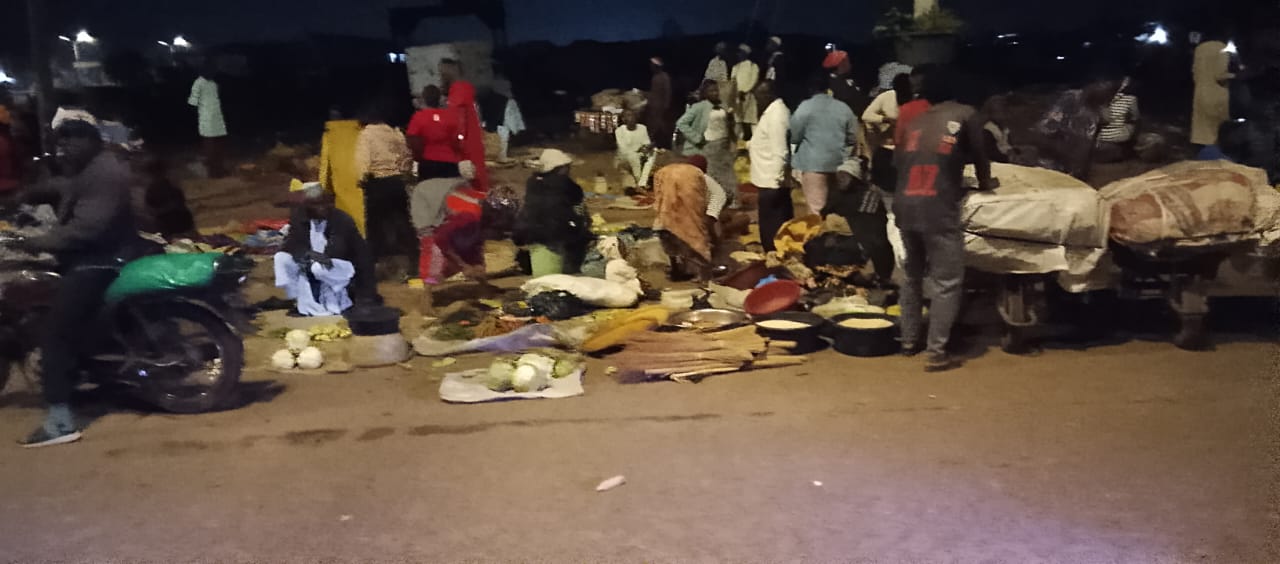

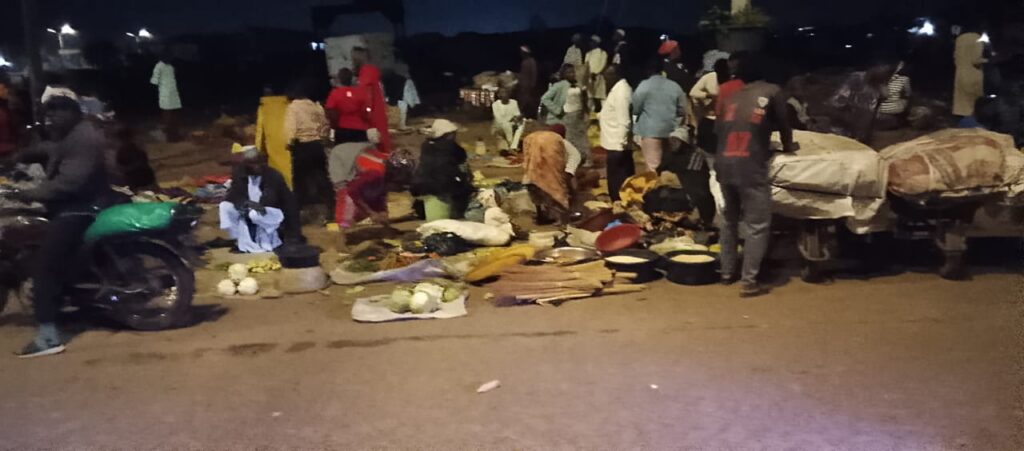
Long after offices have closed and many households have settled indoors, thousands of people across Bukuru, Jos South LGA, are only just beginning the busiest part of their day. From bustling evening markets and roadside food vendors to butchers, fruit sellers and small-scale retailers, the town’s after-dark economy has become a vital source of income and convenience for both traders and consumers. DUNG CHUNG & GRACE RAPP take readers into the heart of Bukuru’s vibrant nighttime economy, revealing how enterprise, innovation and resilience continue to drive commercial activity well beyond sunset
The moment the final rays of sunlight disappear behind the rolling hills, a different Bukuru begins to emerge.
The bustle of the day does not end with the setting sun. It simply changes character. Streetlights and solar lamps replace daylight, headlights weave through busy roads and the familiar hum of generators signals the beginning of another productive evening.
Across Bukuru town, Kugiya Market and Gyel DB Zang Junction (all in Jos South LGA), thousands of residents step into what many locals describe as the city’s “second working day.”
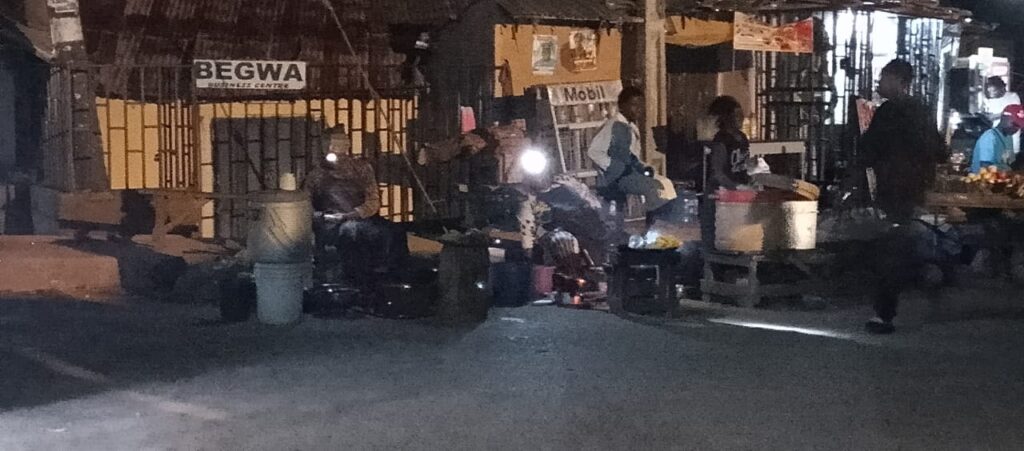
In Bukuru, nightlife is not defined solely by clubs, bars or loud music. Instead, it is driven by ordinary people carrying out extraordinary routines.
It is the butcher slicing fresh meat under a single light bulb at 9 p.m., the fruit seller arranging bright oranges beneath solar-powered lamps, the student rushing to buy toiletries before returning to the hostel and the mother picking up groceries after a long day at work.
When darkness falls, commerce comes alive. For many residents, the evening provides the only opportunity to shop. Civil servants finish work, students leave lectures, traders welcome travellers passing through the city and families prepare for another day.
Markets that appear to be winding down in the afternoon suddenly regain energy, becoming centres of trade, conversation and community.
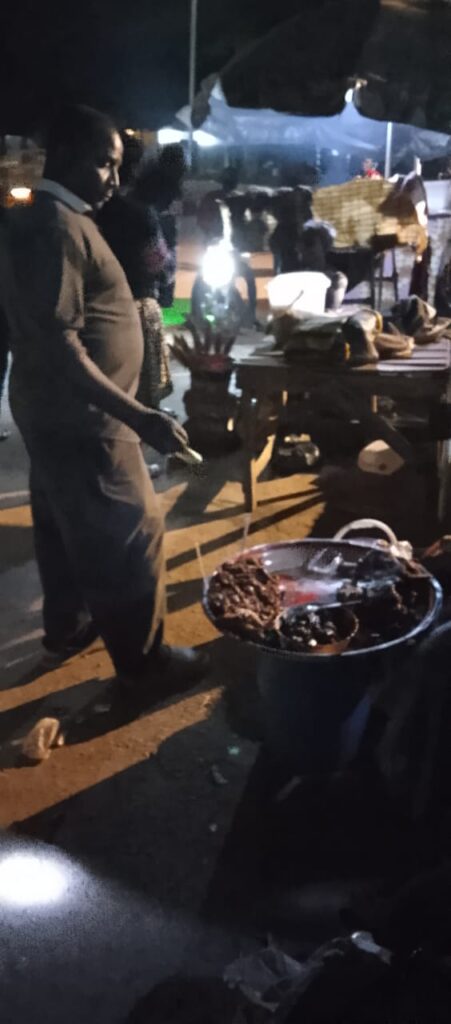
A town that never truly sleeps
This transformation is evident at Bukuru Market on Sunday evenings.
The atmosphere reflects both resilience and economic reality. The market exists in a unique moment, caught between the close of one week and the beginning of another. Narrow walkways overflow with shoppers making final purchases before Monday morning.
Women weave through the crowd, balancing basins on their heads. Commercial motorcycles squeeze through impossibly tight spaces while traders compete to attract customers over the constant drone of generators.
Regular visitors simply call it “the last wave”.
At the heart of the activity stands Suleiman Abubakar, affectionately known as Suleiman Mai Naman Bukuru, whose butcher’s stall attracts a steady stream of customers long after sunset. Beneath the glare of a single electric bulb, his knife moves swiftly across fresh cuts of beef as customers patiently wait their turn.
“They prefer buying at night,” he said with a broad smile. “There is an influx of buyers who take my meat to different places. The last-minute purchases are even better than what I sell during the daytime.”
For Suleiman, nighttime is not merely an extension of business hours. It is the most profitable part of his day. Office workers, students returning to their hostels and travellers heading home all converge at his stall, making evening sales stronger than those recorded during daylight hours.
Just a few metres away are Mrs. Vou Peters’ carefully arranged pyramids of oranges, tangerines, pineapples and bananas beneath the crisp white glow of a solar-powered lamp. The bright lighting gives the fruits a fresher appearance, attracting customers who might otherwise have walked past after sunset.
“Taking advantage of solar lighting at night gives us an edge in selling our goods,” she explained.
Solar lights, bigger opportunities
Across Bukuru, affordable solar lighting has quietly transformed the city’s nighttime economy. Traders who once relied on dim kerosene lanterns or packed up before dusk can now safely extend their business hours. Better lighting improves visibility, attracts more customers, enhances security and ultimately increases daily income.
For Mrs. Peters, the difference is undeniable.
“Sometimes,” she said with a smile, “my night sales equal everything I make in the morning.”
While some traders experience a surge in business during the evening rush, others say customer traffic remains steady throughout the day and into the night.
At Gyel DB Zang Junction, Adamu Sale’s wheelbarrow shop remains busy well after dark. Brightly illuminated shelves display soap, toothpaste, sanitary products, pomade, detergents and recharge cards as customers continue arriving one after another.
The town’s second working day
Nearby, food vendor Mrs. Jessica Dauda said the night shift has become the backbone of her business.
“I sleep during the day so I can prepare for my business, which starts at 8 p.m.,” she said. “I choose to sell my food at night because I make more money from people returning home from work. They are tired and ready to buy a meal instead of cooking.”
As the city’s economy evolves, nighttime trading is gradually becoming part of everyday life in Bukuru metropolis. With improved lighting, extended business hours and growing demand for goods and services after sunset, many traders are discovering that the most profitable hours begin when the sun goes down.
For countless residents, the town’s nightlife is not about entertainment alone. It is about opportunity, resilience and the determination to keep earning long after daylight has faded.