



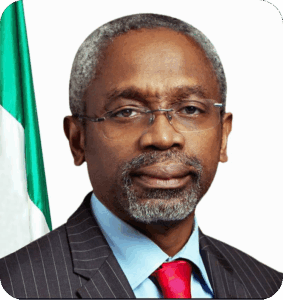
The corruption allegations that have come to be known in public discourse as ‘Gbajagate’, involving the Chief of Staff to President Bola Tinubu, Rt. Hon. Femi Gbajabiamila, have ignited a national conversation on accountability, transparency and the rule of law.
While the allegations remain unproven and have been denied, they are of such gravity that they cannot simply be wished away or dismissed with official statements. They deserve a thorough, credible and independent investigation.
This is not merely about one individual or one office. It is about the integrity of governance in Nigeria and the confidence of citizens in the institutions entrusted with managing public affairs. Democracies thrive when public officials are accountable and when allegations of misconduct are investigated impartially. They falter when investigations are selective or when public perception suggests that some individuals are insulated from scrutiny because of their political influence or proximity to power.
The allegations that have emerged are serious. They reportedly involve claims of bribery, abuse of office and irregularities in the handling of public resources. Those making the accusations have publicly advanced specific claims, while those accused have either denied wrongdoing or rejected the allegations.
Such circumstances underscore the need for an investigation that is independent, professional and free from political interference. Only an impartial inquiry can establish facts, separate truth from falsehood and restore public confidence.
In every constitutional democracy, there is a fundamental principle that no individual is above the law. This principle does not diminish with high office; rather, it becomes even more important. Public officials occupy positions of trust, and with that trust comes a heightened responsibility to be accountable to the people. When allegations of corruption arise against persons occupying the highest offices of government, they demand careful and transparent examination.
Unfortunately, Nigeria’s history with corruption has made many citizens sceptical. For decades, corruption has remained one of the country’s greatest challenges, cutting across successive administrations, political parties and institutions.
Numerous anti-corruption campaigns have been launched, commissions of inquiry established and laws enacted. Yet the perception persists that justice is often pursued selectively, with political considerations determining who is investigated and who is not.
It is this historical background that explains why Nigerians are demanding an independent investigation into the current controversy. Citizens are not asking that anyone be condemned without evidence, nor are they demanding trial by media. What they seek is something much simpler and entirely consistent with democratic values: an investigation conducted by competent authorities without intimidation, interference or undue influence.
Imperative of due process, transparency
The rule of law requires that every allegation be subjected to due process. Due process protects both the accuser and the accused. It ensures that evidence, not rumours, speculation or political sentiment, determines the outcome.
If the allegations are substantiated by credible evidence, those responsible should face the full consequences prescribed by law. If the allegations prove unfounded, those accused deserve to have their names cleared through a transparent process that leaves no room for lingering suspicion.
The controversy also raises broader questions about public financial management and government accountability. Reports linking certain budgetary allocations, agencies and procurement processes to the allegations deserve close public scrutiny. Nigerians are entitled to ask legitimate questions.
How were the funds appropriated? Which institutions were responsible for initiating the relevant projects or programmes? Were all statutory procedures observed? Were procurement laws complied with? Were oversight mechanisms properly exercised? These are not political questions. They are governance questions that deserve clear and factual answers.
Transparency remains one of the strongest weapons against corruption. When government decisions are open to public scrutiny, opportunities for abuse diminish. Conversely, secrecy breeds suspicion and erodes public trust.
In a democracy, citizens are not merely spectators; they are stakeholders whose taxes sustain the machinery of government. They therefore have every right to demand accountability for how public resources are managed.
President Tinubu came into office promising to strengthen governance, improve transparency and tackle corruption. Those commitments are now being tested. The true measure of an administration’s commitment to accountability lies not in its rhetoric but in its willingness to allow credible investigations even when politically inconvenient. Demonstrating that no official is beyond scrutiny would reinforce public confidence in the administration’s anti-corruption credentials.
This is why an independent investigation serves the interests of everyone involved. It protects the innocent while exposing the guilty, if wrongdoing is established. It reassures citizens that institutions function independently of political pressure. Most importantly, it reinforces the principle that justice is blind to status, influence and office.
The responsibility of institutions, citizens
The agencies constitutionally empowered to investigate allegations of corruption, including the Economic and Financial Crimes Commission (EFCC), the Independent Corrupt Practices and Other Related Offences Commission (ICPC) and other relevant law enforcement bodies, have an important responsibility. Their credibility depends not only on their legal powers but also on the public’s confidence in their impartiality. Investigations must therefore be evidence-driven, professionally conducted and transparent within the limits permitted by law.
The media also has a critical role to play. Investigative journalism has historically exposed corruption and promoted accountability across the world. However, journalists equally bear the responsibility of ensuring accuracy, fairness and respect for the presumption of innocence. Public debate should be informed by verified facts rather than speculation or sensationalism.
Civil society organisations, professional bodies and ordinary citizens likewise have a responsibility to insist on accountability through peaceful and lawful means. Democracy flourishes when citizens remain engaged and vigilant.
Silence in the face of credible allegations only encourages impunity. At the same time, public advocacy must remain anchored in respect for due process and the rights of all parties.
The stakes extend far beyond this particular controversy. Investors closely watch the strength of a country’s institutions before committing capital. Development partners assess governance standards in determining the level of cooperation they extend.
More importantly, ordinary Nigerians measure the legitimacy of their government by whether justice is administered fairly and consistently. Confidence in public institutions cannot flourish where accountability appears selective.
Beyond personalities: Test of Nigeria’s democracy
The fight against corruption cannot succeed if it is perceived as a tool deployed only against political opponents while allies enjoy immunity from scrutiny. Such perceptions weaken institutions, deepen public cynicism and undermine national unity.
Equal application of the law is, therefore, not merely a constitutional obligation; it is a practical necessity for building a stable and prosperous nation.
As the controversy unfolds, all parties should exercise restraint. Those making allegations should present every piece of evidence available to the appropriate authorities. Those accused should cooperate fully with any lawful investigation and refrain from actions that may create the impression of obstruction or undue influence. Government institutions should discharge their constitutional responsibilities with professionalism and independence.
Ultimately, the issue is bigger than personalities. It is about the kind of country Nigerians wish to build: a nation where integrity matters, where public office is recognised as a sacred trust and where no citizen, however influential, is beyond accountability. It is about strengthening institutions rather than protecting individuals.
The public demand for an independent investigation is therefore neither unreasonable nor politically motivated. It is a legitimate democratic expectation rooted in the constitutional principles of transparency, accountability and the rule of law.
An independent inquiry would either establish the truth of the allegations or conclusively clear those accused. In either event, justice would have been served, confidence in public institutions would be strengthened and Nigeria’s democracy would emerge stronger.
For a nation that has struggled for decades with the corrosive effects of corruption, there should be no fear of transparency. If the allegations are false, an independent investigation will expose them as such. If they are true, the law must take its course without interference or selective application.
That is the essence of justice. That is the foundation of good governance. That is precisely why the Nigerian public continues to demand an independent investigation into what has become known as ‘Gbajagate’.