


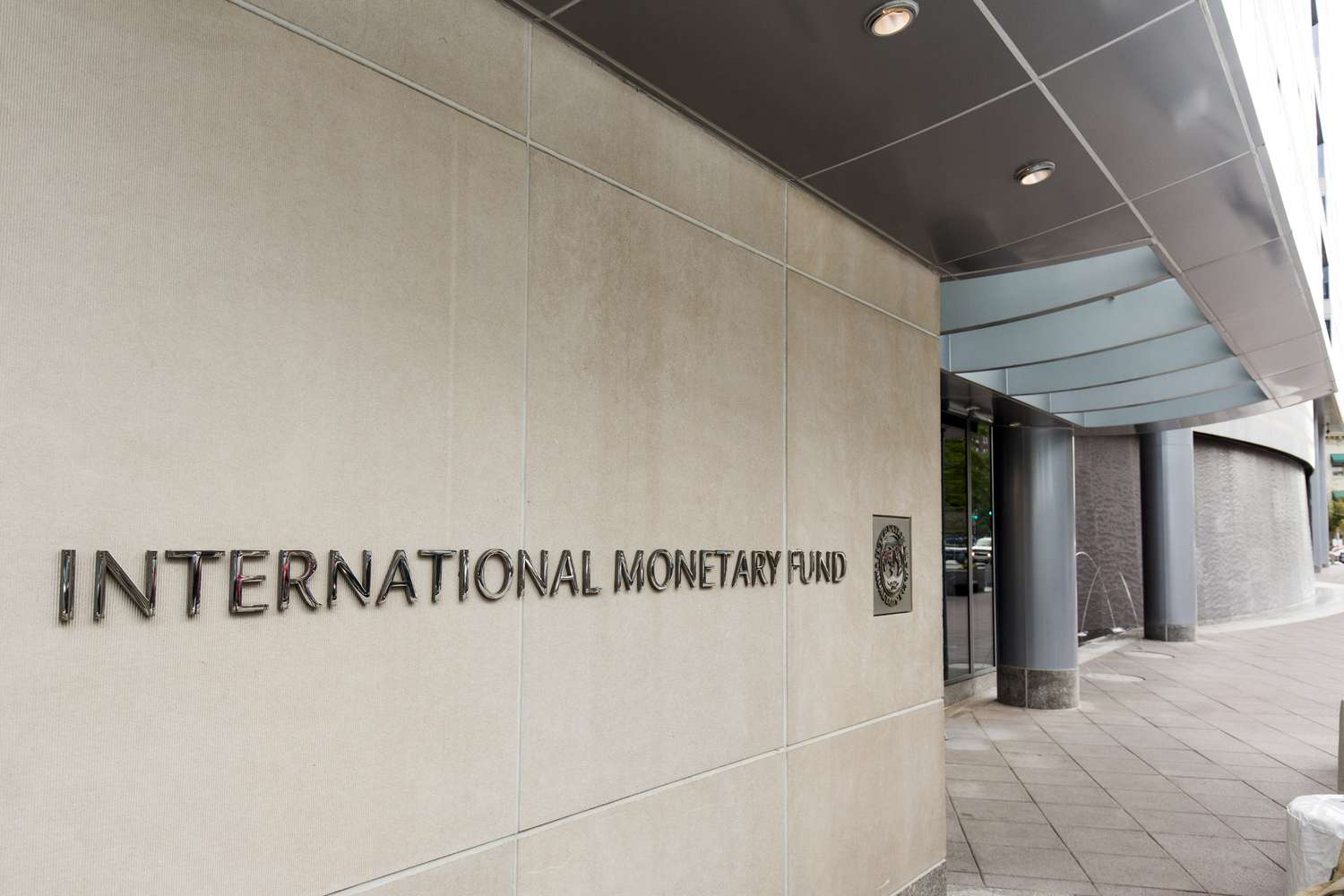

Fiscal transparency remains one of the strongest pillars of democratic governance and public accountability. In this article, HENRY DIYO examines the controversy generated by the International Monetary Fund’s (IMF) disclosure of alleged unreported government spending amounting to about ₦8.83 trillion, the sharp reactions from opposition leaders, the Federal Government’s rebuttal and the broader implications for Nigeria’s economy, governance and public confidence
The International Monetary Fund’s (IMF) disclosure that approximately ₦8.83 trillion in public expenditure—equivalent to about two per cent of Nigeria’s Gross Domestic Product (GDP)—was not reflected in recent official budgets has triggered widespread debate over fiscal transparency and accountability in Nigeria.
The revelation, contained in the IMF’s 2026 Article IV Consultation, has placed the Tinubu administration under renewed public scrutiny at a time when major economic reforms are underway and political activities ahead of the 2027 general elections are gathering momentum.
According to reports, the IMF Resident Representative in Nigeria, Christian Ebeke, told business leaders in Lagos that the unreported expenditures were largely linked to major capital infrastructure projects and other fiscal obligations executed outside the conventional budget framework.
The Fund observed that such off-budget spending creates a significant gap between officially reported fiscal deficits and the government’s actual financing requirements, thereby complicating the assessment of Nigeria’s true fiscal position. It further warned that the practice raises important questions regarding procurement procedures, financial reporting and institutional oversight.
Opposition demands accountability
The IMF’s disclosure has attracted strong reactions from opposition political figures.
Peter Obi, the 2023 presidential candidate of the Labour Party and now a member of the Nigeria Democratic Congress (NDC), described the development as evidence of what he termed “grand corruption” on a massive scale.
“The IMF now reveals that about ₦8.83 trillion in expenditure undertaken in 2025 is not reflected in the budget. This expenditure is not budgeted and is therefore not under legislative oversight or administrative scrutiny. This is horrible,” Obi stated.
He argued that the amount exceeds 35 per cent of the 2025 capital budget and is greater than the actual capital releases made during the year, while reiterating his call for President Bola Tinubu to resign.
Former Vice President, Atiku Abubakar, also expressed concern over the IMF’s findings. He called on the Economic and Financial Crimes Commission (EFCC), the Independent Corrupt Practices Commission (ICPC), the National Assembly and the Office of the Auditor-General of the Federation to commence immediate investigations into the matter.
Atiku described the alleged expenditure as “the most consequential act of fiscal impunity in Nigeria’s recent democratic history” and urged the media, civil society organisations and democratic institutions to intensify demands for full accountability.
Government rejects allegations
The Federal Government has strongly rejected the allegations, insisting that they represent a misinterpretation of the IMF report rather than evidence of financial misconduct.
In a statement issued by the Ministry of Finance, the Coordinating Minister of the Economy, Taiwo Oyedele, maintained that Nigeria does not operate what critics have described as a “shadow budget.”
He insisted that all government expenditures comply with constitutional and statutory provisions.
“These claims are incorrect and risk misleading the public regarding the government’s financial management,” Oyedele stated, challenging critics to identify any specific projects executed outside approved legal procedures.
According to the government, some capital expenditures that were initially outside the original budget framework were subsequently incorporated through supplementary budget processes, including repeal and re-enactment legislation.
While acknowledging the controversy, the IMF’s broader report also recognised several reforms undertaken by the Tinubu administration, including savings from the removal of fuel subsidies and improvements in Nigeria’s external reserves.
Nevertheless, the Fund maintained that Nigeria should strengthen its budget preparation processes, fiscal reporting mechanisms and transparency standards in order to minimise the risks associated with off-budget spending and complex financing arrangements.
Implications for governance, public trust
Economic analysts have warned that lingering concerns over fiscal reporting could weaken investor confidence, complicate public debt management and deepen public distrust at a time when many Nigerians continue to grapple with inflation, rising living costs and the consequences of ongoing economic reforms.
Although allegations of extra-budgetary spending are not entirely new in Nigeria, previous administrations have also faced criticism over expenditures on security operations, infrastructure projects and emergency interventions undertaken outside approved budgets. However, the scale of the expenditure highlighted by the IMF has significantly intensified public concern.
As political activities ahead of the 2027 general elections continue to gather pace, the controversy is expected to remain a major issue in national discourse.
The National Assembly may face increasing pressure to exercise its constitutional oversight responsibilities more vigorously, while anti-corruption agencies could equally come under public scrutiny regarding their willingness to investigate the matter independently and impartially.
Ultimately, the controversy reflects a broader challenge confronting Nigeria’s democratic governance: balancing the executive’s need for flexibility in responding to urgent national priorities with the constitutional requirement for transparency, legislative oversight and public accountability.
Whether the current debate results in meaningful reforms to Nigeria’s public financial management system or merely becomes another episode in partisan political contestation may ultimately determine the level of public confidence in the country’s democratic institutions for years to come.