


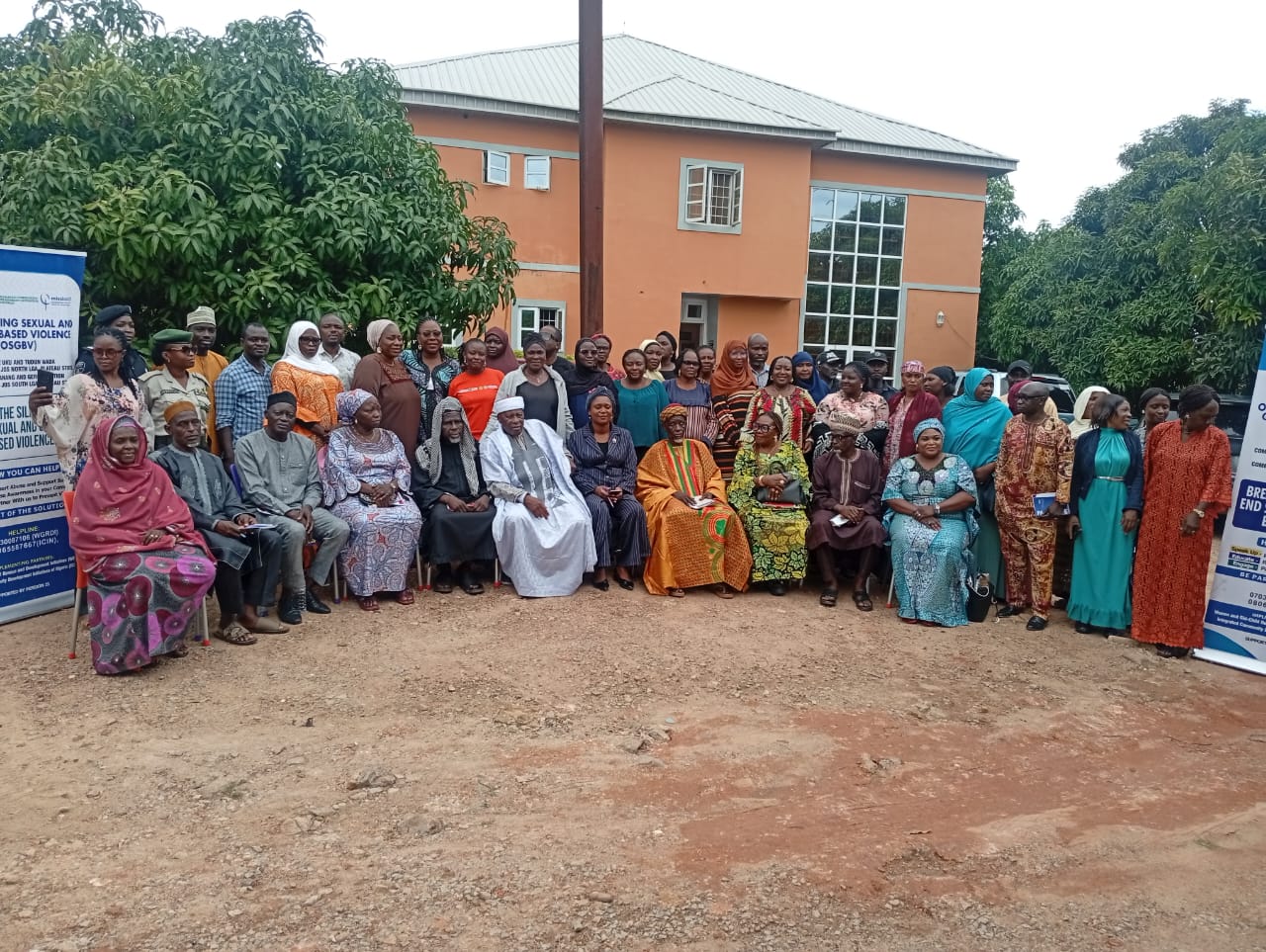

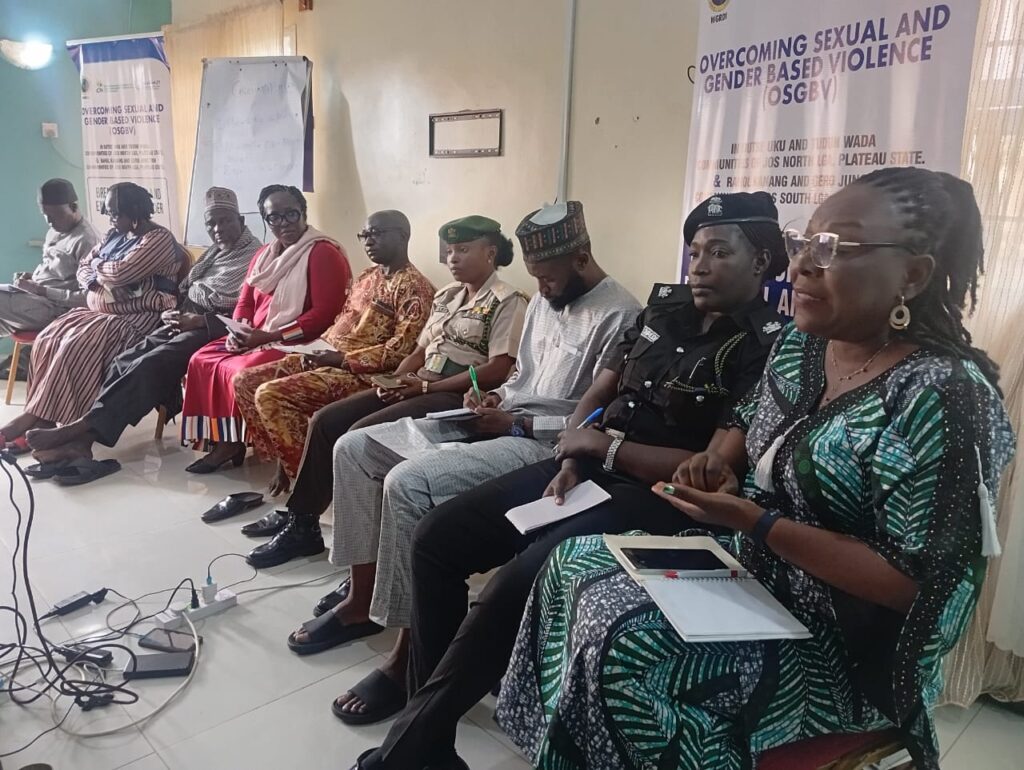
In this report, PALANG KASMI captures the growing resolve among government agencies, civil society organisations, traditional and religious institutions, security agencies and community leaders to move beyond advocacy and ensure the full implementation of the Violence Against Persons Prohibition (VAPP) Law in Plateau State. The stakeholders argue that while the legal framework exists to protect survivors of Sexual and Gender-Based Violence (SGBV), greater awareness, stronger collaboration and effective enforcement are needed to translate the law into meaningful justice for victims
A coalition of stakeholders has resolved to work towards the full implementation of the Violence Against Persons Prohibition (VAPP) Law in Plateau State as part of efforts to eliminate all forms of Sexual and Gender-Based Violence (SGBV) in the state.
The commitment was made during a roundtable dialogue tagged, ‘Dialogue on Strengthening the Implementation of the Violence Against Persons Prohibition (VAPP) Law in Plateau State’, held at the Retreat and Training Centre, Shaka Gold and Base, Jos.
The two-day forum was jointly organised by the Women and Girl Child Rescue and Development Initiative (WGRDI), in collaboration with Mission 21 and the Integrated Community Development Initiative of Nigeria (ICIN), under the project. ‘Overcoming Sexual and Gender-Based Violence (OSGBV)’ in Dutse Uku and Tudun Wada communities of Jos North Local Government Area, as well as Rahol Kanang and Gero communities of Jos South Local Government Area.
The highly interactive dialogue attracted strategic stakeholders from across Plateau State, including representatives of paramilitary agencies, the Neighbourhood Watch Security Network, women and youth groups, professional associations, traditional and religious institutions, civil society organisations (CSOs), the media, and stakeholders from both the public and private sectors. Participants brainstormed on practical measures to address the rising incidence of Gender-Based Violence (GBV), which they noted occurs almost daily.
Stakeholders seek stronger enforcement of VAPP law
The resource person at the forum and Chairperson of the Plateau State chapter of the International Federation of Women Lawyers (FIDA), Barr. Naankus Fyaktu, presented a paper titled, ‘Protection, Enforcement and Remedies under the VAPP Law’, in which she highlighted the challenges hindering effective implementation of the legislation.
She described the VAPP Law as a critical legal instrument in the fight against SGBV, stressing that it goes beyond rescuing survivors by providing protection, rehabilitation and economic empowerment.
Fyaktu traced the history of the legislation, explaining that the VAPP Act was signed into law in 2015 by former President Goodluck Ebele Jonathan and domesticated in Plateau State in 2022 by former Governor Simon Bako Lalong.
She stressed: “The survivor has rights and remedies, including protection from further violence, access to medical and psychological care, legal assistance, compensation, rehabilitation and reintegration into society, as stipulated in the VAPP Law.”
Speaking on the physical and psychological consequences of SGBV, Fyaktu observed: “Violence has a way of making victims withdrawn. You see a woman or child who was once active avoiding public life, and if nothing is done to rehabilitate the victim, the psychological impact may remain with the person for the rest of his or her life.”
She noted that Plateau State currently has only a few public and private shelters for survivors of SGBV, stressing the need for additional facilities.

Low awareness, weak enforcement hinder implementation
Participants at the forum identified poor public awareness of the existence and provisions of the Violence Against Persons Prohibition (VAPP) Law as one of the major obstacles to its effective implementation in Plateau State.
The Executive Director of the Women and Girl Child Rescue and Development Initiative (WGRDI), Ambassador Dakyes, observed that many individuals and organisations, including some civil society organisations (CSOs), know very little about the law and even lack the knowledge required to access grants for interventions aimed at addressing Sexual and Gender-Based Violence (SGBV).
She described the level of ignorance surrounding the law as worrisome, stressing that while ignorance is not an excuse, it remains one of the biggest barriers to justice for survivors.
Also speaking, the Chairperson of the Plateau State Gender and Equal Opportunities Commission, Barr. Olivia Dazyam, commended civil society organisations in the state for supporting the commission’s efforts to ensure justice for victims of Gender-Based Violence.
She emphasised that the law must work for the people, noting that collaboration among stakeholders remained essential to achieving meaningful implementation.
While appreciating both local and international partners for organising the awareness programme, she described the engagement as a significant step towards strengthening the state’s response to SGBV.
“What is going on in this engagement with critical stakeholders in the state is to let them into the law itself,” she said.
Dazyam urged participants to be proactive in promoting the implementation of the law.
According to her, violence remains an enemy of development, and communities that tolerate Gender-Based Violence cannot experience genuine progress.
Participants at the forum undertook a detailed review of the various provisions of the law, describing it as a landmark legal instrument that has strengthened the criminal justice system by replacing outdated provisions of the Penal Code and providing better protection for survivors of violence.
Traditional institutions pledge support against GBV
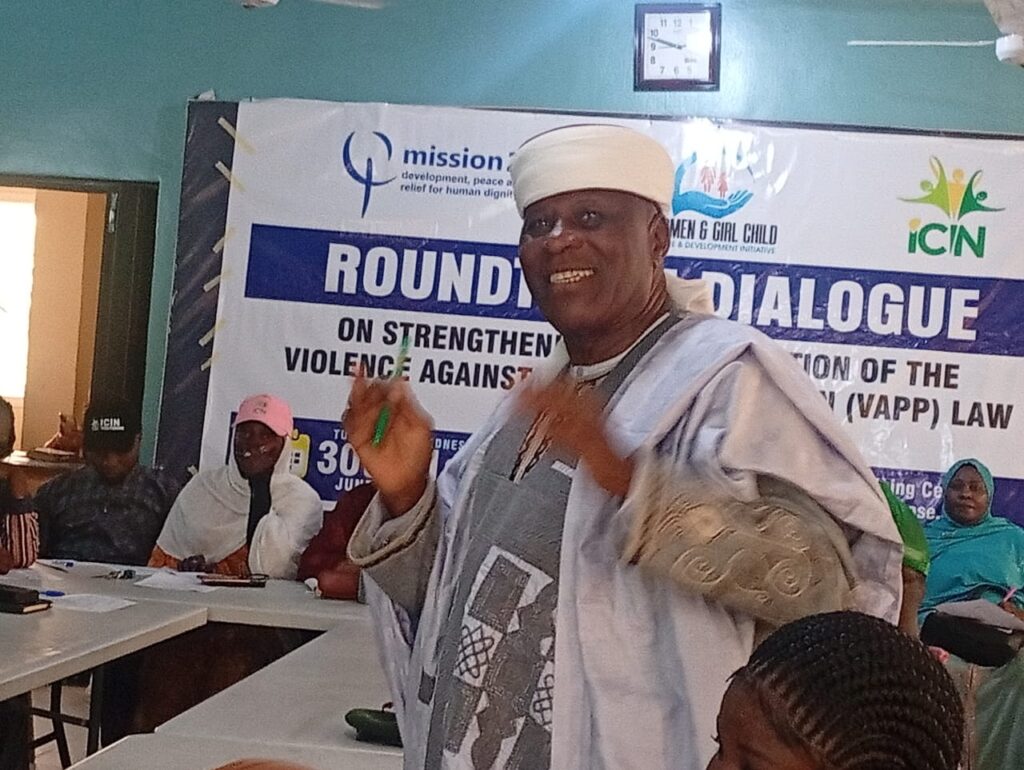
The forum also highlighted the pivotal role of traditional institutions in preventing and responding to Sexual and Gender-Based Violence, with participants describing traditional rulers as critical partners in taking awareness of the VAPP Law to the grassroots.
The Sum Pyem, representative of the Plateau State Council of Chiefs and Emirs and paramount ruler of the Pyem Chiefdom in Gindiri, Mangu Local Government Area, Charles Mato Dakat, said traditional institutions were fully committed to supporting laws that protect women, girls and other vulnerable members of society.
Recalling some harmful traditional practices of the past, he noted that parents sometimes gave out their daughters in settlement of debts, stressing that such practices had no place in modern society.
“The VAPP Law is a very important law in our communities, and this engagement will help us, especially members of the traditional council, to sensitise our people that ignorance is not an excuse under the law,” he said.
Dakat pledged to sensitise other traditional rulers on the provisions of the VAPP Law so that awareness would cascade from chiefdoms to district heads, village heads and ward leaders across the state.
Also speaking, a traditional leader and representative of the Da Gwom Rwei of Jos South, Jonathan Dangyang, said he attended the engagement with high expectations because many people in his community are guided largely by customs and traditions.
“It is important for me to learn more about the VAPP Law, understand all its sections and take the knowledge back to my people so they will realise that it is not all about culture and tradition. There are also laws that regulate people’s behaviour in the community, especially on issues relating Sexual and Gender-Based violence,” he said.
He expressed optimism that the knowledge acquired during the engagement would enable him to enlighten members of his community and contribute to reducing Gender-Based Violence.
Speaking on behalf of the media, the Chairman of the Nigeria Union of Journalists (NUJ), Plateau State Council, Comrade Ayuku Pwaspo, reaffirmed journalists’ commitment to giving sustained attention to Gender-Based Violence as part of their responsibility to educate the public and expose injustice.
She noted that Plateau journalists would continue to prioritise reports on SGBV and the implementation of the VAPP Law in order to shape public discourse and promote accountability.
“VAPP must be brought to the limelight for justice to prevail,” she pointed out.
The Plateau State Commander of the National Agency for the Prohibition of Trafficking in Persons (NAPTIP), Commander Alexander Adole, described the agency as a critical stakeholder in the rescue, prosecution and rehabilitation of trafficking victims.
He called for stronger synergy among government institutions, civil society organisations and communities to improve the fight against SGBV.
“Once any woman, child or girl has been raped, the survivor should not bathe, even if it takes days, and the clothes worn at the time should not be washed. They should be preserved as evidence,” he advised.
Speaking on behalf of Mission 21, the organisation’s Country Director, Yakubu Joseph, represented by the Monitoring and Evaluation Officer, Samuel Wamdeo, explained that gender justice remains one of the organisation’s core thematic areas.
He expressed confidence that the coalition of carefully selected stakeholders would utilise the knowledge gained during the dialogue to promote the effective implementation of the VAPP Law and curb Gender-Based Violence in their respective communities.
Miss Face of Plateau, Judith Kidime Moto, also pledged to use her platform to campaign against violence and bullying in schools.
She observed that bullying has become widespread among both boys and girls, warning that it has serious psychological and educational consequences for children.
Participants at the forum identified parental neglect, harmful expressions of masculinity, corruption and inadequate knowledge of the VAPP Law among stakeholders as some of the major drivers of Gender-Based Violence.
At the end of the engagement, representatives of the participating organisations and communities developed a joint action plan aimed at strengthening collaboration in the fight against SGBV.
The stakeholders resolved to work together to make the VAPP Law more effective by intensifying community sensitisation, promoting awareness of citizens’ rights and ensuring that survivors of violence receive the protection and justice guaranteed under the law.