



By Rev. JOHN OKWII
The birth of Jesus was not an accident of history. Every detail surrounding His arrival into the world proclaimed a divine message.
He was born in Bethlehem—the House of Bread—in fulfilment of the prophecy recorded in Micah 5:2, which declared that the Messiah would come from that little town.
Years later, Jesus Himself revealed the deeper meaning of His birthplace when He declared: “I am the bread of life. Whoever comes to me will never go hungry, and whoever believes in me will never be thirsty” (John 6:35). The place of His birth and the message of His ministry were inseparably connected.
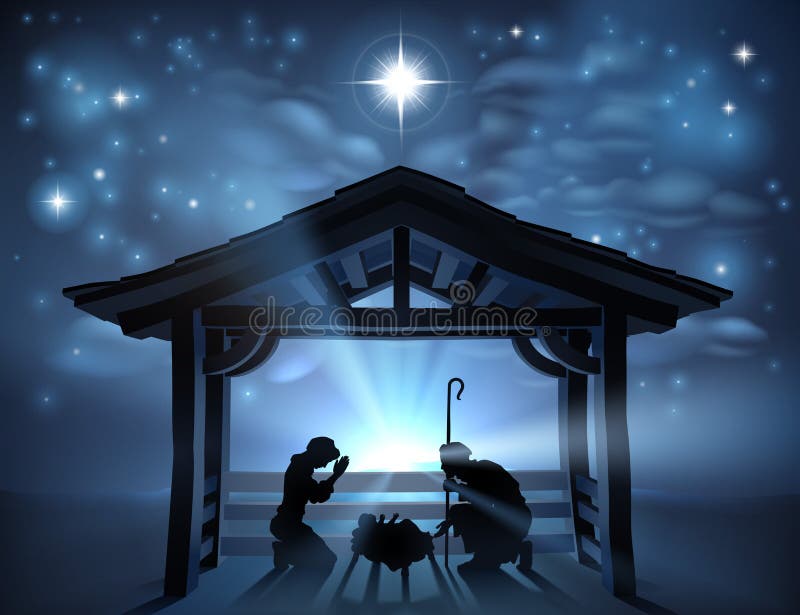
Equally significant was the place where Mary laid the newborn Child. According to Luke 2:7, she wrapped Him in swaddling clothes and placed Him in a manger because there was no room for them in the inn. A manger was not a cradle but a feeding trough for animals. The Bread of Heaven was placed where hungry creatures fed.
The One who would nourish the world with eternal life was Himself laid in the place of food. Even before Jesus uttered His first word, God had already preached His first sermon through the circumstances of His birth.
Soon afterwards, Wise Men from the East arrived in Jerusalem, not as kings seeking political influence but as sincere seekers after divine truth. They bypassed Herod’s magnificent palace and travelled instead to worship a poor Child born in humble surroundings. Their actions remain a powerful rebuke to a generation that often measures greatness by wealth, political influence and social status.
Across Africa today, many still run to palaces while ignoring God’s manger. Yet Heaven continues to proclaim that true wisdom bows before holiness rather than before riches. As Proverbs 9:10 reminds us, “The fear of the Lord is the beginning of wisdom.”
Gold: Gift of kingship
Matthew records that the Wise Men “opened their treasures and presented Him with gifts of gold, frankincense and myrrh” (Matthew 2:11). Gold has always symbolised royalty. Long before Jesus wore a crown of thorns, Heaven had already proclaimed His royal authority.
One of the greatest tragedies of our generation is that many desire the crown while refusing to carry the cross. They seek authority without accountability, influence without integrity and power without character. African wisdom rightly observes that “a crown sitting on a rotten head soon falls into the dust” and that “when the throne forgets justice, the market remembers suffering.” These proverbs reflect the painful realities experienced in many nations today.
Nigeria is richly endowed with gold, oil, tin, lithium, fertile land and gifted people. Yet, despite these abundant resources, poverty continues to grow because many leaders embrace the nation’s wealth while rejecting the values of the King.
Gold without God becomes greed. Power without character becomes oppression. Public office without integrity degenerates into organised corruption.
The Bible reminds us in Proverbs 29:2: “When the righteous are in authority, the people rejoice: but when the wicked beareth rule, the people mourn.” This timeless principle speaks directly to every generation. Leadership is stewardship entrusted by God. The treasury belongs to the people, not to political families or personal interests. Public budgets are sacred trusts, and public office must always remain a public trust.
Frankincense, myrrh: Worship, sacrifice
The second gift presented by the Wise Men was frankincense. In the Old Testament, frankincense was burned as part of worship and symbolised prayers rising acceptably before God. It was a gift reserved for divine worship, making its presentation to the infant Jesus a profound declaration of His deity.
Even before He healed the sick, raised Lazarus from the dead or went to Calvary, Heaven had already testified that this Child was worthy of worship. The Wise Men recognised what many religious leaders of their day failed to see—that the Child before them was not merely a king but God manifested in the flesh.
The message of frankincense remains relevant today. Many people no longer worship God wholeheartedly but have replaced Him with the idols of wealth, political power, ethnic superiority, social status and even religious titles. Some have elevated money above morality, while others have made influence their god.
Sadly, even within the Church, the pursuit of fame and prosperity sometimes overshadows the call to holiness and faithful discipleship.
African wisdom cautions that “the drum that beats only for itself soon splits,” while another proverb declares: “When a man kneels before money, he cannot stand before God.” These sayings remind us that self-centred ambition ultimately leads to ruin. Jesus Himself warned in Matthew 6:24: “No one can serve two masters… You cannot serve both God and money.” Likewise, the Apostle Paul reminds believers that “the love of money is the root of all kinds of evil” (1 Timothy 6:10).
When wealth becomes an object of worship, it ceases to be a blessing and becomes a source of spiritual bondage.
The challenge extends beyond individuals. Many churches have become more concerned with commercial success than spiritual transformation. Some politicians have elevated themselves beyond accountability, while many intellectuals take pride in knowledge yet neglect wisdom.
Knowledge without God may produce technological advancement. But wisdom grounded in God produces justice, compassion and lasting peace.
The third gift, myrrh, is perhaps the most mysterious of all. Myrrh was commonly used to prepare bodies for burial. To present burial perfume to a newborn Child appeared unusual. Yet, Heaven already knew the purpose for which Jesus had entered the world. The Cross was visible from Bethlehem. Calvary was hidden within Christmas. Christ was born not merely to live but to die for the sins of humanity.
Years later, when Mary anointed Jesus with expensive perfume, Judas Iscariot criticised the act because he saw only wasted resources. Jesus, however, recognised its prophetic significance, declaring that she had prepared Him for burial.
Later still, Joseph of Arimathea and Nicodemus would use myrrh and aloes to prepare His body after the crucifixion. Thus, the gift presented in Bethlehem found its fulfilment at Calvary. The Child born for sacrifice became the spotless Lamb who took away the sin of the world, fulfilling the declaration of John the Baptist in John 1:29: “Behold the Lamb of God, who takes away the sin of the world.”
The message of myrrh speaks powerfully to contemporary Africa. Society continues to witness kidnappers collecting ransom only to murder their victims, bandits shedding innocent blood after enriching themselves, corruption diverting funds meant for hospitals while patients die, education budgets disappearing while children are denied quality learning and road contracts being paid for while highways become death traps. These are not merely economic failures; they represent a profound moral and spiritual crisis.
When society loses the fear of God, human life inevitably loses its value. African wisdom says, “The hyena never becomes full by eating bones,” reminding us that greed has no finish line. Another proverb warns: “The man who drinks innocent blood eventually drinks his own tears.”
Scripture echoes the same truth in Galatians 6:7: “Do not be deceived: God cannot be mocked. A man reaps what he sows.” Every society that abandons righteousness ultimately bears the painful consequences of its choices.
The gifts of the Wise Men, therefore, proclaimed far more than honour for a newborn Child. They announced His kingship through gold, His divinity through frankincense and His sacrificial mission through myrrh. Long before Christ spoke to the multitudes or ascended the Cross, Heaven had already declared who He was and why He had come into the world.
From Bethlehem to Africa: A call to rise
One remarkable aspect of the Christmas story is that the Wise Men did not present their gifts to Herod, who occupied a magnificent palace and wielded political power. Instead, they journeyed to a humble dwelling where a Child lay in a manger. Joseph and Mary possessed very little by earthly standards, and before long they would flee to Egypt as refugees. Yet God entrusted heavenly treasures to humble hands, reminding the world that He often bypasses proud palaces to bless humble hearts.
This truth runs throughout Scripture. God chose David, a shepherd boy, to become king over Israel. He called Gideon while he was threshing wheat in hiding and He selected fishermen to become apostles. As 1 Corinthians 1:27–29 teaches, “God chose the foolish things of the world to shame the wise… so that no one may boast before Him.” Greatness in God’s kingdom begins with humility, obedience and reverence.
African wisdom expresses the same truth: “The river does not begin as an ocean,” and “The tallest iroko tree was once a seed nobody noticed.” These proverbs remind us never to despise small beginnings. As Zechariah 4:10 declares: “Do not despise these small beginnings, for the Lord rejoices to see the work begin.” Every lasting transformation begins with a single act of faith and obedience.
The message of Bethlehem speaks directly to Plateau State. For years, communities have experienced violence, families have buried loved ones, farmers have abandoned fertile lands and many churches have become places where tears are shed alongside prayers. Yet the Word of God still declares through Isaiah 60:1, “Arise, shine; for your light has come, and the glory of the Lord rises upon you.”
Plateau State must not be defined only by conflict. It can become a land known for peace, reconciliation and righteous leadership. Beyond its mineral resources and tourist attractions, it can become a place where the glory of God is reflected through justice, unity and compassion.
The same message applies to Nigeria. The nation’s greatest crisis is not the absence of natural resources but the shortage of righteous leadership and moral integrity. Corruption cannot be defeated merely through legislation. It must first be confronted through transformed character.
Insecurity demands not only effective law enforcement and intelligence-led security but also impartial justice and a renewed fear of God. Tribal hatred and ethnic division find their ultimate answer in the reconciling power of the Cross, for Christ “is our peace” (Ephesians 2:14), breaking down the walls that divide humanity.
The hope of Bethlehem is ultimately the hope of the Gospel. The Child laid in a manger became the King enthroned in glory. The Cross gave way to the empty tomb, death was conquered by resurrection and darkness yielded to the light of God’s salvation. Because Christ lives, hope remains alive for every individual and every nation.
Plateau State can rise. Nigeria can rise. Africa can rise—not because human institutions are flawless or leaders are perfect, but because Jesus Christ still reigns over the affairs of men. As the Apostle Paul declares, “If anyone is in Christ, he is a new creation; the old has gone, the new has come” (2 Corinthians 5:17). The transformation God brings to individuals can also extend to families, communities and nations.
The Wise Men saw a poor Child. But God revealed the King of kings. The world saw a manger. But Heaven saw the Bread of Life. Herod perceived a political threat, while the angels proclaimed the birth of the Saviour of the world. That same God still calls His people to see beyond present circumstances and to embrace His greater purposes.
The enduring call of Isaiah 60:1–3 still echoes today: “Arise, shine; for your light has come, and the glory of the Lord rises upon you… Nations will come to your light, and kings to the brightness of your dawn.”
May that prophetic promise find fulfilment in our generation as we bow before Christ the King, worship Him as Lord and follow Him in lives of faithful sacrifice.
Crux sola est nostra theologia.
Amen.
Rev. Prof. John Brown Okwii, the
Serving Pastor, Assemblies of God Church, Hwolshe, opposite Model Academy, along Yakubu Gowon Way, Jos, writes via johnbrownokwii@gmail.com
Great spiritual lesson.