



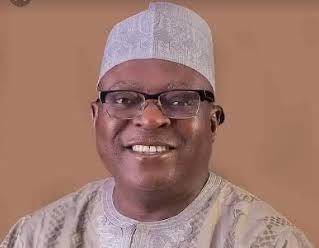
DAN MANJANG
There is a peculiar drama unfolding in Nigeria. And Plateau State appears, once again, to be one of its favourite stages. A religious cleric speaks, tempers rise, political ears become selectively deaf, government officials suddenly develop a mysterious allergy to microphones and the rest of society is advised to “remain calm.”
Welcome to the theatre of selective outrage, where the loudest voice sometimes becomes the most important voice, not because it is necessarily the wisest, but because those who should answer it have chosen silence.
Enter Sheikh Sani Yahaya Jingir, a man whose public interventions have, over the years, generated considerable controversy. His recent speeches and verbal salvos have once again provoked questions about the boundaries between religious preaching, political activism and the responsibilities that accompany influence.
One might even be tempted to ask whether the Sheikh has recently been issued a divine appointment letter, perhaps signed, sealed and delivered from Heaven, authorising him to determine who belongs, who does not belong, who is politically legitimate, who should be feared and who should keep quiet.
If such a letter exists, the public deserves to see it. If it does not, then perhaps somebody should remind the Sheikh that Nigeria already has a Constitution, courts, elected governments and enough political gladiators to fill several stadia.
The satire becomes even more interesting when one considers the historical record. The Plateau State Judicial Commission of Inquiry into the 2008 Jos unrest documented allegations concerning Sheikh Jingir’s sermons and concluded that some of the material presented before it was inflammatory.
The Commission eventually found him indirectly responsible for the unrest and recommended investigation and prosecution. Whatever one’s political or religious persuasion, such a historical record should make every responsible society extremely cautious about public statements capable of inflaming ethnic or religious passions.
Yet, Nigeria has an interesting way of dealing with history: we remember yesterday only when yesterday is useful for attacking an opponent today.
The more pressing question is what happens when a religious leader appears to speak with the authority of a judge, politician, traditional ruler, security chief and, occasionally, Almighty God rolled into one. Too often, the authorities sit comfortably, political gladiators clear their throats, security agencies study the ceiling, politicians check which way the political wind is blowing and ordinary citizens are left wondering whether the law has suddenly become a sleeping constitution.
The conspiracy of convenience
This is not necessarily a conspiracy in the traditional sense, where men gather secretly around a table and whisper sinister plans. Ours is more sophisticated. It is a conspiracy of convenience. Everyone hears, but nobody hears. Everyone sees, but nobody sees. Everyone knows, but nobody knows, until somebody else’s house burns, and then everybody suddenly becomes an expert on peace.
The greatest danger in such circumstances is not merely the controversial speech itself. It is the culture of impunity that may follow when influential people discover that their words carry no consequences. A market woman shouting an insult may be arrested for disorderly conduct. A young man posting an inflammatory message online may find himself answering questions from security agencies.
But when a powerful public figure makes provocative statements before an audience running into thousands, the response sometimes resembles a prayer meeting: “Let us continue to pray.”
Prayer is good. But law is also good, and in a functioning democracy accountability is not optional.
There is something particularly revealing about the way political gladiators behave whenever a controversial cleric speaks. Those who ordinarily spend their days denouncing intolerance suddenly become philosophers of silence. They tell us that the man is “a respected elder.” Of course, he may be respected. But respect should never become a diplomatic immunity card for reckless speech.
Then another politician whispers: “We do not want to offend his followers.” So democracy has reached the point where votes are more important than values. If that is the case, perhaps the Independent National Electoral Commission should simply print a new constitutional provision: Section 999: Any citizen commanding sufficient followers shall be exempt from accountability.
Subsection Two could add: “Where such citizen is religiously influential, all institutions of state shall politely look elsewhere.” Subsection Three might conclude: “Political parties shall compete to be the first to pay homage.”
At least then we would know the rules of the game.
But the tragedy is that inflammatory rhetoric does not remain on the pulpit. Words have legs. They travel from microphones into marketplaces, from social media into homes, from political meetings into streets. In a society already burdened by ethnic suspicion and religious mistrust, irresponsible rhetoric can become an accelerant.
Accountability, not silence
That is why the responsibility of religious leaders is enormous. A preacher is not merely speaking to ears. He may be speaking to emotions, identities and loyalties. A sentence delivered casually from a podium can be interpreted as a command by someone looking for justification.
That is precisely why playing God is such a dangerous occupation. God does not need political party membership. God does not require ethnic arithmetic. God does not need electoral delegates. God does not campaign for 2027. God does not need a convoy, and God certainly does not require political gladiators to interpret His supposed instructions for the rest of us.
Religious leaders should preach religion, politicians should practise politics, judges should interpret the law, and security agencies should enforce the law. When one individual attempts to occupy all four offices through the power of the microphone, society has every right to ask questions.
The authorities, too, must decide what they want Nigeria to become. If a statement crosses the legal threshold, investigate it. If it does not, say so. If it is merely offensive but lawful, explain why. Silence is not leadership. Silence can easily be interpreted as approval, and political opportunism can be more dangerous than open disagreement.
Recent controversy surrounding remarks attributed to Sheikh Jengre has already generated public condemnation in some quarters, including calls for official action. That should provoke a sober national conversation: are we building a country where everybody is equal before the law, or one where influence determines whose words are considered dangerous?
The answer matters, because today it may be a Sheikh, tomorrow it may be a pastor, the next day a politician, and after that perhaps an activist, a traditional ruler, a media personality or a social media influencer. Once society accepts the principle that powerful people may say whatever they like because they possess followers, everybody becomes vulnerable.
The solution is not censorship. The solution is equal accountability. Let the Sheikh speak. Let his critics speak. Let scholars debate him. Let journalists scrutinise him. Let the courts determine whether any law has been broken. Let security agencies investigate credible allegations professionally and without political manipulation.
But let nobody, religious or political, become so powerful that the country is expected to hold its breath whenever he opens his mouth.
Our political gladiators should also stop hiding behind the curtains. If they disagree with the Sheikh, they should say so. If they agree with him, they should have the courage to say so. If they are afraid of losing votes, they should admit it.
Nigeria does not need politicians who become brave only when the cameras are turned off. Nor does it need religious leaders who confuse spiritual authority with political sovereignty. We need leaders who understand that the microphone is not a throne, the pulpit is not a parliament, a political rally is not a court, and no human being, however learned, revered or influential, is God.
The Sheikh may continue to preach. But the rest of us are equally entitled to listen critically. When the sermon becomes politics, we should call it politics. When politics becomes incitement, the law should take its course. When politicians become silent because they fear losing votes, the public should call it cowardice. And when authority chooses convenience over responsibility, history should record it.
For the most dangerous silence in a democracy is not the silence of the powerless. It is the silence of those who have the power to speak and deliberately choose not to for selfish reasons.
Manjang, mnipr, MDiv, a former Plateau State Commissioner of Information and Communication, writes from Jos via dmanjang@gmail.com