



By Rev. JOHN OKWII
The central truth of Scripture is that humanity did not merely lose a garden in Eden. It lost a divine order of life. The gospel is not simply God’s programme for taking sinners to heaven. It is Christ’s work of restoring humanity to God’s image, God’s presence, God’s purpose, God’s abundance and, ultimately, God’s renewed creation.
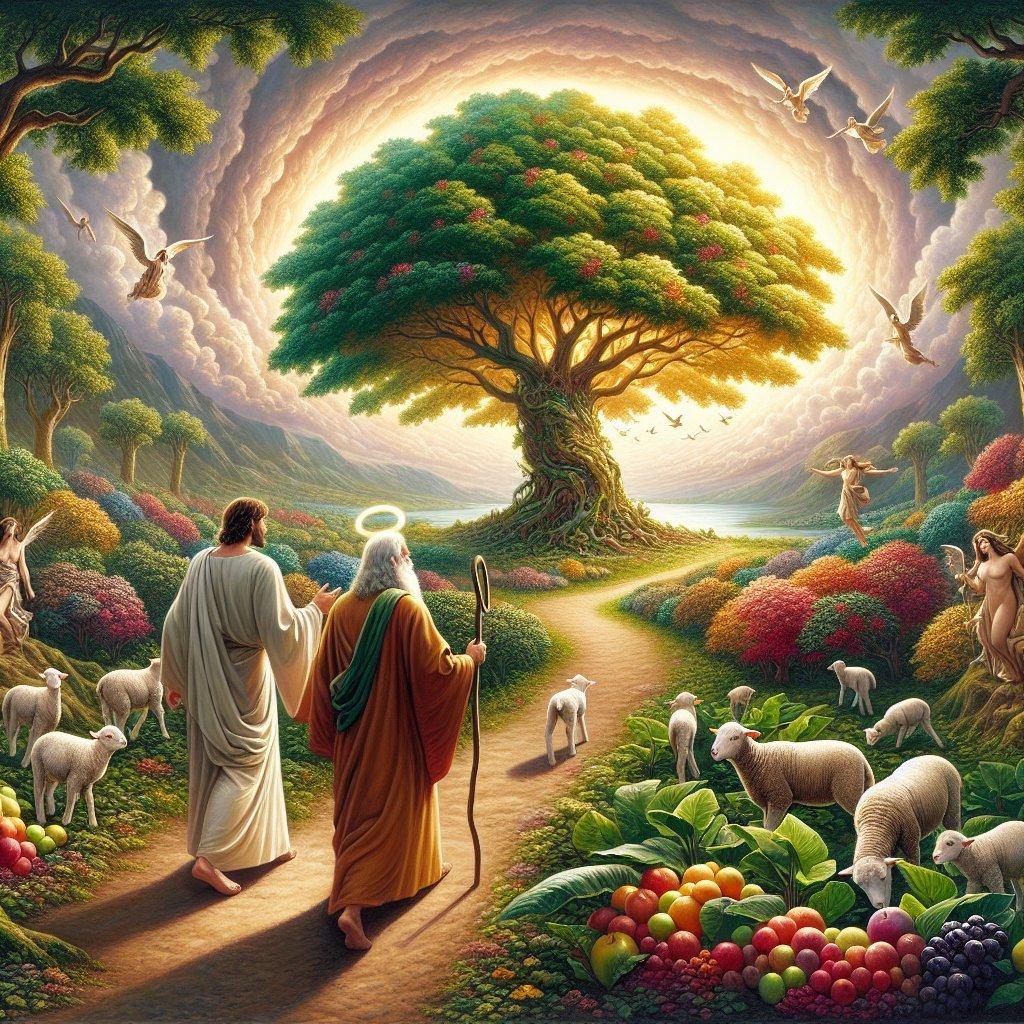
Today, I want us to travel, not first to Jerusalem, Rome, Wittenberg, Azusa Street or even Calvary, but back to the garden. Before there were denominations, theological colleges, seminaries and church traditions, there was Eden.
Before Adam carried a Bible, God carried the relationship. Before humanity invented transportation, it walked freely in God’s world. Before death entered human experience, life was God’s original language, and before the earth produced thorns, it produced abundance.
Perhaps the question confronting the African Church is not merely how to build larger churches, but how to recover the divine life for which humanity was originally created. As an African proverb reminds us, “When a man forgets where he came from, he will not know where he is going.”
Africa must remember. Nigeria must remember. The Church must remember. We must return to Genesis, not simply to study how the world began, but to rediscover what humanity was meant to become.
In Genesis 1, God repeatedly speaks creation into existence with the command: “Let there be.” Light appears, the seas gather, vegetation grows and the heavens are formed. Yet when God turns to humanity, the language changes dramatically.
“Let us make man in our image, after our likeness.” There is divine deliberation. The stars receive a command, but humanity receives divine consultation and divine formation.
Genesis 2 deepens the picture: “The Lord God formed man of the dust of the ground, and breathed into his nostrils the breath of life.” Humanity came from the earth, but its life came from the breath of God. The body connected humanity to creation; the breath connected humanity to God.
Adam was not merely created. He was commissioned. God placed him in Eden “to dress it and to keep it.” Eden was not a retirement home but a sanctuary of purpose, stewardship and partnership with God. Adam exercised discernment and authority by naming the animals, demonstrating that the human mind functioned in remarkable harmony with God’s created order.
Eden was a place of unhindered fellowship with God. Sin introduced alienation, fear, shame, pain, sweat, thorns, struggle and death. The greatest loss of Eden was not merely a beautiful garden. It was communion with God.
Then the serpent entered the conversation. He did not begin with a knife but with a question: “Yea, hath God said?” Satan attacked God’s word before attacking the fruit. The deeper temptation was not simply eating forbidden fruit, but believing that humanity could become something apart from God. That deception still wears modern clothing.
It whispers that money, political power, intelligence, denomination, title, miracles, prophecy, academic achievement or ministry success can replace God. That is Eden’s temptation in contemporary form.
When sin entered, death entered. Shame appeared immediately, physical death eventually followed, and blame became humanity’s new language. Adam blamed Eve, Eve blamed the serpent and humanity has been blaming someone ever since.
Governments blame citizens, citizens blame governments, church leaders blame members, members blame leaders, parents blame teachers and teachers blame parents. Eden teaches that restoration begins when blame ends and repentance begins.
The Christ we found
The ground was cursed because of human rebellion, producing thorns, painful labour and the certainty that dust would return to dust. Creation itself came under the consequences of sin. When we look at corruption, violence, insecurity, environmental destruction, broken families, tribal conflict, unemployment and division across Nigeria and Africa, we are witnessing a world that has lost its harmony with God.
Yet God did not abandon humanity. Christ did not come merely to make broken people feel better; He came to begin God’s great work of restoration.
Genesis tells us that Abel’s blood cried from the ground. Africa understands the language of blood crying from the soil, for our continent has witnessed the blood of martyrs, victims of violence, women, men and children. The ground remembers. But Hebrews proclaims that Jesus’ blood speaks better things than the blood of Abel. Abel’s blood cries for justice; Christ’s blood offers redemption.
Abel’s blood exposes murder; Christ’s blood offers mercy to the repentant. Abel’s blood remembers the crime; Christ’s blood creates a new creation. Nigeria does not merely need political restructuring; it needs the transforming power of the blood of Jesus Christ working through repentant people.
Romans 5 presents Jesus as the new Adam. The first Adam disobeyed; Christ obeyed. Adam brought condemnation; Christ brings justification. Adam brought death; Christ brings life. Adam hid from God; Christ brings us back to God. The cross was not God’s emergency plan but the centre of His redemptive purpose, and in the resurrection Christ defeated death itself.
The Church in Nigeria cannot transform the brokenness of Genesis 3 while reproducing that same brokenness within itself. We cannot preach against corruption while manipulating church finances, condemn tribalism while building tribal churches, proclaim reconciliation while refusing to forgive one another, or preach holiness while secretly celebrating immorality.
We must recover the divine order represented by Eden: presence, purity, purpose, stewardship and fellowship.
Christ restores what Adam lost, yet restoration has a future completion. Christians still experience sickness, hardship, persecution and death because redemption has begun, but the final renewal of creation is still coming. Revelation promises a day when God will wipe away every tear and death will be no more.
We, therefore, live between Eden lost and Eden restored. We look back to understand what was lost, upward to Christ for salvation and forward to the new creation. Meanwhile we pray, preach, work, serve, reconcile, pursue justice, feed the hungry, defend the vulnerable, educate children and proclaim the coming kingdom.
Returning home in Christ
The great danger is that the Church may be trying to build an Eden without God. We may seek abundance without obedience, power without character, prosperity without generosity, miracles without holiness, anointing without discipline, leadership without service and church growth without spiritual formation. That is not Eden restored. It is Babel. Humanity building upward without God always ends in confusion.
Nigeria must hear the gospel beyond church walls. The Christian businessman must carry Christ into the marketplace, the teacher into education, the doctor into medicine, the lawyer into justice, the politician into government, the civil servant into administration, the farmer into stewardship of creation, the student into disciplined learning and the parent into the home.
Revival must become visible in public character. Africa does not merely need Christians who shout “Hallelujah”; it needs Christians whose lives make the Hallelujah believable.
The final question is not what denomination we belong to, how many years we have been in church, how many sermons we have preached or how many degrees hang on our walls. The question is whether we have returned to God.
Therefore, Church of Nigeria, do not merely curse the darkness; return to the light. Church of Africa, do not merely complain about the fallen world; become an instrument of its redemption. Church of Jesus Christ, do not merely preach about Eden. Live under the reign of the One who is restoring all things.
We left a garden, but God pursued us. We sinned, but Christ died. We were condemned, but Christ justified. Death entered, but Christ conquered death. Abel’s blood cried from the ground, but Calvary’s blood spoke better things.
Adam was driven from God’s presence, but Christ opened the way back. Creation groans, the Spirit has come as the firstfruits, the Church waits and Christ will return. The God who began the story in Genesis has not abandoned His story. He is making all things new.
Come home from sin, bitterness, hypocrisy, corruption, spiritual pride, denominational hatred, secret compromise, religious performance, unforgiveness and divided hearts. Come home to Christ. We were not created merely to live in a garden. We were created to live in God. In Christ, the breath that began humanity’s story becomes the Spirit who makes us new. “Therefore if any man be in Christ, he is a new creature.”
The garden was lost. Christ was found. And in Christ, the way home is open.
Crux sola est nostra theologia.
Rev. Prof. John Brown Okwii, the
Serving Pastor, Assemblies of God Church, Hwolshe, opposite Model Academy, along Yakubu Gowon Way, Jos, writes via johnbrownokwii@gmail.com