



For many Nigerian women, childbirth is more than the arrival of a baby. It is a test of endurance, womanhood, tradition and, increasingly, economic survival. JENNIFER YARIMA and NANRET LONGJI examine the cultural stigma surrounding Caesarean Section, CS, the fears and personal experiences that shape women’s choices and the growing call from medical experts to put the lives of mothers and babies above society’s expectations about how childbirth should happen
“I was willing to lay down my life just to give birth the natural way,” said Blessing, a mother of three from Jos North LGA who has experienced both vaginal delivery and Caesarean Section.
For her, the decision is not only about pain. In her community, children born through CS are sometimes called ‘harvested babies’, a term suggesting that the child was not born but rather taken out of the womb like crops from a farm.
She explained that the label carries judgment and reinforces the belief that vaginal delivery is the only acceptable way for a woman to give birth.
Pregnancy: A journey shaped by expectations
Pregnancy in Nigeria is more than a medical condition. It is a spiritual, social and often economic journey filled with cravings, body changes, prayers, taboos and constant advice from elders.
At the end of it all is childbirth, a defining moment that can determine the health and survival of both mother and baby.
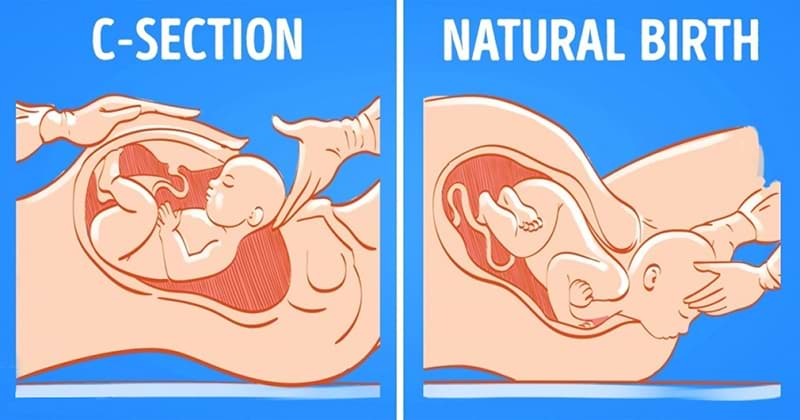
Medically, childbirth generally occurs through two main methods. Vaginal birth, commonly described as ‘natural’, occurs when the baby passes through the birth canal, while CS is a surgical procedure in which doctors make an incision in the abdomen and uterus to deliver the baby.
To medicine, both methods are valid, with the safest option depending on the circumstances surrounding each pregnancy and delivery. To culture, however, vaginal birth is often regarded as the only ‘real’ way to give birth.
Across many African communities, a woman’s strength is measured by her ability to endure labour, while pushing a baby out is often seen as proof of womanhood and divine favour.
“In our place, if you did not labour, people will say you are weak. They will say you took the easy way,” Blessing said.
But health workers say such beliefs sometimes persist even when complications make vaginal delivery dangerous, leading in some cases to prolonged labour, ruptured wombs and preventable deaths of mothers and babies.
Experts continue to stress that the lives of mother and child must come first, but changing deeply rooted beliefs has proved difficult.
When surgery becomes the safer option
Doctors say the foundation for a safe delivery is often laid during antenatal care, where regular examinations help determine the baby’s position and growth as well as the mother’s health and the safest mode of delivery.
Dr Dogara Pole, Medical Director of Fudawa Clinics and Maternity in Jos, explained that several conditions can make CS necessary. These include labour that fails to progress, unsuccessful attempts to induce labour, a baby in a breech position, a previous scar on the womb from an earlier CS, failure of the cervix to dilate properly and situations where the baby’s head is too large to pass safely through the mother’s pelvis.
He added that heavy bleeding and signs of foetal distress during labour are also among the circumstances that can require urgent surgery.
“Child delivery requires a professional approach for a safe outcome, whether it is vaginal or through CS. What matters is that both mother and baby come out alive,” Dr Pole pointed out.
Dr Kehinde Agbowuro, a Consultant Obstetrician, said CS should not be regarded as an inferior method of delivery.
“Caesarean Section is not an inferior method of delivery. It is only recommended when there is a clear medical reason. No trained doctor would suggest surgery unnecessarily because it also comes with risks. Every decision to do a CS is taken to protect the life of the mother and the baby,” he said.
He disclosed that the decision could be made before labour begins or become necessary during labour when circumstances change.
When the baby cannot pass safely, when there is excessive bleeding or when the baby shows signs of distress, he said surgery may become the safest option.
“These are life-saving decisions. They are not made to take away from a woman’s experience of childbirth,” he said.
Fear, experience, weight of culture
Despite medical explanations, many women of childbearing age remain apprehensive about surgery, with their concerns often rooted in personal experiences, stories from friends and relatives and fear of possible complications.
Blessing Gad, a mother of three, said she preferred vaginal delivery because she wanted to be seen as what she termed a “real woman.”
“I prefer the normal delivery. A friend of mine shared her experience of the injection given before surgery. She said she never felt strong afterwards, unlike those who had their babies the normal way,” she explained.
Evelyn Zakka expressed similar concerns about possible after-effects.
“The anaesthesia seems to have some effect after a while. Infections can set in and if it is not properly managed, one is left with routine hospital visits. I prefer going through normal labour and having my baby the normal way,” she said.
For many women like Blessing and Evelyn, such personal accounts can carry more weight than medical statistics. Fear of weakness after surgery, infection and prolonged recovery can make vaginal delivery appear to be the safer and more dignified option.
Beyond fear, however, other factors influence women’s preferences.
Afiniki Zughumnan, a mother who has had two CS deliveries, carries her scars with pride but said she would choose vaginal birth if given the opportunity.
For her, recovery time is a major consideration.
“With vaginal birth, once the baby comes out the pain stops. You can go back to your house chores, your farm and your daily life within days. But after CS, healing takes weeks. You cannot lift anything and you are constantly reminded of the wound,” she said.
Ofoma Amaka, a mother of five from Barkin Ladi, cited family size and cost as additional concerns.
In farming communities, she said, children are often regarded as additional hands on the farm, while repeated Caesarean Sections can lead doctors to advise some women against having further pregnancies.
“A man’s strength is in the number of children he has to help cultivate the land so we don’t spend money hiring labour,” she said.
She also highlighted the financial burden associated with surgery, noting that vaginal delivery generally costs less while a CS can run into hundreds of thousands of naira.
As a result, some families reject surgery even when it is medically advised, leaving women to take potentially dangerous risks in attempts to deliver vaginally.
Culture and family pressure also play a significant role. Elderly women in some communities believe that a woman who undergoes CS is weak, while others attach negative cultural meanings to the procedure.
Such beliefs can make women reluctant to accept surgery when it becomes necessary, while the expression ‘harvested baby’ further reinforces the stigma by making mothers feel that their children are somehow different.
Doctors, however, are urging women to reject the idea that Caesarean Section represents failure.
“CS is not a punishment and it does not make a woman less of a woman. Children born through CS are no different from those born vaginally. The only thing that matters is that both mother and baby are safe and healthy,” Dr Agbowuro said.
He also warned about misinformation and the patronage of unqualified persons because of cost.
“No trained professional will recommend surgery just to make money. But when women avoid hospitals because of fear or money and go to quacks, the result can be severe complications and even death. When CS is done in an accredited facility by skilled hands, the outcome is usually very good,” he cautioned.
Both doctors agreed that early antenatal care gives women and their families an opportunity to understand their options and make informed decisions.
They also called for greater community engagement involving men, religious leaders and traditional rulers so that accurate information about safe childbirth reaches households across the country.
Nigeria continues to face a high maternal mortality burden, with delays in deciding to seek care, reaching a health facility and receiving appropriate treatment contributing significantly to preventable deaths.
Fear of surgery, stories of negative experiences and cultural stigma can further contribute to delays in accessing appropriate care.
The ‘harvested babies’ narrative is, therefore, more than a question of terminology. It reflects attitudes that can influence decisions in ways that may put the lives of women and their babies at risk.
The preference for vaginal birth is tied to identity, personal experience, tradition and economic realities. For medical experts, however, the priority remains safety.
Both vaginal delivery and CS have their appropriate place, depending on the medical circumstances of each pregnancy and delivery.
“The goal is always the same, a safe, dignified childbirth experience for every woman,” Dr Agbowuro said.
Perhaps the conversation, therefore, needs to move away from how a baby was delivered and towards what truly matters: that mother and child survived and have the opportunity to live healthy and fulfilling lives.
Whether a child is described as ‘born’ or ‘harvested’, what should matter most is life, health and the opportunity for both mother and baby to thrive.