




A disease that should largely be kept at bay by routine childhood immunisation is once again placing Nigerian families on alert, as deaths and suspected infections in Plateau State expose gaps in vaccination, diagnosis, treatment and public awareness, SEKYEN WALSHAK reports
For parents, the danger is not always obvious. A child may begin with what appears to be an ordinary sore throat, fever or catarrh, only for the condition to deteriorate rapidly.
That reality raises an uncomfortable question: how can a disease for which an effective vaccine exists still be threatening Nigerian families in 2026?
Diphtheria belongs to the category of diseases for which modern medicine has provided a powerful weapon — vaccination.
Yet in Nigeria, the disease continues to find its way into homes, communities and hospitals, leaving behind sick children, grieving families and questions about the country’s ability to ensure that protection reaches every child.
Nigeria faced a major resurgence of diphtheria in late 2022, becoming one of the largest outbreaks of the disease in recent African history in 2023, with an unusual and severe surge recorded in Kano State in December 2022.
By 2023, the Nigeria Centre for Disease Control and Prevention declared a national health emergency. The World Health Organisation, in its Disease Outbreak News report of September 13, 2023, noted that between June 30 and August 31, 2023, a total of 5,898 suspected cases were reported from 59 Local Government Areas in 11 states.
In epidemiological week 34, ending August 27, 2023, more than 234 suspected cases were reported from 20 LGAs in five states, with one laboratory-confirmed case among 22 samples collected.
Eighteen of the cases were epidemiologically linked, while 141 were classified as clinically compatible.
In 2026, Nigeria is once again confronting the reality of diphtheria.
The disease has continued to affect communities across the country, with Kano, Borno and Bauchi among the states carrying a particularly heavy burden in the current outbreak.
Other states, including Katsina, Plateau, Kaduna, Yobe, Sokoto, Zamfara, Lagos, Osun, Jigawa, Cross River, Nasarawa, Gombe, Enugu and Imo, have also recorded cases at different stages of the prolonged outbreak.
The geographical spread tells a bigger story.
Nigeria’s struggle with diphtheria is no longer simply about an isolated outbreak in one community; it is a national public-health challenge.
Plateau’s warning
For Plateau State, the danger has become painfully immediate.
Twenty-three people have died in an alarming outbreak of suspected diphtheria, while health authorities recorded 143 suspected cases within two weeks, raising fresh concerns about transmission, particularly in parts of Jos North Local Government Area.
The Plateau State Commissioner for Health, Dr Nicholas Baamlong, disclosed the figures in a telephone interview with Channels Television on Tuesday, September 1, 2026, saying affected patients were being treated in isolation as the state government intensified efforts to contain further transmission.
“So far we have 143 suspected cases, we have had 23 deaths and nine currently on admission at the Jos University Teaching Hospital, JUTH, and the Plateau Specialist Hospital, Jos,” Baamlong disclosed.
The outbreak has been concentrated in communities within Jos North, with Rikkos identified among the major affected areas.
The latest figures represent an increase from earlier reports that put the number of suspected cases at 117 and deaths at 15.
But beyond the rising numbers is another challenge that could determine how effectively the state responds.
“The biggest challenge is getting antitoxin, and most of them are presenting late,” Baamlong said.
His statement exposes two critical weaknesses in the fight against the disease: access to life-saving treatment and delays in seeking medical attention.
For a disease capable of progressing rapidly and obstructing a patient’s airway, late presentation can turn what might have been a manageable infection into a medical emergency.
Dr Tonriang Fasua of the Jos University Teaching Hospital described diphtheria as a disease caused by toxin-producing bacteria, primarily Corynebacterium diphtheriae.
It spreads mainly through respiratory droplets from coughing and sneezing, as well as through close contact with an infected person, while symptoms usually appear within two to five days after exposure.
She noted that its early symptoms can easily be mistaken for less serious illnesses, including the common cold and catarrh.
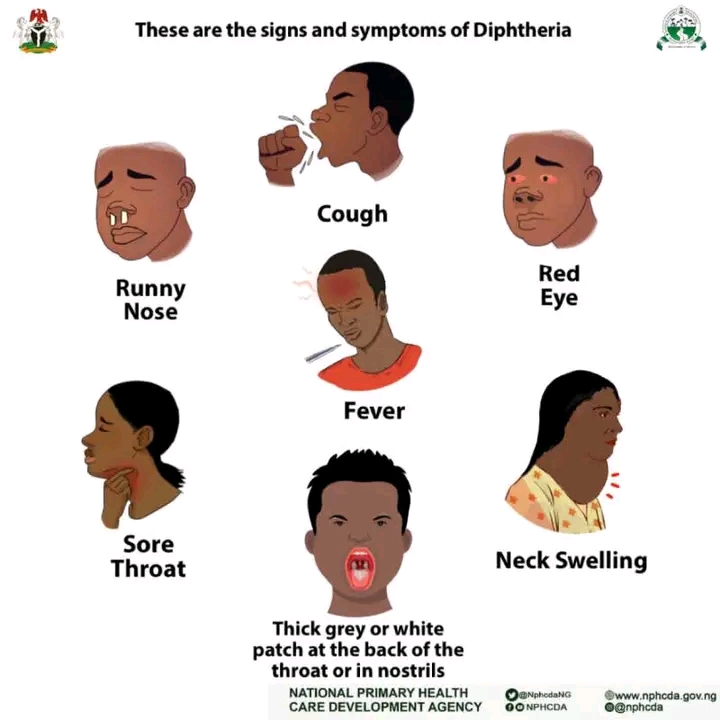
Fever, sore throat, weakness, swollen glands around the neck, runny nose and fatigue may appear harmless to an unsuspecting parent.
But diphtheria can become severe.
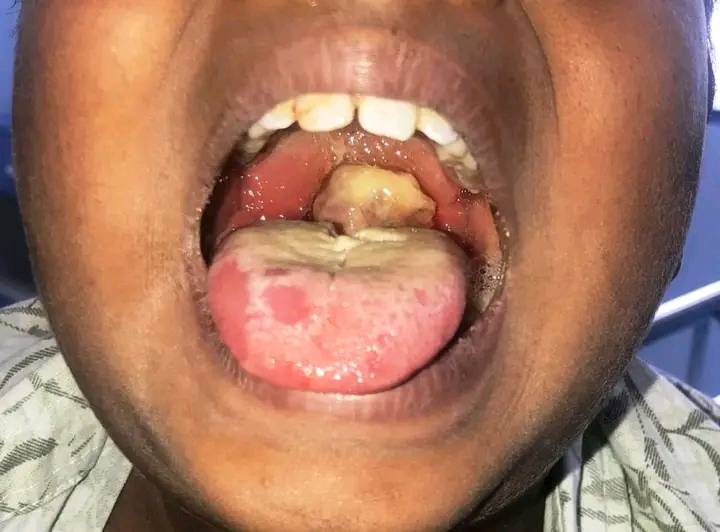
A thick, greyish-white membrane can form in the throat, making breathing and swallowing difficult, while the toxin produced by the bacteria can damage vital organs, including the heart and nervous system, and may lead to death.
Lubabatu Abdullahi, a resident of Layin Dan Maraya in Jos, lost her son, Umar Muhktar, to diphtheria after initially mistaking his symptoms for an ordinary illness.
“I lost my son Umar Muhktar to diphtheria in Jos. I thought it was just an ordinary cough, so I bought medicine and told him to go and sleep,” she said.
“By morning, he could barely eat. Later, we suspected malaria and I bought malaria drugs for him.”
Abdullahi said the family did not initially realise that he had diphtheria and did not take him to hospital.
“A day later, I noticed a growth in his throat. We then took him to a herbalist who gave us a concoction. We also gave him hot water and salt, but nothing changed,” she said.
“We hardly slept because of what he was going through. It was only after his death that we were told he had diphtheria.”
Her experience illustrates the danger of delayed diagnosis and treatment.
A mother may see her child’s fever and sore throat and decide to wait, but by the time the child reaches a hospital, the disease may already have progressed.
The vaccine paradox
Nigeria’s diphtheria crisis has been particularly pronounced in the northern part of the country.
According to the Nigeria Centre for Disease Control and Prevention, Kano, Borno, Bauchi and Yobe have been among the states with a high burden of the disease, while other states, including Katsina, Plateau, Niger, Kaduna and Lagos, have also recorded suspected or confirmed cases and active transmission at different periods.
In Katsina State, for instance, suspected cases have been reported across several local government areas, while Plateau has recently experienced a particularly severe outbreak in Jos North.
The pattern is significant because infectious diseases do not respect political or social boundaries.
A disease that begins in one community can move through households, schools, markets, workplaces and crowded settlements.
In areas affected by insecurity, displacement and poor access to healthcare, children may miss routine immunisation appointments.
Overcrowded living conditions can also facilitate transmission, while misinformation and vaccine hesitancy may create additional barriers to protection. Population movement can further complicate efforts to contain transmission.
No discussion of Nigeria’s diphtheria crisis is complete without Kano. The state has remained at the centre of the country’s prolonged struggle with the disease, requiring repeated vaccination campaigns, surveillance and treatment interventions.
But Kano also illustrates one of the central paradoxes of the crisis: emergency vaccination campaigns are being deployed against a disease for which routine immunisation already exists.
The question, therefore, is not simply whether Nigeria has vaccines.
It is whether the vaccines are reaching every child who needs them and whether children are receiving all the recommended doses.
Nigeria has included diphtheria-containing vaccines in its routine childhood immunisation programme for years.
The vaccine is not experimental or new. But having a vaccine and ensuring that every eligible child receives the recommended doses are two different things.
Children who are unvaccinated or incompletely vaccinated remain particularly vulnerable, demonstrating why vaccination cannot be treated as a one-time event. A child receiving one injection does not necessarily mean that the child has completed the required immunisation schedule.
Parents and caregivers need to know which vaccines their children have received, which doses are still required and whether they have completed the recommended schedule.
That is why the small piece of paper many parents keep inside a drawer — the immunisation card — can be more important than it appears.
The problem, however, is bigger than vaccines alone. It would be too simplistic to blame everything on parents.
A mother cannot vaccinate a child if she cannot reach a health facility. A father cannot complete a vaccination schedule if services are unavailable.
A displaced family may lose access to routine healthcare altogether. A community may distrust vaccines because of misinformation or poor communication. And a health worker cannot administer a vaccine that is unavailable.
The responsibility, therefore, stretches from the home to the health centre, from local governments to state ministries, and from communities to the Federal Government.
When prevention fails
This was also the message from the NCDC as Nigeria continues to battle outbreaks of cholera and diphtheria.
At a press conference on August 31, the NCDC Director-General, Dr Jide Idris, provided updates on the ongoing cholera and diphtheria outbreaks, highlighting progress made, continuing risks and response efforts by health authorities.
For diphtheria, Idris called on state and local governments to intensify efforts to close critical gaps, particularly through routine and targeted vaccination.
He also emphasised that healthcare workers, communities, traditional and religious leaders and the media have important roles to play in dispelling misinformation and promoting prompt care-seeking.
The message is important because the fight against diphtheria cannot be left to hospitals or government alone. Prevention must begin in homes and communities long before an outbreak arrives.
In Plateau, Baamlong said the government had stepped up public enlightenment campaigns across affected communities. Traditional rulers and other community stakeholders are also being engaged to support containment efforts and encourage residents to report suspected cases early.
But the state is facing another obstacle: laboratory confirmation. According to the commissioner, authorities have experienced difficulties confirming some suspected cases because of the unavailability of specialised containers required for proper collection and transportation of samples to laboratories.
That means that while health workers are battling to treat patients and prevent transmission, the system is also struggling with some of the basic logistics required to confirm infections.
When prevention fails, treatment becomes expensive. Once a child becomes seriously ill, the equation changes. Instead of a routine immunisation visit, there may be hospital admission.
Instead of a vaccination appointment lasting minutes, there may be days or weeks of treatment. Instead of prevention, families suddenly face medical bills, transport costs, lost working hours and the emotional burden of caring for a critically ill child.
For hospitals, outbreaks mean additional pressure on already stretched health facilities. Health workers must isolate suspected patients, trace contacts, collect samples, administer treatment and protect themselves from infection.
And when diphtheria antitoxin is unavailable or delayed, the challenge becomes even greater. This is why prevention remains cheaper, safer and more humane than waiting for children to become critically ill.
The NCDC’s wider response to the ongoing outbreaks also reinforces this principle. While treatment is essential, prevention must remain at the centre of Nigeria’s public-health response.
The same principle applies beyond diphtheria. The NCDC has also urged states and local governments to address the root causes of cholera by improving sanitation, providing safe water, strengthening waste management, ending open defecation and intensifying community health education.
Although these measures are primarily aimed at cholera prevention, they highlight a broader public-health lesson: disease outbreaks are often symptoms of deeper weaknesses in health systems, infrastructure, public awareness and community behaviour.
For parents, perhaps the most practical response is also the simplest: find the child’s immunisation card and check it.
Do not rely entirely on memory. “I am sure we vaccinated the baby” is not the same as knowing that the child received all the recommended doses.
If the card is missing or the vaccination history is uncertain, parents should speak with a healthcare professional rather than guess. And if an eligible child has missed a vaccination appointment, parents should seek professional advice rather than simply assume that it is too late.
Beyond fear
During a visit to Sabon Farin Quarters in Kwang, 10 people were asked if they were aware of diphtheria. Nine of them said they had no idea what the disease was about.
The responses are revealing. For a disease that can spread quickly and become fatal, lack of awareness can be almost as dangerous as lack of access to treatment.
Diphtheria is a serious and potentially deadly bacterial infection that mainly affects the throat and nose. It can spread from person to person through coughing, sneezing, close contact and respiratory droplets.
Children who are unvaccinated or have not completed their routine immunisations are particularly vulnerable, while adults who were never adequately vaccinated can also become infected.
For Kachollom Davou, her first encounter with the disease came years ago when she began hearing about the outbreak.
“That was how I got to know about the disease,” she said.
But the return of the disease in 2026 has left her concerned.
“For this same disease to be back in 2026, it shows that a lot has to be done in our health sector and also our environmental health in order to combat it permanently,” Davou said.
Her words point to a problem that goes beyond the existence of vaccines. Awareness, access to healthcare, environmental health and community participation all matter.
For diphtheria to be controlled, prevention must begin before an outbreak. Children should receive all recommended doses of diphtheria-containing vaccines, while people should avoid close contact with anyone suspected or confirmed to have the disease.
Good respiratory hygiene, regular handwashing and prompt medical attention for suspicious symptoms can also help reduce transmission. People should follow public-health guidance on protective measures and avoid sharing personal items with someone who is sick.
For the NCDC, the responsibility extends beyond government. Healthcare workers must provide accurate information and encourage early care-seeking.
Traditional and religious leaders can help communities understand the risks and challenge misinformation. The media can also help by providing accurate, timely and responsible information about the disease.
Communities must likewise be willing to listen, ask questions and seek medical attention when symptoms appear.
Most importantly, diphtheria is preventable, and early detection and treatment can save lives. Parents and caregivers should check their children’s vaccination status rather than wait for an outbreak to reach their community.
Know the signs, get vaccinated and seek care early. Katman Bawa recalled how his family initially misunderstood the illness.
“We were told by some people it was apata or bubu as called. I was told to wash it. I used hot water and salt, wrapped my finger with bandage and removed those white thick things. They would cry and wail in pain, but nothing was changing until a doctor diagnosed and told us it was diphtheria,” he said.
“Thank God it was treated.”
Diphtheria should not have to become a headline before families remember vaccination. A child should not have to struggle for breath before a parent discovers that the disease could have been prevented. A community should not wait for deaths before asking whether its children are protected.
Nigeria has the knowledge, vaccines and medical tools to fight diphtheria. But having the tools is not enough.
The harder part is ensuring that those tools reach the people who need them, that suspected cases are identified early, that hospitals have the necessary treatment, and that communities understand that prevention begins long before an outbreak arrives.
The NCDC’s message reinforces this reality: state and local governments must close gaps in vaccination and disease response, while communities, health workers, traditional and religious leaders and the media must help tackle misinformation and encourage early care-seeking.
Plateau’s 23 deaths and 143 suspected cases are, therefore, more than statistics. They are a warning that a vaccine-preventable disease can still exploit gaps in immunisation, healthcare access, public awareness and emergency response.
Before another fever becomes an emergency, before another cough becomes a crisis and before another family is forced to ask, “How did this happen?”, there is one small but important thing every parent can do: check that their children are adequately protected.
Because in 2026, the tragedy is not simply that diphtheria still exists.
The greater tragedy would be allowing a preventable disease to continue taking lives because the protection that could have stopped it never reached the child.