



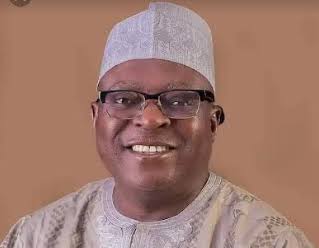
DAN MANJANG
No nation can achieve sustained industrialisation, create competitive businesses, improve healthcare and education or meaningfully reduce poverty without reliable and affordable electricity. But Nigeria, Africa’s most populous country and one of the continent’s largest economies, continues to grapple with inadequate and unreliable supply.
The central problem is not simply a shortage of generating capacity, but the interconnected weaknesses across the electricity value chain, principally involving the Generation Companies (GENCOs), Transmission Company of Nigeria (TCN) and Distribution Companies (DISCOs).
Nigeria’s electricity sector was unbundled following the Electric Power Sector Reform Act, with generation and distribution largely transferred to private ownership in 2013, while TCN remained government-owned, a structure designed to introduce competition, efficiency and private investment.
More than a decade later, however, the expected transformation has not been fully achieved.
Generation, transmission bottlenecks
Electricity generation is the first stage of the chain, with GENCOs producing power principally from natural gas and hydroelectric sources, while independent power producers also contribute to national supply.
Nigeria possesses considerable natural gas reserves and substantial hydroelectric potential, in addition to enormous opportunities for solar, wind, biomass and other renewable sources.
The paradox is that the country has installed generating capacity considerably higher than the electricity actually available to consumers, with the Nigerian Electricity Regulatory Commission’s (NERC) April 2026 operational factsheet reporting 13,625 megawatts (MW) of installed grid-connected capacity but only 4,286MW available for dispatch on average, representing a plant availability factor of just 31 per cent.
This illustrates one of the fundamental misconceptions about Nigeria’s power crisis: building generating plants alone will not solve the problem.
GENCOs face several difficulties. These include inadequate and unreliable gas supply, gas-payment challenges, ageing generating equipment, insufficient maintenance, foreign-exchange constraints, high operating costs and inadequate liquidity across the electricity market.
Generators may, therefore, have the physical capacity to produce electricity but lack the fuel or financial capacity to operate consistently.
The solution requires a dependable gas-to-power framework in which gas producers are paid, GENCOs remain financially viable, and power purchase agreements are credible and enforceable.
Government should also aggressively diversify the generation mix by encouraging hydro, solar, wind, biomass and other appropriate technologies, while particularly promoting embedded and distributed generation to enable industries, universities, hospitals and communities to generate power close to where it is consumed.
Between generation and the consumer lies transmission, with TCN responsible for moving bulk electricity from generating plants through high-voltage transmission lines and substations to distribution networks.
This remains one of the most critical weaknesses in Nigeria’s electricity system because a generating plant may produce electricity. But if the transmission network cannot evacuate it, that electricity is effectively stranded.
The World Bank’s recent National Energy Compact for Nigeria states that the transmission network requires significant improvement, noting that ageing and poorly maintained infrastructure limits the system’s ability to evacuate available generation.
The compact identifies a 2024–2026 TCN investment programme involving substantial capital expenditure from both tariff and non-tariff sources.
Nigeria, therefore, needs a massive and sustained transmission investment programme covering new transmission lines, substations, transformers, protection systems, control systems and modern grid-management technology.
TCN must also strengthen preventive maintenance, as attention is too often directed towards repairing infrastructure after failure rather than maintaining it before failure.
The country needs a transmission system capable of handling significantly more electricity than today’s average demand because generation capacity will continue to grow.
Furthermore, the electricity grid must become more resilient, as a modern Nigeria cannot continue to depend excessively on a fragile, centrally controlled national grid.
Regional grids, mini-grids, embedded generation, battery storage and other decentralised solutions should complement the national grid.
DISCOs, the broken value chain
The DISCOs are responsible for taking electricity from the transmission network and delivering it to homes, businesses and industries, making them the face of the electricity industry for most consumers.
Unfortunately, distribution remains one of the weakest links in the chain, with the World Bank’s 2026 National Energy Compact reporting that DISCOs have been experiencing very high aggregate technical, commercial and collection losses, averaging about 47 per cent across the sector.
These losses arise from several sources, including obsolete networks, overloaded transformers, inadequate metering, electricity theft, illegal connections, poor billing systems and non-payment of electricity bills.
Consequently, electricity that has already been generated and transmitted does not necessarily translate into electricity revenue.
Metering is particularly important because customers who are not properly metered may dispute their bills, while utilities cannot accurately measure consumption.
Nigeria, therefore, needs universal, reliable and tamper-resistant metering, supported by digital billing and transparent customer-service systems.
Consumers, however, also have responsibilities, as electricity theft is not a victimless crime. Illegal connections and meter bypasses increase losses, damage infrastructure and ultimately contribute to higher costs for honest consumers.
The crisis in Nigeria’s electricity sector is ultimately a value-chain problem. GENCOs need money to generate electricity, TCN needs money to maintain and expand the transmission network, and DISCOs need money to operate and upgrade distribution infrastructure.
Consumers, meanwhile, need reliable electricity before they are willing to pay consistently, while government has historically had to intervene financially because tariffs and market revenues have not always covered the actual cost of supplying electricity.
This creates a vicious cycle of poor generation leading to inadequate supply, weak distribution revenue, poor investment, deteriorating infrastructure, higher losses, weaker revenue and further deterioration.
Breaking this cycle requires reforming the entire chain simultaneously rather than addressing individual components in isolation.
Building a sustainable electricity sector
Nigeria needs cost-reflective but socially responsible electricity tariffs because power cannot sustainably be supplied below its economic cost indefinitely. However, tariff reform must protect poor and vulnerable Nigerians through targeted subsidies rather than blanket subsidies that benefit everyone, including those who can afford to pay.
The government and private sector must also establish a bankable investment environment because investors will not commit billions of dollars where contracts are uncertain, payments are unreliable or regulatory rules change unpredictably.
GENCOs must be guaranteed adequate gas supply and payment discipline, while gas-to-power infrastructure should be treated as strategically important national infrastructure.
TCN must receive sustained investment to modernise the transmission network, with the country moving towards a stronger, smarter and more decentralised grid supported by modern digital monitoring and control technologies.
DISCOs, on their part, must be subjected to measurable performance obligations, with their licences and investment arrangements tied to clearly defined targets for metering, loss reduction, reliability, customer service and network expansion.
Companies that consistently fail to meet agreed standards should face credible regulatory intervention. Nigeria should also accelerate the development of renewable and decentralised electricity, as solar mini-grids can provide reliable power to rural communities, while embedded generation can support industrial clusters, universities, hospitals and commercial centres.
Renewable energy should not be regarded as a replacement for the national grid, but as an important complement to it.
Finally, there must be discipline and accountability throughout the electricity sector. Government agencies must pay their electricity bills, consumers must pay for electricity consumed, DISCOs must remit their obligations, GENCOs must meet contractual commitments, TCN must maintain the transmission network, and NERC must enforce the rules fairly and consistently.
Nigeria does not merely have an electricity-generation problem; it has a generation, transmission, distribution, financing, regulatory and governance problem. The fact that installed generating capacity can far exceed the amount actually available for dispatch demonstrates that capacity without reliability is of limited value.
The country must, therefore, stop treating GENCOs, TCN and DISCOs as isolated institutions because they are interconnected parts of one electricity ecosystem.
Reforming one while neglecting the others will produce limited results. Nigeria’s objective should be clear: generate more, transmit more, distribute more, waste less and collect more efficiently.
Achieving this requires investment, competent management, transparent regulation, technological modernisation, consumer responsibility and political consistency.
If these measures are pursued simultaneously and sustained beyond political cycles, Nigeria can transform electricity from a chronic national problem into a foundation for industrialisation, employment, investment and an improved quality of life.
The country has the resources; what it has lacked is the combination of effective policy, infrastructure, investment, accountability and sustained implementation necessary to turn those resources into dependable power.
Manjang, mnipr, M.Div, former Plateau State Commissioner of Information and Communication, writes via danmajang@gmail.com