




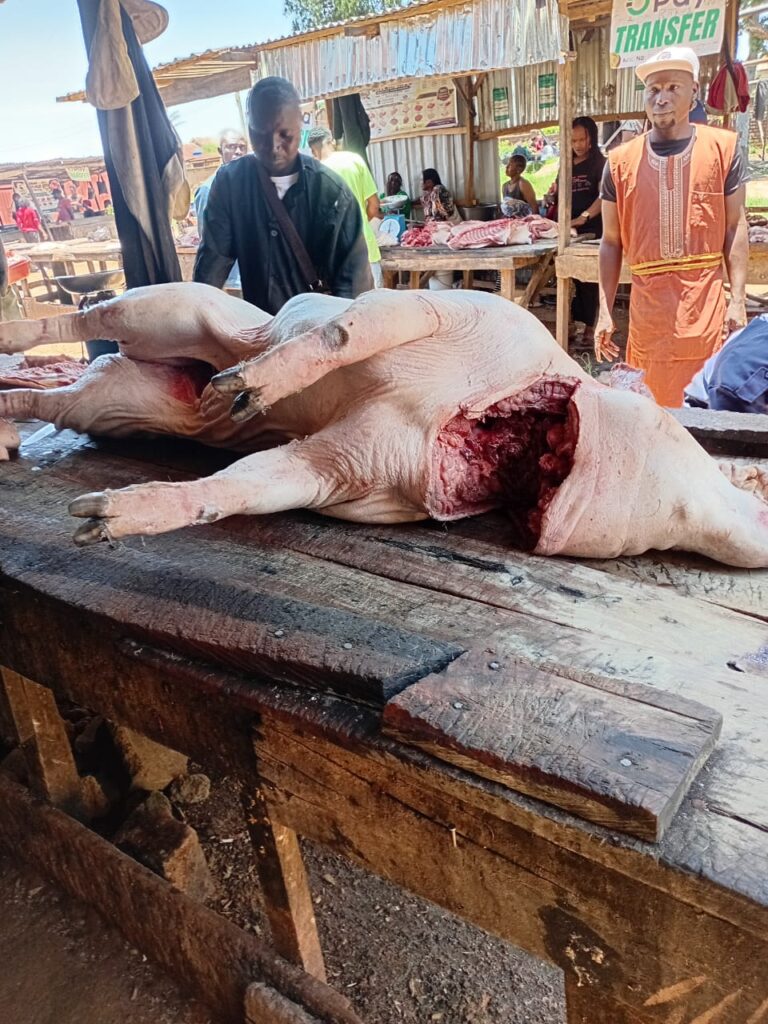
What was once a modest livestock venture is fast becoming a serious money-making enterprise, with farmers, traders and processors finding new value at almost every stage of the pig production chain. ALFRED NANMAN explores the forces behind Nigeria’s emerging pork economy, from rapid animal growth and multiple revenue streams to changing consumer habits, modern processing and the prospects for youth employment and food security
Pork was once largely overlooked in Nigeria due to cultural, religious and personal beliefs. But in recent years, the narrative has changed.
Driven by economic hardship and a growing interest in animal husbandry, many Nigerians have ventured into pig farming, while increased research and changing consumer tastes have made pork one of the fastest-growing and most sought-after meats in the country.
Today, pork is no longer simply “neglected meat.” It has become a “hot cake,” so to say.
Historically, pigs were reared and sold in only a few locations, although consumption remained high in some parts of Plateau State.
In places such as Qua’an-Pan, Langtang North and Langtang South, pork is deeply woven into the culture, with some families in Langtang preparing only pork during festive periods such as Christmas.
In Qua’an-Pan Local Government Area, pork is also considered an important part of the bride price.
Several factors contributed to the low consumption of pork in the past, with many people regarding it as “dirty meat” because of the conditions in which pigs were traditionally raised.
Pigs were often kept in poor and unsanitary environments, which discouraged many Nigerians from consuming pork, unlike consumers in several developed countries.
Another factor was the method of sale, as middle-class buyers had little trust in the way pork was marketed.
It was mostly hawked at roadside spots and was rarely found in supermarkets due to the lack of modern retail outlets, particularly in Plateau State, until recently.
That has now changed, as pork is increasingly sold in major supermarkets such as Shoprite, Supermart.ng and Butcher’s World Nig Ltd, where customers can purchase it in clean and more comfortable environments.
In addition, pork is now served in hotels, barbecue spots and lounges across the country, making it more accessible to middle-class consumers.
Religious beliefs have also played a significant role in determining pork consumption in Nigeria.
In Islam, the consumption of pork is prohibited, and Flight Lieutenant Imran Zakariya, Chief Imam of the Nigerian Air Force Station Central Mosque, Jos, explained that the prohibition is established in several verses of the Qur’an.
“Islam permits the consumption of livestock while prohibiting the consumption of pigs and dogs, which are slaughtered without proper rites,” he said.
“This prohibition is stated in Q2:173, Q5:3, Q6:145 and Q16:115, while the four major Sunni schools of thought — Hanafi, Maliki, Shafi’i and Hanbali — as well as Shi’a jurisprudence, unanimously agree that consuming pork is strictly prohibited in Islam.”
Pig farming: A fast-growing business
Despite these cultural and religious considerations, the situation has changed significantly over the past five to 10 years. This is largely due to improvements in farming and processing methods.
Commercial pig farms now employ biosecurity measures, vaccination and proper feeding methods, while processing companies package pork into products such as sausages, bacon and frozen cuts.
The product now appears cleaner and more modern to consumers, a development that has helped to increase confidence in pork.
One of the biggest attractions of pig farming is its profitability. Now pigs grow rapidly and can reach a market weight of between 80kg and 100kg within six to eight months.
They also have high reproductive rates, with one sow capable of giving birth to between 10 and 12 piglets and, in some cases, producing two litters in a year.
This means that a single sow can potentially produce 20 to 24 piglets annually, allowing farmers to scale up their operations rapidly.
Pigs also offer multiple income streams, as farmers can sell fresh meat, bacon, lard and “ganda” or hide from one animal.
Pig fat, or lard, can be used in cooking and in the preparation of products such as bread, burgers and sandwiches, while pig manure can be used as organic fertiliser.
Another advantage is the relatively low input and quick turnaround time, as pigs do not require as long a period to mature as cattle.
With limited space and adequate feed, farmers can begin to see returns in less than a year, making pig farming attractive to young people as an agribusiness with quick returns.
Bulus Wanka, Chairman of Pork Sellers at the Jos Main Abattoir, attested to the profitability of the business.
“Pork is one of the cheapest meats now. A kilo of pork is ₦5,000 compared to beef at ₦7,000,” he explained.
“I built my house from this business, and so did many of my colleagues. At first, I looked down on the business until I saw the income. A boy of mine started with ₦5,000 and today he has almost ₦1 million from this business.”
He advised Nigerian youth to embrace pig farming instead of complaining about unemployment.
“You can start small and, with consistency and patience, grow big in this business,” he added.
Dr Jerry Jang of the Ministry of Livestock and Fisheries told THE NIGERIA STANDARD that pork is highly nutritious.
“Pork is proteinous and is generally considered white meat because of its low cholesterol,” he said.
“The fat in pork is not harmful. Pork is the most consumed meat in the world today, especially in Asian countries. It has high-quality, complete protein with all nine essential amino acids. It helps build muscle and tissue repair.”
Dr Jang added that pork was also rich in B vitamins and contained nutrients such as iron and zinc.
“B1 helps convert food to energy and supports nerve function. It contains heme iron, which the body absorbs better than iron from plants, and helps prevent anaemia. It is also a good source of zinc, which is important for the immune system and wound healing,” he explained.
Demand creates new opportunities
The demand for pork continues to rise as more Nigerians discover the product and its uses, while pig farming is increasingly attracting young people because it is relatively fast, profitable, scalable and does not require large expanses of land.
Pigs can also feed on grains and some food waste, making them useful in recycling certain agricultural and food-processing by-products.
With relatively low production costs, large litters and steady market demand, pork production has the potential to create numerous jobs and generate additional income from its various by-products.
From being regarded as a “neglected meat”, pork has transformed into a growing agribusiness opportunity in Nigeria.
With improved hygiene, modern processing techniques and increasing consumer demand, the pig industry could play a significant role in the country’s food security and youth employment efforts.