



By Rev. JOHN OKWII
A wedding is supposed to announce joy, with families gathering, food prepared, music playing and everyone hoping the occasion will be remembered for happiness.
But at Cana, a crisis was developing behind the celebration: “They have no wine” (John 2:3).
There was no public announcement or emergency meeting, yet the crisis was real. The wedding continued while the supply was disappearing.
That is how many families, churches and nations look today. The celebration is visible, but the crisis is hidden. Some families and marriages are functioning while their “wine” is finished; some churches are singing while their spiritual wine is disappearing; and some leaders are wearing robes while their inner strength is exhausted.
Cana, however, teaches that a crisis does not become impossible simply because human resources have reached their limit. There was still Jesus, and when Jesus is present, the story is not finished.
The ordinary vessel
Jesus was invited to the wedding. But He did not need the chief seat to perform the chief miracle. He did not demand recognition or insist on being introduced as the Guest of Honour. He simply was there.
This is a lesson for the African Church, which can sometimes become too concerned with titles, positions, platforms and public recognition. The person occupying the highest chair is not necessarily the person carrying the highest authority.
There are people sitting at the back of the church carrying answers for those sitting at the front. There are prayer warriors whose names never appear on programmes, mothers praying quietly at home, young people whose gifts are overlooked and elderly saints whom society considers obsolete.
Yet, heaven may have deposited something inside them that the platform cannot manufacture.
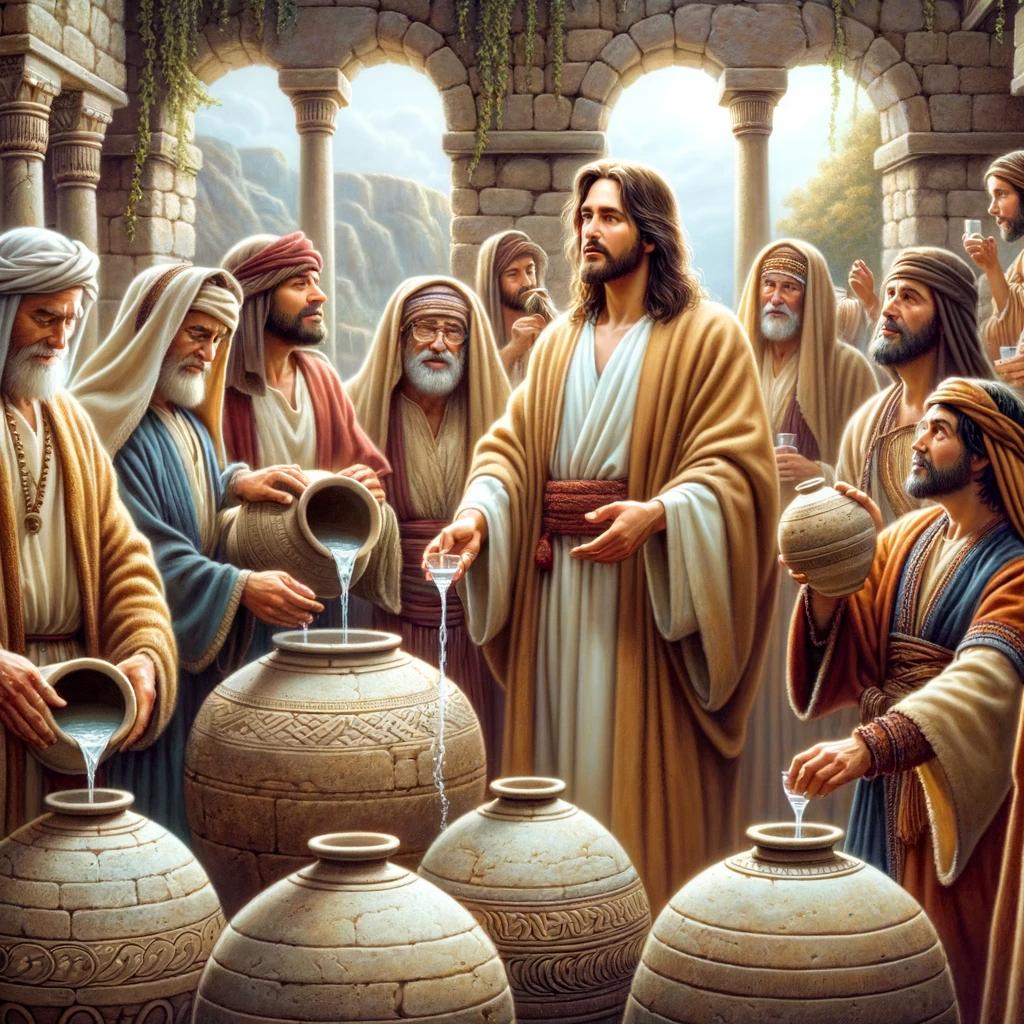
John tells us that six stone jars stood at Cana, used for Jewish purification customs. They were ordinary vessels with an ordinary purpose. Nobody came to the wedding looking for them. Then Jesus gave them a new assignment.
This reminds us that what has been ordinary for generations can become extraordinary when it comes under divine command. The jar did not change its material; Jesus changed its use.
Africa has many such “stone jars”: elderly people, traditional knowledge, unused buildings, abandoned schools, rural churches, young graduates, women whose gifts have been ignored, retired ministers, farmers, artisans, teachers, scientists, students and local communities.
We often ask, “What can this give us?” Jesus asks, “Can I use this?” That is a different question.
The jar also did not become the wine. It became the carrier of what Jesus created. The miracle was not in the vessel but in Christ.
Paul says, “We have this treasure in earthen vessels” (2 Corinthians 4:7). The preacher is not the power. The church building is not the power. The denomination, choir, bishop, prophet or academic degree is not the power.
Jesus is the source. We are containers, and we do not have to be spectacular to be useful. We have to be available to the Master.
When the best wine comes
The governor of the feast remarked that the best wine had been saved until last. What appeared to be the end was actually the beginning of a superior provision.
That is a message to anyone who believes their best days are behind them. Cana says: not necessarily.
Families may have experienced difficult seasons, churches may have passed through embarrassment, ministries may have suffered depletion, and nations may have endured painful periods. Yet the Gospel does not teach that history must end in embarrassment.
Jesus can intervene when human resources end.
After the miracle, however, the jars did not become celebrities. The wedding couple received attention, the governor received attention, the wine received attention, but Jesus received the glory.
The jars simply remained jars. This is the humility of the vessel. If God uses you, do not become the object of the miracle you carried. The jar carried the wine, but the jar was not the wine.
The same lesson appears in the triumphal entry into Jerusalem. Jesus rode on a colt, but nobody worshipped the donkey. The colt carried Jesus; the jar carried the wine.
A servant can carry an assignment, a child can carry a prophetic future, a small church can carry a great mission, a poor community can carry extraordinary wisdom, and a neglected institution can become an instrument of renewal.
The Church also has a dangerous habit of celebrating the wine while forgetting the jar. We celebrate the preacher but forget the prayer warrior, the cathedral but forget the cleaner, the missionary but forget the local believer, the pastor but forget the Sunday-school teacher, and the harvest but forget the farmer.
Never become so fascinated with the spectacular that you forget the ordinary things God used to produce it.
Where are the jars?
John’s theological conclusion is that Jesus’ first sign at Cana “manifested his glory”. The wine was not the final message. Jesus was. The miracle was a sign pointing beyond itself. The jars, servants and Mary all point us to Christ. The Church must, therefore, never stop at the miracle. The miracle is not the destination; Christ is the destination.
Cana teaches that God can use neglected vessels, ordinary things can become extraordinary under divine command, obedience can precede understanding, and God can begin with what we already possess. It also teaches that hidden crises can meet hidden grace and that God’s instruments do not need public recognition.
A word to Plateau State, Nigeria, Africa
Plateau has known seasons dominated by pain, conflict, displacement, insecurity and uncertainty. But perhaps the Church needs to stop asking only, “Who caused the crisis?” and begin asking, “Where are the jars?”
Where are the people who can carry reconciliation? Where are the teachers, young people, women, pastors, scientists, farmers, entrepreneurs and peacemakers? Plateau does not only need another discussion about its problems. It needs servants who will fill the jars.
Nigeria also has many jars: universities, churches, schools, farms, young people, traditional institutions, entrepreneurs, women, scientists, artisans, local communities and media organisations.
Some have been neglected, abused or left standing in the corner. But the question is not, “Are they impressive?” The question is, “Can Jesus use them?”
Nigeria’s transformation may not begin with the most celebrated people. It may begin with ordinary servants who hear: “Fill the jars.”
Africa has often been treated as though it were merely a recipient of someone else’s wine, but Cana challenges that mentality.
Africa has people, creativity, hospitality, communal structures, intellectual traditions, agricultural resources, universities, churches, entrepreneurs, artists, scientists and technology innovators that God can use.
The question is whether these vessels will be placed under the command of Christ. The miracle is not produced by the jar, but without a vessel willing to be filled, carried and poured out, the miracle cannot be served to the guests.
Perhaps you feel like one of those jars. You may have been overlooked, used only for ordinary things or left standing in the corner wondering whether your life still matters. Cana answers: Yes.
You may be ordinary, but you are available. You may be overlooked, but you are still standing. You may not be on the high table, but you can still be in the Master’s hands.
You may only have water. Give Jesus the water. You may only have a small church. Give Jesus the church. You may only have a small gift. Give Jesus the gift.
When Jesus touches what is placed in His hands, water can become wine, shame can become celebration, scarcity can become abundance and embarrassment can become testimony.
The jars did not know that their moment had come. But Jesus knew. So let the African Church hear this: do not despise the jar, the water, the servant or the ordinary. Do not despise what God has already placed around you.
Put it in the hands of Jesus. For when the Master touches the vessel, the ordinary can carry the extraordinary. And when the Church obeys, the water can become wine.
Crux sola est nostra theologia. Solus Christus! Amen.
Rev. Prof. John Brown Okwii, the
Serving Pastor, Assemblies of God Church, Hwolshe, opposite Model Academy, along Yakubu Gowon Way, Jos, writes via johnbrownokwii@gmail.com