



In this piece, SAMSON ILIYA examines the dangerous gap between security presence and effective security in Plateau State, arguing that checkpoints designed to protect communities can become vulnerabilities when officers prioritise petty bribes over intelligence and proper screening. He traces the wider consequences of insecurity and weak enforcement across farming, education, commerce, religious life and public trust, while proposing stronger oversight, accountability and community participation as a path towards a safer Plateau and a more dependable security system
A society that cannot sleep at night cannot work in the morning. A society that cannot farm cannot eat. A society that cannot gather for worship, for school, for market or for naming ceremonies is a society that is already bleeding, even if the headlines have not caught up yet.
That is why security is everyone’s business. It is not the business of soldiers alone, or police alone, or vigilantes alone. It is the business of the teacher who must decide if it is safe to open school, the business of the trader who must decide if it is safe to bring goods to market, the business of the pastor and imam who must decide if it is safe to hold a night vigil.
Without security, every other structure in society collapses. The economy stalls. Education is interrupted. Religious and communal life is fractured. Peaceful coexistence becomes a memory people talk about in the past tense.
Nowhere is this truth more visible today than in Plateau State.
Decades under siege
For decades, Plateau State has been battling insecurity that does not rest. It is not one kind of violence. It is many, layered on top of each other until the people can no longer tell where one ends and the next begins.
There are frequent attacks on people in their farms. A farmer leaves home at dawn to tend to maize and yam and does not return. There is land grabbing, where entire communities wake up to find their ancestral lands occupied by people with guns and a different story.
There are kidnappings here and there, on highways, in villages and even near urban centres. There are reprisals, rumours and a constant hum of fear.
The impact has not stayed within Plateau. When Plateau bleeds, Nigeria feels it. Plateau is part of the food basket. When farmers abandon their fields, food prices climb in Jos, Abuja and Lagos. When communities are displaced, schools close, children drop out, and the next generation grows up with trauma instead of textbooks. When trust between neighbours dies, it is replaced by suspicion, and suspicion is a very poor foundation for any nation.
So the question became urgent: what do we do?
More boots, more barriers
The state and federal governments responded the only way the state knew how at first: with presence.
The Nigerian military was deployed to hotspots. The Nigeria Security and Civil Defence Corps was given a wider mandate. The police increased patrols. And because the state understood that government alone could not reach every trail and every hill, local vigilante groups were mobilised. These are men who know the terrain, who know which stranger does not belong, and who can tell the difference between a herder passing through and a scout planning an attack.
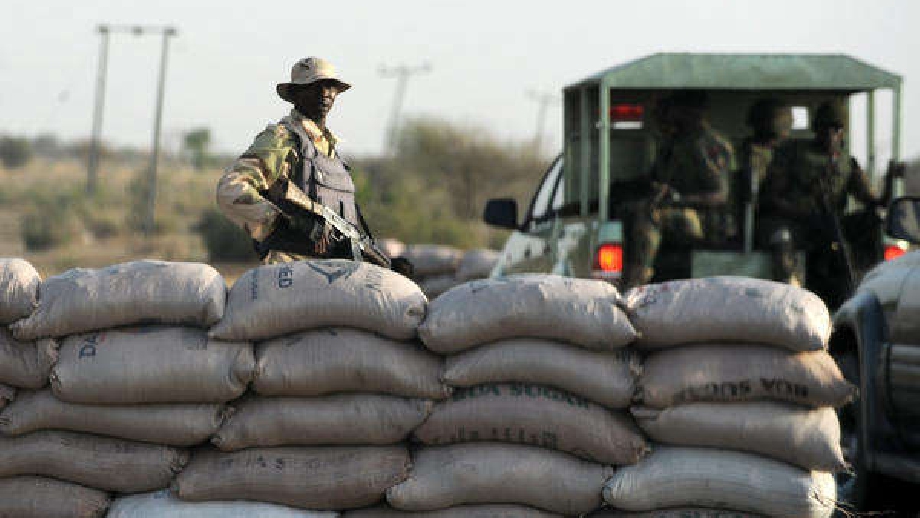
Checkpoints sprang up in rural communities, at the entrances of towns and even inside urban areas in Jos, Bukuru and other places that used to feel safe. The idea was simple. If we can see everyone who enters and leaves, we can stop trouble before it starts.
The government also intensified regulation of movement. Tricycles, popularly called Keke, and motorbikes were restricted. No movement after 7 pm. The logic made sense. Criminal elements use mobility to strike and disappear. If you take away night mobility, you take away some of their advantage.
To a degree, it worked. Night attacks became harder. Snatch-and-run operations reduced. People reported feeling a little safer knowing that at 7:05 pm the roads would be quieter.
For a moment, it looked like the state was regaining control.
But then the gate became a market.
Here is where the story turns, and where we must speak plainly, because silence is part of what is killing us.
Some of the very security personnel whose main duty is to protect lives and property began to turn that duty into a business. The business is ₦200.
Here is how it works. Curfew starts at 7 pm. But a Keke rider is still on the road at 7:30 pm. Of course, he should be stopped, questioned and, if necessary, turned back. Instead, at the checkpoint, the transaction is short and crisp: “Oga, ₦200.” The rider brings out two hundred naira. The officer hurriedly pockets it and waves him through.
No one checks who is inside the tricycle. No one asks where they are going. No one searches what they are carrying. The same thing happens to the bike man. ₦200, and the questions disappear.
Now multiply that by ten checkpoints in one night. Multiply it by 30 days. Multiply it by all the Keke and bike riders in the state. What you have is not security. You have a toll gate.
And that is why citizens are asking the painful question: how is it that we can have a checkpoint on this road, and yet that same night, terrorists will still enter the same community and launch an attack? How? When? Who opened the way?
The answer is uncomfortable. When a checkpoint is for sale, it is no longer a checkpoint. It is a gaping hole. When an officer’s eyes are on the cash in his hand instead of on the people in the vehicle, then anything can pass. Weapons can pass. Suspicious people can pass. Danger can pass.
We are not saying every officer is corrupt. Many are serving with courage under terrible conditions. Poor pay, poor equipment, long hours, and they still stand in the rain. But a system that rewards bribery will eventually drown out the good ones. And a few bad ones in uniform can erase the sacrifice of the many.
Some will say, “It is just ₦200. Let them manage.” But ₦200 is not small when you understand what it buys.
It buys the erosion of trust. When citizens see that the law is negotiable, they stop believing in the law.
It buys risk. That ₦200 means no proper search was done. It means a car bomb, a kidnapper or a gun could have passed because someone was in a hurry to collect.
It buys impunity. Once officers learn they can sell access at night, they will sell information during the day. They will sell warnings. They will sell silence.
It also buys economic damage. Farmers who should be moving produce early in the morning now have to factor in bribes. Transport costs go up. Food becomes more expensive. The poorest people pay twice: once at the market and once at the checkpoint.
And worst of all, it buys the feeling that government is not serious. When people see checkpoints everywhere and attacks still happening, they conclude that the state is either incompetent or complicit. Neither conclusion builds a nation.
The ripple effect, what must be done
This is why security is everyone’s business. Because when security fails at the checkpoint, everything else fails downstream.
Schools: Parents are afraid to send children to schools far from home. Teachers refuse postings to rural areas. Learning hours are cut short so everyone can be home before dark. An entire generation loses time.
Economy: Markets close early. Farmers abandon fertile land because the road to it is not safe. Investors do not come to a place where they must negotiate with both government and fear. Unemployment rises, and idle youth become easy recruits for crime.
Religious and communal life: Night vigils are cancelled. Festivals are scaled down. People stop visiting neighbours in other villages. The fabric that held Plateau’s diverse communities together begins to tear.
Health: Ambulances are delayed at checkpoints. Pregnant women in labour are asked for ₦200. People die not just from attacks, but from delays.
All of this because we allowed security to become a business transaction.
The government of the day must move beyond deploying more men and start cleaning the system. Presence without integrity is just theatre.
Here is what an investigative strategy should look like:
Audit the checkpoints. Unannounced inspections by independent teams. Include officers from outside the command, civil society representatives and use technology. Body cameras, logbooks and random vehicle checks. If ten Kekes passed in 20 minutes and none were searched, someone must answer questions.
Punish publicly and consistently. Any officer caught collecting bribes at a checkpoint should face dismissal and prosecution. Not a transfer. Not a query. Real consequences that other officers can see. When people know there is a cost, behaviour changes.
Remove the pressure that creates bribes. Pay allowances on time. Provide proper kits, fuel and communication equipment. Rotate personnel so no one stays too long in one location to build a bribe network. An officer who is owed three months’ allowance is an officer who is vulnerable.
Bring citizens in as partners. Create safe reporting channels. A dedicated phone line and WhatsApp number for reporting checkpoint extortion, with protection for whistleblowers. Community security committees in every LGA that meet monthly with security heads. When citizens can speak without fear, patterns of abuse are exposed quickly.
Address the root causes. Security will not hold if we ignore why people pick up arms. Land disputes need urgent and fair resolution. Displaced persons need support to return and farm. Youth need jobs and skills so that ₦200 at a checkpoint is not the best job offer they will get this week.
Government must lead from the front. But citizens must also stop enabling the problem.
If you are a Keke rider, refusing to pay ₦200 will be hard. You may be delayed. You may be threatened. But every time you pay, you are funding the next hole in security. If you see something, say something. Use the reporting lines.
If you are a community leader, ask questions at the checkpoint. Who is the commander here? Where is the logbook? Let the officers know that the community is watching.
If you are a journalist or activist, follow the money. How much is being collected daily? Where does it go? Shine a light on it.
Security is everyone’s business because an army cannot be in every farm. A police officer cannot ride in every Keke. But a community that refuses to normalise bribery is a community that is harder to attack.
Imagine Plateau six months from now if we get this right.
For instance, if the 7 pm curfew is still in place, it woould be enforced with dignity. A Keke is stopped at 7:15 pm. The officer asks where the passengers are going. He checks inside. He writes the plate number in a book. No money changes hands. The rider complains but complies, because he knows the next checkpoint will do the same.
A vigilante group gets a tip about strange movement in a community. They call a number that is answered. A patrol arrives within 20 minutes. The threat is averted. The next morning, farmers go to their fields without looking over their shoulders.
In the market, tomatoes are cheaper because the truck did not pay five bribes on the way from the farm. In the school, children stay till 3 pm because parents trust the road home. In the church and mosque, night prayers return because people believe the night is watchable again.
That is not wishful thinking. That is what happens when we decide that security is not just about guns, but about accountability.
Plateau State has carried too much for too long. The attacks on farms, the land grabbing, the kidnappings and the displacement have cost lives, livelihoods and trust. The government’s response with the military, police, civil defence and vigilantes, plus the regulation of Keke and bikes after 7 pm, was necessary. It has helped a bit.
But help is not healing when the very people tasked to protect us are turning checkpoints into cash points. Collecting ₦200 without checking who is in the vehicle, what they are carrying or where they are going is not security. It is gambling with lives.
We must ask how, when and who is allowing attacks to happen in communities that have checkpoints. The answer will often lead us back to corruption, compromise and a lack of oversight.
The government of the day must now come up with a deliberate investigative strategy to sweep out these corrupt officers. Audit them. Expose them. Dismiss them. Prosecute them. At the same time, equip the honest ones, pay them well and involve communities in the work of watching.
Because at the end of the day, security is not a gift government gives to citizens. It is a contract between government, security agencies and the people. When one side breaks it for ₦200, the whole contract collapses.
Plateau deserves more than checkpoints. Plateau deserves safety. Nigeria deserves more than reactions. Nigeria deserves systems that work.
Until we treat security as everyone’s business, and until we treat corruption in security as everyone’s enemy, we will keep building gates that do not close and wondering why the enemy keeps walking in.