


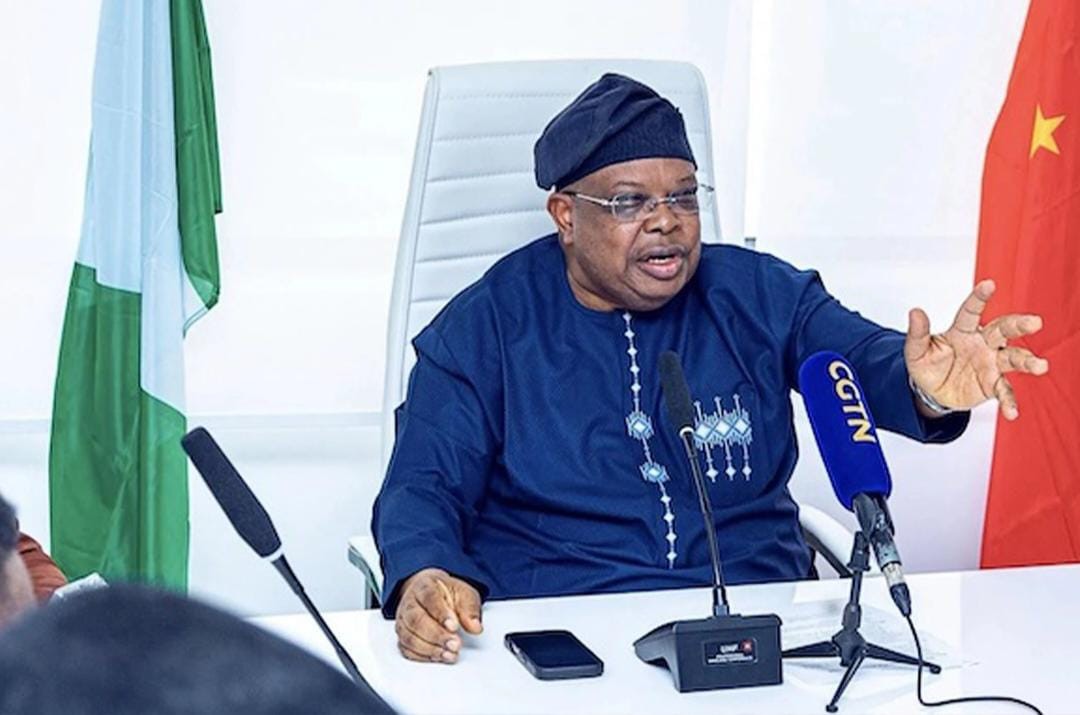

Nigeria’s power sector may be showing signs of improvement, but claims of a dramatic transformation must ultimately be tested against verifiable evidence, not anecdotes about working freezers. DAN MANJANG argues that while the Minister of Power, Joseph Tegbe, deserves the opportunity to improve electricity supply, Nigerians are entitled to know where the reported 18-hour supply is being achieved and whether such improvements are reflected in national electricity data
The Minister of Power, Mr Joseph Tegbe, deserves commendation for acknowledging the importance of improving electricity supply in Nigeria.
However, his recent claim that some Nigerians have asked him to “slow down” because their freezers are now working continuously raises an important question: which Nigerians, and in which part of the country, made this extraordinary request?
Nigerians deserve to know whether the statement refers to a particular community, state, electricity distribution franchise area or simply an isolated conversation.
If some communities that previously had no electricity for three months are now enjoying 18 hours of supply every day, as the minister claimed, the Federal Government should publish the locations of those communities and the corresponding distribution data.
This is not an unreasonable demand. Electricity is a measurable public service, and claims of dramatic improvement should be capable of independent verification through feeder-level records, metering data and reports from the relevant Distribution Companies.
Beyond the freezer anecdote
The freezer anecdote, while childish and amusing, should not become the yardstick for measuring Nigeria’s electricity revolution. A freezer freezing food is not evidence of reliable electricity across Nigeria.
Millions of Nigerians still depend on generators, inverters and solar systems because public electricity remains insufficiently dependable for homes and businesses. The minister himself has acknowledged the enormous structural problems confronting the sector, including ageing infrastructure.
Indeed, the national grid figures available around the time of the minister’s statement do not suggest that Nigeria has suddenly entered an era of abundant electricity.
For September 15, the reported peak generation was about 4,774MW, while total energy sent out was about 98,459MWh. The same data show varying load allocations across the DisCos, demonstrating that electricity availability remains a matter of uneven distribution rather than a uniformly experienced national transformation.
It is, therefore, important for the minister to distinguish between improvement in some locations and a nationwide transformation. There is nothing wrong with celebrating an improvement where it has occurred.
What is questionable is using the experience of unidentified consumers to create the impression that Nigerians generally have so much electricity that they are pleading for less of it. The reality of electricity supply should ultimately be established by independently verifiable statistics rather than humorous anecdotes.
The minister also said during the commissioning that some places which had been without electricity for three months are now enjoying up to 18 hours of supply. Again, Nigerians should be told where these places are.
Are they in Abuja, Lagos, Oyo, Plateau, Kaduna, Kano, Rivers, Enugu, Benue, Kebbi or elsewhere? Naming the locations would allow Nigerians to appreciate the achievement and, more importantly, enable the claim to be independently tested.
Cost of unreliable power
There is also a danger in making light of a problem that has imposed enormous economic costs on Nigerian households and businesses for decades. For small businesses, hospitals, schools, artisans, manufacturers and ordinary families, electricity is not merely about whether a freezer is freezing.
It determines whether a business can remain open, whether food can be preserved, whether equipment can operate, whether students can study and whether employers can remain competitive.
The minister’s own recent disclosures underscore the magnitude of the challenge. In an earlier statement, he said Nigeria had an installed generation capacity of about 13,625MW but that only around 5,000MW was transmitted and approximately 4,000MW actually delivered to consumers.
The Federal Government has also set a target of 6,500MW of power supply by December 2026. These figures demonstrate that the country is still working towards substantially increasing reliable electricity availability.
Consequently, rather than telling Nigerians that their freezers are freezing, the minister should tell Nigerians how many megawatts are being generated, transmitted and actually delivered to consumers every day; how many hours of supply each distribution feeder receives; and how those figures compare with the situation before his assumption of office. Those are the measurements that will convince Nigerians that the power sector is genuinely changing.
Accountability, not anecdotes
The minister deserves the opportunity to succeed, but Nigerians equally deserve accountability. If electricity supply has genuinely improved from almost zero to 18 hours in particular communities, let the Ministry of Power publish the evidence and identify those communities.
If consumers actually called the minister asking him to “slow down” because their freezers were overworking, let him tell Nigerians which part of the country they came from.
Until then, the freezer story should be treated as an anecdote—not as proof that Nigeria’s electricity crisis has been solved.
Nigeria needs electricity that is stable, affordable, predictable and nationwide—not merely a good story about a freezer.
The ultimate test of the minister’s performance should be what Nigerian households, industries and businesses can reliably measure from their electricity supply every day.
Manjang, mnipr, M.Div., former Plateau State Commissioner of Information and Communication, writes via dmanjang@gmail.com