



By REV JOHN OKWII
The Christian faith teaches that every human being is created in the image and likeness of God. This is a profound statement about human dignity, potential, responsibility and worth. If people bear God’s image, then their lives should matter, not only spiritually, but also economically, socially, intellectually, physically and emotionally.
This raises an important question for the African Church: How can a people who are taught that they carry the image of God continue to experience persistent poverty, unemployment, poor health, weak social infrastructure and limited economic opportunity?
The question is not an attack on the Church. Rather, it is an invitation to reflection. The Church has historically provided spiritual guidance, education, healthcare, charity and community support. Yet, in many places, there is a growing need to ask whether some of our methods of doing church are producing the transformation that our communities desperately need.
Beyond attendance to productive discipleship
Church attendance is valuable, but attendance by itself is not the same as transformation.
In some congregations, services, conventions, prayer meetings, vigils, fasting programmes and other activities can consume enormous amounts of people’s time. A person may spend many hours in church while losing valuable hours that could have been used to acquire skills, cultivate a farm, operate a business, study, care for children, rest or provide professional services.
There is, therefore, a need to recover a broader understanding of discipleship. A Christian should not only be taught how to pray. They should also be equipped to work, create, manage resources, solve problems, build healthy families, develop skills, serve society and contribute to the common good.
Prayer and fasting have an important place in Christian spirituality. But spiritual practices should not become substitutes for responsible action. Faith can inspire work. It should not make work unnecessary.
Tithes and offerings are acts of worship and generosity. They also represent resources entrusted to a community. This creates an important stewardship question: How can church resources produce lasting value for the people and communities from whom they come?
The church,spiritual authority, responsible leadership
The Church should be a place where people are strengthened for life, not a place where life is suspended. Families need time together. Children need parental attention. Workers need time to work. Entrepreneurs need time to build. Students need time to study. The sick need time to recover. Communities need people who are available to solve practical problems.
A healthy Christian community should therefore encourage balance. The question should not always be, “How many hours did you spend in church?” It may sometimes be more meaningful to ask, “What kind of person did you become, and what difference did your faith make in the lives of others?” Church leadership carries considerable influence. This makes accountability especially important.
Healthy churches need systems that protect both leaders and members: transparent finances, accountable leadership, independent oversight where appropriate, clear governance structures, safeguarding policies and avenues through which legitimate concerns can be raised without intimidation.
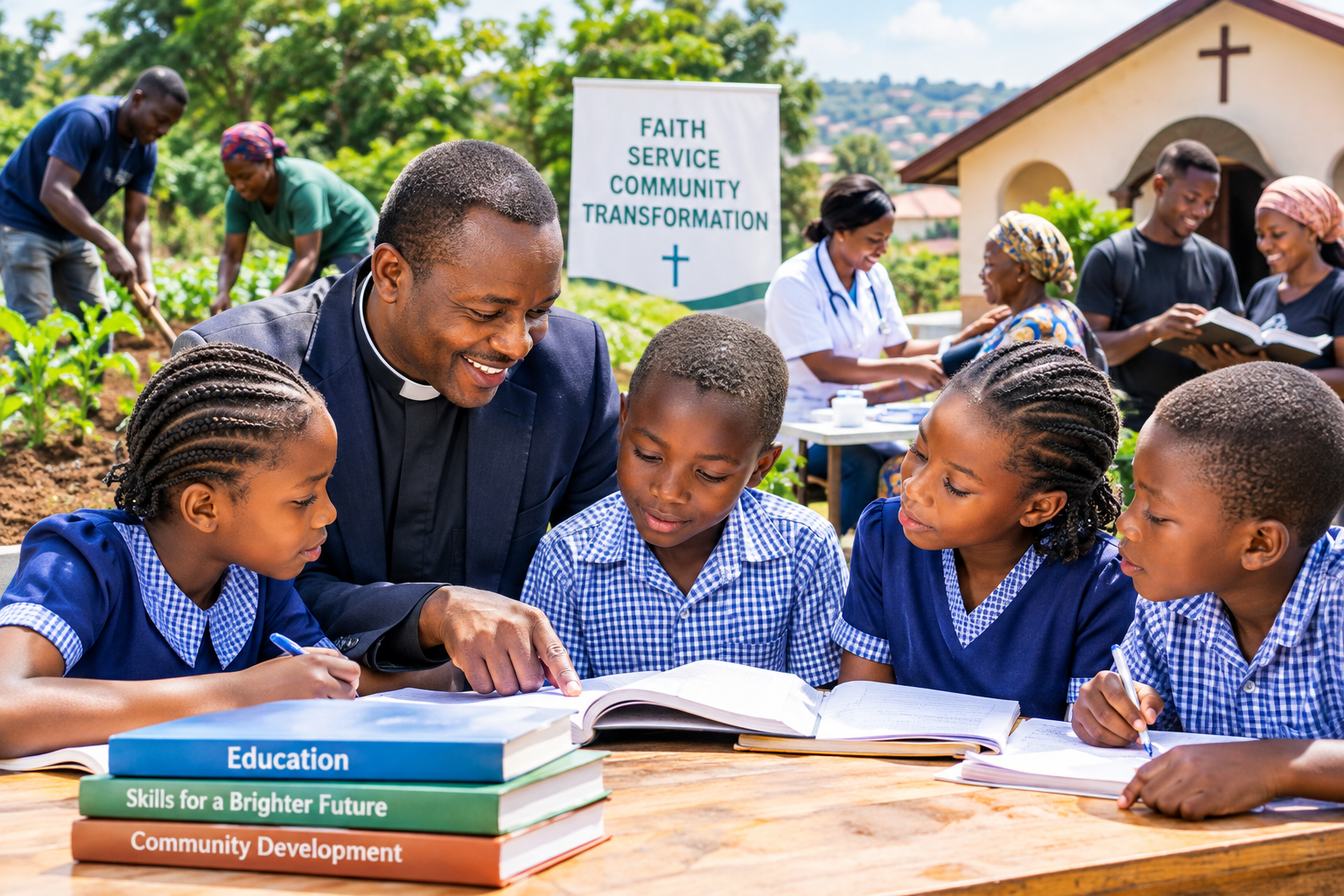
Imagine if some church programmes were deliberately designed to help members become financially independent through vocational and technical training, entrepreneurship and business management, apprenticeships for young people, agricultural cooperatives, financial literacy, mentoring for professionals, employment networks, scholarships, health education and preventive healthcare, as well as support for widows, vulnerable families and people with disabilities. Community libraries and digital-learning centres could also be established to expand access to knowledge and opportunity.
In such a model, giving would not merely finance activities. It would help build capacity.
Sowing seeds should include building people
Christian language about “sowing seeds” can be deeply meaningful. But the concept deserves careful reflection.
A seed should produce something. If a congregation repeatedly gives money but remains economically vulnerable, poorly educated, unemployed, unhealthy and dependent, it is reasonable to ask whether the community’s resources are being converted into sufficient long-term social value.
The most valuable seed a church can plant may sometimes be a person. Teach a young person a trade, and a livelihood may emerge. Educate a child, and a generation can change. Support preventive healthcare, and years of productive life may be preserved. Help a farmer improve productivity, and an entire household may become more secure. Help a small business become sustainable, and employment may follow. Build ethical leadership, and institutions can become stronger.
This is also a form of ministry. Africa’s greatest resource is not its church buildings, conferences or financial institutions.
A different measure of success
Perhaps churches should begin measuring some aspects of their impact differently. Instead of asking only, “How many people attended?”, we could also ask: How many people gained employment? How many young people acquired useful skills? How many families escaped extreme poverty?
How many children received quality education? How many people gained access to preventive healthcare? How many businesses became sustainable? How many vulnerable families were restored to dignity? How much of our collective wealth was converted into lasting community assets?
The Church can remain a house of prayer while also becoming a centre of learning, healing, ethical leadership, entrepreneurship, compassion and community development.
The challenge before African Christianity is therefore not simply to ask how much more people can give to the Church or how much more time they can spend inside it.
A deeper question is: What is the Church helping its people become, and what is happening to the communities because those people have been transformed?
If the answer is genuinely Christ-centred transformation, then our worship will not end when the service closes. It will continue in the classroom, the workplace, the marketplace, the hospital, the farm, the family, the community and wherever human dignity is being restored.
That may be one of the clearest ways to demonstrate what it means to be created in the image of God.
Crux sola est nostra theologia. Solus Christus!
Rev. Prof. John Brown Okwii, the
Serving Pastor, Assemblies of God Church, Hwolshe, opposite Model Academy, along Yakubu Gowon Way, Jos, writes via johnbrownokwii@gmail.com
I deeply appreciate this powerful and thought‑provoking message. I completely subscribe to its vision of faith that transforms communities beyond the church walls. By God’s help, I am committed to contributing positively to its realisation, so that our worship truly reflects Christ in everyday life and restores dignity to our people.
Thank you Sir for sharing.
This transformation awakening vision, misson and zeal should be shared with all our churches, the leaders and all members.
“Behold, old things have passed away, ….”
May the Lord help us to be the channels where this awakening vision, mission and zeal will be passed on to all.
Thank you Sir for sharing.
This is now going beyond the local congregation.
This transformation awakening vision, misson and zeal should be shared with all our churches, the leaders and all members.
_”Behold, old things have passed away, ….”_
May the Lord help us to be the channels where this awakening vision, mission and zeal will be passed on to all.
God bless🙏
Thank you Sir for sharing.
This is now going beyond the local congregation.
This transformation awakening vision, misson and zeal should be shared with all our churches, the leaders and all members.
“Behold, old things have passed away, ….”
May the Lord help us to be the channels where this awakening vision, mission and zeal will be passed on to all.
God bless
We need this message to educate members in the household of faith to know the truth and is high time the church think of teaching it’s members the right thing that will help improve their general livelihood.
That alone will make the people believe in the spiritual aspect of Christianity than when always call to give where there’s no benefit to the giver.