



By VICTOR GAI
A revolution of sorts is currently taking place in stadia development across the country, on a scale never experienced in the history of sports in Nigeria.
A new wave of massive stadia remodelling and upgrading is sweeping across the country, with the potential to transform the sports sector.
From the north to the south, one state after another is witnessing a huge turnaround that could place Nigeria among the elite sporting nations in terms of facilities.
Historically, Nigeria boasted some of the best stadia in Africa, giving the country the capacity to host major continental and international competitions.
In 1980, Nigeria hosted the Africa Nations Cup, while in 1999, it hosted the FIFA Under-17 World Cup before co-hosting the Africa Cup of Nations alongside Ghana in 2000.
Unfortunately, the facilities that attracted FIFA and CAF competitions were badly maintained and deteriorated quickly.
Almost all the stadia used for those tournaments were left to rot. Facilities such as the National Stadium, Lagos, Ahmadu Bello Stadium, Kaduna, and Nnamdi Azikiwe Stadium, Enugu, became shadows of their former selves.
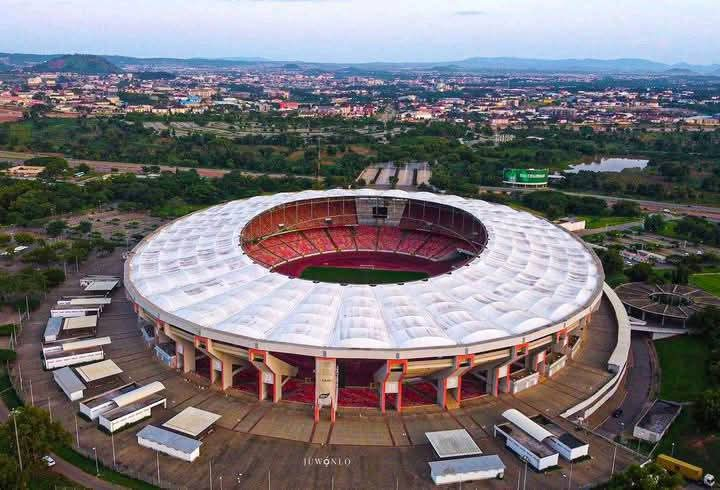
Subsequently, the Olusegun Obasanjo administration built a world-class international stadium in Abuja, named after the late sports enthusiast, MKO Abiola. The venue became the home of the senior men’s national team, the Super Eagles.
Unfortunately, the iconic 60,000-capacity stadium was poorly maintained to the extent that it lost its FIFA pass mark.
Along the line, the magnificent 35,000-capacity Godswill Akpabio International Stadium, popularly known as the Nest of Champions, came on board and saved the situation by taking over from Abuja as the home ground of the Super Eagles.
The stadium, until recent times, became the only FIFA-accredited stadium for international matches in Nigeria. Kudos must, however, be given to the Akwa Ibom State Government for its maintenance culture and great foresight in preserving the stadium and other facilities, including hotels and training grounds. If not for the Akwa Ibom Government, Nigeria might well have been among nations playing their home matches away.
Tinubu’s magic wand
President Bola Tinubu’s reforms in the football sector in particular and sports in general may be producing results in the interim.
In August, President Tinubu directed a comprehensive reform of Nigerian football to overcome repeated failures to qualify for major regional, continental and world tournaments.
Tinubu directed the Chairman of the National Sports Commission to work with the Nigeria Football Federation Secretariat and relevant football stakeholders to ensure continuity in essential football administration while facilitating a broad, consultative reform process.
Special Adviser to the President on Information and Strategy, Bayo Onanuga, revealed this in a statement titled, ‘President Tinubu Directs Comprehensive Football Reform.’
He cited deep structural deficits despite the sport’s enormous public support and national attention.
“The reform must respond to a longstanding need to strengthen governance, administration, stakeholder representation, development pathways, domestic competitions and accountability across Nigerian football,” the President insisted.
It is noteworthy, too, that most of the federal government-owned stadia were handed over to state governments interested in upgrading them.
Stadia redevelopmen, upgrades
It would then seem that the President’s sports reform agenda has coincided with state governors’ massive sports infrastructure upgrades across the states. Or rather, could the President’s reform agenda be the magic wand behind the massive stadia upgrades across the country?
The following are a few stadia among several others that are undergoing massive upgrades and remodelling to meet international standards.
The Teslim Balogun Stadium, Lagos
It has a seating capacity of approximately 24,325 to 25,000 people following recent upgrades.
It has a newly upgraded natural grass pitch, replacing the former artificial turf.
Opened in 2007, the artificial turf was replaced with a lush, FIFA-standard natural grass pitch featuring modern subsurface drainage.
Added to that is a new hospitality suite, upgraded dressing rooms and powerful halogen floodlights.
The Ahmadu Bello Stadium, Kaduna
It currently has a capacity of 16,000 people, but it is undergoing expansion to 32,000 to 33,000 seats upon completion of the ongoing reconstruction.
Built in 1965 and designed by architects Jane Drew and Maxwell Fry, it was transferred to the Kaduna State Government in early 2026 for a major FIFA-standard upgrade.
The Nnamdi Azikiwe Stadium, Enugu
This edifice has a traditional seating capacity of 22,000 spectators, though ongoing renovations aim to expand it to 30,000.
Popularly known as ‘The Cathedral’, NAS is the home ground of one of Nigeria’s oldest club sides, Enugu Rangers.
It is undergoing upgrades and reconstruction by the state administration, which includes replacing the turf and expanding capacity.
Yenagoa Stadium
The new multipurpose stadium being built in Igbogene, Yenagoa, by the Bayelsa State Government has a planned seating capacity of 25,000, which is expandable and upgradable.
It has an Olympic-standard and FIFA-compliant multipurpose sports complex, two training/practice pitches, swimming and diving pools, basketball, volleyball and tennis courts, as well as indoor sports halls.
It is also targeted ahead of the anticipated 2028 National Sports Festival.
The Warri Stadium
Also known as the Warri City Stadium, it has a seating capacity of 20,000 spectators and is the home ground of Warri Wolves F.C.
It has been remodelled with a FIFA-standard hybrid grass pitch, an advanced nine-lane running track and a fully covered fibreglass roof.
The Rwang Pam Township Stadium, Jos
It has a traditional capacity of 15,000 spectators, though ongoing government remodelling projects are modernising the facility to expand or reconfigure the seating.
Rwang Pam Township Stadium is a multi-use sports ground and serves as the home ground for local clubs such as Plateau United and Mighty Jets F.C.
It is undergoing state-backed remodelling to upgrade its facilities, turf and seating arrangements.
Apart from these, states such as Adamawa, Niger, Taraba and Bauchi, among others, are either building new stadia or remodelling and upgrading existing ones. It is indeed the era of facilities renewal and turnaround in Nigeria. These are interesting times for sports in Nigeria.
Revisiting abandoned stadia
Meanwhile, the massive stadia upgrades across Nigeria cannot be complete without revisiting abandoned stadium projects.
Massive stadia such as the 45,000-capacity National Stadium, Surulere, Lagos, and the 45,000-60,000-capacity Jos International Stadium cannot simply be wished away, as they play a significant role in the nation’s sports development.
For instance, the National Stadium, Lagos, has been a historic ground for the national team. It is etched in the minds of Nigerians as the venue where Nigeria won her first laurel in football. Most national teams feared the stadium because of the vociferous Lagos fans. In those days, most matches were won before they were played. Nigerians deserve the National Stadium, Lagos.
For the new Jos International Stadium, it has the potential to become the new home of the national team due to the friendly weather of Jos city. With a near-European weather condition, it could serve as a home away from home for the Super Eagles players who were mostly born in Europe and are accustomed to the weather there.