


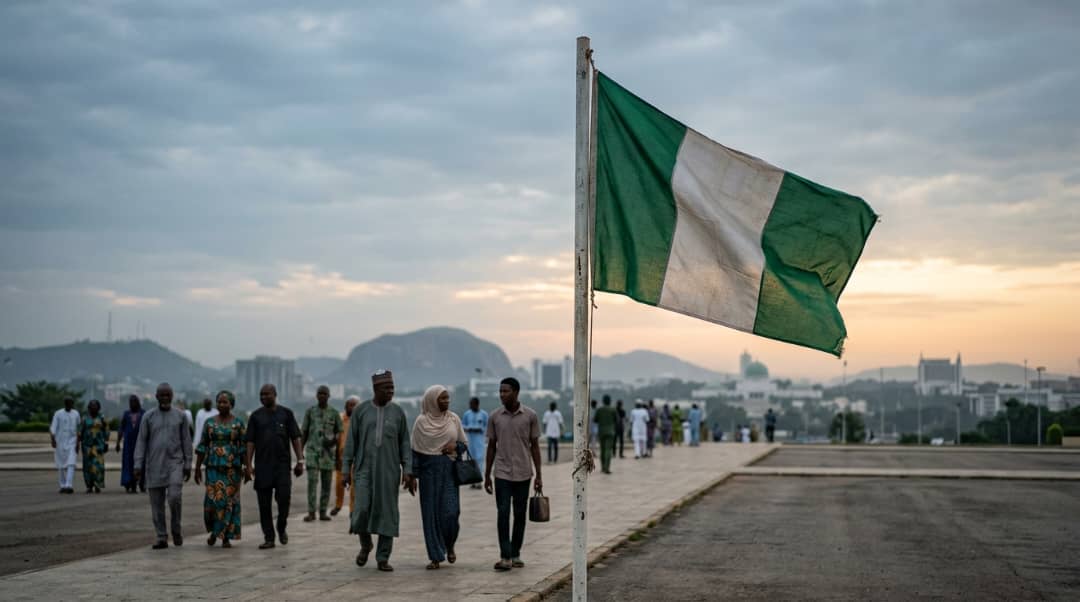

TODAY, Nigeria’s national anthem will be on our lips as leaders or followers, just as it was for our compatriots when the Union Jack was lowered and the Green, White, Green flag was unfurled on that auspicious day of our nation’s Independence in 1960. This is as it should be. Love for country by citizens ought to be a given and not a mere function of time or season.
YET, anniversaries present opportunities for sober reflection, informed resolve and the consequent difficult choices. Anniversaries remind nations where they were the last time out, provide beacons with regard to where they are today and propel them to the unavoidable steps to respect, relevance, reawakening, restoration, restitution or redemption in a very fluid world.
AS we observe Nigeria’s 66th Independence Day, we have the opportunity to come clean on what we know or think of ourselves and what others know or think of us. This should provide clarity, a roadmap and timelines for the unavoidable work we must do for the progress and salvation of our nation. To say Nigeria is a hopeless case and that disaster is unravelling, as some may be tempted to argue, is to ignore the country’s innate strength, endowments and capacity. It is these very qualities have enabled it to survive different forms of challenges.
INDEED, the fact that a sitting Military President publicly expressed his bewilderment that the country had not collapsed is evidence of its resilience. This presidential slip not only put to rest any doubts as to the poor deal that had been Nigeria’s fate, but also affirmed its staying power against all odds. Being a major actor in the country’s affairs himself, the man was positioned to know what was amiss. Nevertheless, we must not push our country’s luck to breaking point.
IT is sad that since Independence, Nigeria has increasingly been seen as a contraption woven just for the convenience of some people and those who are called by their name or aligned to them. Nation states, THE NIGERIA STANDARD insists, are entities fashioned by people united by shared experiences, common needs and goals, and on which the noble work of securing and promoting the common and collective good of all is undertaken. This must be on a progressive and sustainable basis.
TO say all has been well with Nigeria is to live in denial of the wasted years and monsters that still haunt us to this day. Indeed, to paint our country in rosy colours on this Independence Day anniversary is to be uncharitable to the millions of ordinary citizens who have had to live with legitimate expectations that are achievable and within reach, yet left unmet. For years, lack of vision and commitment to noble goals have had crippling effects on our country. Fueled largely by leadership failure, greed, nepotism, bigotry, injustice, exclusion and cluelessness, these have eroded and subverted our national ideals and ethos. Vital guardrails in the forms of accountability, selflessness, service, unity, equity and inclusion, which have come to the rescue of other societies, have likewise been in very short supply.
IT is true that at some points in its life, Nigeria was a reference point for a number of positive things. On the international scene, its voice was loud, clear and influential in support of the end to colonial and racist rule on the African continent. It also championed the creation of regional and sub-regional groups, with the Economic Community of West African States, ECOWAS, a shining example. At home, Nigeria tried to remain within the confines of democratic governance. It had a federal system which paraded some of its principles and practices. The federating units, for instance, were resourceful and intentional enough in pursuing service delivery in deliberate fashions that upheld healthy competition among them.
SADLY, the signs were there that it was, after all, not going to be a smooth sail for Nigeria. Teething issues were not accorded the attention and tact they deserved. The First Republic was sacked, trust issues dragged the nation into a civil war and healing processes were tried before the Second Republic was born. That government was also sacked, heralding the return of the rule of military henchmen. Their questionable efforts led to the short-lived Third Republic, with this Fourth Republic representing a fresh attempt at popular rule.
WE can blow the trumpet, celebrating 27 years of uninterrupted civilian rule. We can point to the Lagos-Calabar Road, the Badagry-Sokoto Super Highway, the Akwanga-Jos-Maiduguri Road, the Sharam-Baban Lamba Road and the Jos-Pankshin-Yelwa-Ibi Road, all being undertaken by the Bola Ahmed Tinubu-led Presidency, as evidence of the infrastructural transformation that Nigeria has longed for. There is also no denying the new heights in other sectors. Scores of tertiary institutions have been established in different parts of the country. A novel scholarship programme is also afoot, providing succour for indigent students.
No doubt, these and such other interventions at the federal and state levels can only rebound to our good as a nation.
YET, Nigeria is still in dire straits. Climbing some of the other mountains contending with us is proving fatal, with huge potential for national ruin. Today, Nigeria is faced with existential threats, with fear ruling millions of hearts, distress the constant companion of hundreds of communities and greed by those entrusted with the public purse denying the vast majority a fulfilling life. Furthermore, it is a fact that Boko Haram no longer enjoys the space and latitude that it appropriated to devastating effect in the North-East. It is also true that explosive devices no longer go off in Maiduguri, Jos or Abuja, among the select hunting grounds of that terrorist organisation. We can only thank the security agencies for this respite.
YET, fear occasioned by dastardly acts by newer actors pervades the land. In the North-West, Zamfara, Katsina, Sokoto and Kebbi have been under siege for years, with so-called ‘bandits’ having a field day. Hundreds of students and other citizens have been kidnapped for ransom, while huge taxes and other oppressive and criminal acts have been inflicted on communities. Thousands have not only been killed, so-called Kachallas and emerging fundamentalist groups in the region have dared the authorities by words and activities!
IN the Middle Belt, marauders have imposed savagery on hapless communities. Worst hit have been Plateau, Benue and Kaduna states, where thousands have been murdered in cold blood. Unfortunately, 66 years after Independence, communities are being raided by so-called ‘unknown gunmen’. Thousands are killed, their farm produce turned to forage, with surviving ancestral landowners forced into displaced persons’ camps. Nothing can be more distressing. It provides irrefutable evidence of Nigeria’s poor performance in ensuring the security and well-being of its citizens. Given that the subsisting 1999 Constitution of the Federal Republic makes the security and well-being of citizens the cardinal function of government, this trend is unacceptable.
WORST hit by these vicious attacks by heavily armed herdsmen and sundry criminals have been Bassa, Barakin-Ladi, Jos South, Bokkos, Mangu and Riyom local government areas in Plateau State. In Benue State, the violence has been concentrated mainly in Ukum, Logo, Katsina-Ala, Gwer West, Gwer East, Apa and Agatu local government areas. In Southern Kaduna, Kachia, Kajuru, Kagarko, Chikun, Kauru and Zangon Kataf local government areas have also been among the worst affected by violent attacks, banditry and communal conflicts. These places, to borrow a phrase, are in “sorrow, tears and blood.” That this process of plunder, subjugation and ruination is accompanied by taunts from its perpetrators and their enablers and, in some cases, the renaming of some ancestral communities speaks to the woes millions of vulnerable, law-abiding citizens face.
YET, “Enough is enough” and condolence messages have been the standard response from the Federal Government, which controls the entire reins of the nation’s security apparatus. This is not nation-building. It is nation-killing. To end the scourge, the Federal Government must be more creative, proactive and decisive. “Enough is enough” has not been enough. The armed herdsmen, their sponsors and supporters are not deterred by such feeble words. Condolence visits and messages do not bring back lives lost in such brigandage. Thus, Nigeria must take the war to all outlaws and defeat them.
CORRUPTION is the other monster responsible for our country’s pain and shame. THE NIGERIA STANDARD recalls that during the Muhammadu Buhari Presidency, the war on corruption was presented as a cardinal goal. Yet, forfeitures of scandalous proportions, in terms of choice and strategic property and cash running into billions of naira by some office holders of that regime, say a lot. Indeed, if a reminder of the bleeding that Nigeria is suffering is needed, it has come from no one better than the Chairman of the Economic and Financial Crimes Commission (EFCC), Ola Olukoyede.
SPEAKING last week at the 80th birthday of Kanu Agabi, former Attorney-General of the Federation and Minister of Justice, the Chairman disclosed that the Commission gets over 20,000 petitions every year on alleged fleecing of our common patrimony. Describing the volume and nature of cases as disturbing, the EFCC boss stated: “Somebody will spend three or four years as a public servant. Before he got to office, he had less than N100,000 in his account. By the time he is leaving, we were able to trace several millions of dollars and naira to him. Some build fifty-something houses, sometimes 200 houses. There is no way a nation will develop with those kind of people in power. No way.”
APPARENTLY, the state of morality in this land is at breaking point. It is also true that primitive accumulation of wealth and other vices are adding other layers of plague to our country. Yet, THE NIGERIA STANDARD considers this situation an invitation to work by all patriots, to reclaim lost grounds. This is why we enjoin all to support efforts aimed at writing a new chapter for our country. The bloodshed must end. One step in this direction is for the so-called ‘unknown gunmen’ to be unmasked, defanged and made to answer for their atrocities. The ‘Kachallas’ and their foot soldiers (the ‘known gunmen’) should be made to face the law too.
ACCOUNTABILITY must also become the new norm. As it has been said, if we do not kill corruption, corruption will kill Nigeria. Those 200 private houses the EFCC Chairman referred to represent the public health centres stolen by an individual. Those millions of dollars in a private account represent the water treatment plants that never took off. Those millions of naira in a private account are the flip side of our public refineries that have failed to deliver fuel. Hope is good and vital. But, as we have experienced, hope, when married to good works, becomes the best thing to happen to Nigeria and Nigerians.
GOING forward, Nigeria must outgrow the caricature others have made of it. Nigerians must also wean themselves of lamentations. Boxed in those ways, vision and capacity are undermined. Given what Independence promised 66 years ago, nothing can be more fulfilling for Nigerians today than an end to the insecurity and avarice plaguing the land. The sombre mood on the Plateau, the plains of Benue, Southern Kaduna, Niger and the ungoverned spaces in Zamfara, Borno and Oyo, among other places, pose questions on the fruits of Independence in relation to good and effective governance.
CALLS for better deals for the citizenry are in tandem with the purposeful, responsive and selfless service envisioned at Nigeria’s dawn. We must, therefore, reset ourselves on our mountains with courage and conviction. Nigeria deserves nothing less.