



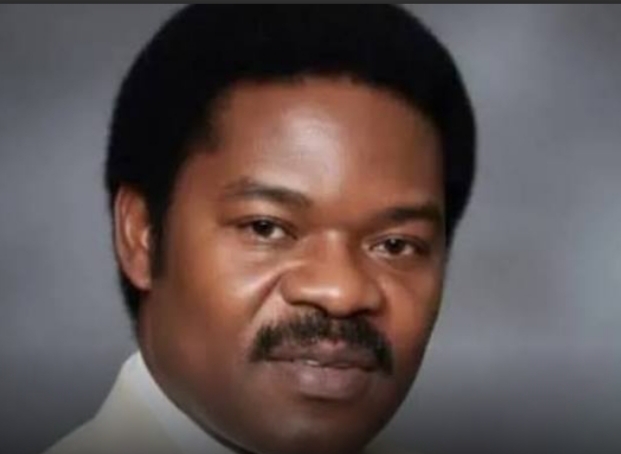
On October 19, 1986, Nigeria lost one of its most courageous journalists. Dele Giwa, the founding Editor-in-Chief of Newswatch magazine, was killed by a letter bomb delivered to his home in Ikeja, Lagos.
Four decades later, his murder remains one of the darkest chapters in the history of Nigerian journalism and an enduring symbol of the dangers confronting those who dare to question authority and demand accountability.
For me particularly, this anniversary is more than an occasion to remember a fallen colleague. It is a moment for sober reflection on the price of truth, the vulnerability of journalists and the unfinished struggle for press freedom in our country.
As a former National Secretary of the Nigeria Union of Journalists (NUJ) and a journalist who has spent much of his professional life reflecting on the challenges of the profession, I cannot contemplate Dele Giwa’s death without asking a fundamental question: Forty years after this tragedy, what has Nigeria learnt about the need to protect journalists and defend the public’s right to know?
Dele Giwa was only 39 when his life was so brutally cut short. He was not killed in a crossfire, during a riot or while covering a dangerous assignment. He was murdered in the privacy of his home when a parcel delivered to him exploded.
The circumstances surrounding his death shocked the nation and sent a chilling message to journalists who believed that the press had a responsibility to hold those in power accountable. His murder was not merely the loss of an individual. It was an assault on press freedom and the right of Nigerians to receive information without intimidation.
For those of us who entered journalism with a sense of mission, Dele Giwa represented the conviction that journalism must do more than report events. It must interrogate power, expose wrongdoing, challenge injustice and ensure that public officials understand that the authority they exercise comes with an obligation to account to the people.
When Dele Giwa, alongside Ray Ekpu, Dan Agbese and Yakubu Mohammed, established Newswatch in 1984, they helped redefine the possibilities of Nigerian journalism. The magazine brought a new sense of purpose to investigative reporting, rigorous research, editorial independence and in-depth analysis. It demonstrated that the Nigerian press could challenge official narratives and investigate matters of public interest without abandoning its responsibility to accuracy and fairness. Newswatch was more than a magazine. It was a statement of professional courage and a declaration that Nigerians deserved to know the truth about those who governed them.
At a time when military rule restricted democratic freedoms and placed enormous pressure on independent voices, its founders insisted that public office must not become a shield against scrutiny. Their work inspired a generation of journalists who came to understand that the profession was not simply a means of earning a living but a calling that demanded integrity, courage and an unwavering commitment to the public good.
The unaswered questions
The relationship between the military establishment and Newswatch became increasingly tense as the magazine continued to challenge official narratives. In the days preceding his death, Giwa was questioned by officials of the State Security Service.
On October 19, 1986, a parcel arrived at his residence, and the explosion that followed brought his life to a brutal end. The circumstances of his murder have generated questions, controversy and public concern for four decades, yet no conclusive criminal conviction has established responsibility for the killing.
That failure should trouble every Nigerian who believes in justice, democracy and the rule of law. We cannot continue to consign this murder to the archives of unresolved national tragedies or allow the passage of time to diminish the importance of the questions it raises. A nation cannot credibly claim to value press freedom while leaving the murder of one of its most prominent journalists without a satisfactory judicial resolution.
Forty years after his death, one question continues to haunt our national conscience: Who killed Dele Giwa? Successive investigations, public discussions and inquiries have failed to bring the matter to a satisfactory judicial conclusion. The Oputa Panel revisited aspects of the case. Yet the country has not achieved the kind of definitive accountability that could offer closure to his family and reassure the public that no individual or institution stands above the law. The continued absence of a conclusive resolution is not merely a matter of historical interest. It raises serious questions about the effectiveness of our institutions and their willingness to pursue justice in cases involving attacks on journalists.
If relevant records and evidence remain available, a credible review of the case deserves serious consideration. Modern investigative and forensic methods may offer opportunities to examine evidence that could not be adequately analysed four decades ago, while surviving witness accounts, official records and other materials should be assessed by competent and independent authorities.
It is against this background that I call on the Federal Government to use the 40th anniversary of Dele Giwa’s murder as an opportunity to reopen investigations into the circumstances surrounding his death. Such an initiative must be independent, credible and guided by evidence, due process and a genuine commitment to justice. It should not be driven by political expediency or the desire to assign blame without proof, but by the determination to establish the truth wherever the evidence leads. The relevant authorities should examine whether surviving records, witness accounts and modern forensic techniques could help answer questions that have remained unresolved for decades.
Forty years is a long time to wait for answers. But the passage of time should not become an excuse for abandoning the search for justice. The murder of a journalist must never be treated as a crime whose significance diminishes simply because the years have passed.
Lessons from international experience
International experience offers useful lessons for Nigeria. We are not the only country to have confronted the murder of a journalist under circumstances that raised serious questions about accountability.
In Malta, for instance, the assassination of investigative journalist Daphne Caruana Galizia in October 2017 led to extensive investigations and multiple convictions. Three men were convicted of carrying out the killing, while two others were convicted of supplying the bomb.
However, businessman Yorgen Fenech, who was accused of commissioning the murder, was acquitted, and the prosecution subsequently appealed against the verdict. The case demonstrates that, even where convictions have been secured, establishing the full extent of responsibility for a journalist’s assassination can be a complex and protracted process.
In Türkiye, the murder of Armenian-Turkish journalist Hrant Dink in Istanbul in January 2007 likewise resulted in years of investigations, retrials and convictions. In February 2025, a court imposed life sentences on eight defendants in a retrial connected to the murder conspiracy.
Yet questions about the full extent of responsibility have persisted. These cases demonstrate both the possibility of securing accountability through sustained investigations and the importance of pursuing unresolved questions through credible evidence and due process.
These experiences offer an important lesson for Nigeria. The passage of time should not, in itself, extinguish the pursuit of justice for a murdered journalist. Where credible evidence survives, it should be preserved, reviewed and tested through independent and lawful procedures. Investigations must follow the evidence wherever it leads, without shielding individuals from scrutiny because of their political influence, institutional position or former office.
Equally, accountability must be established through due process rather than public speculation or political accusation. The objective is not to secure convictions at any cost, but to establish the truth and ensure that those proved responsible answer for their actions.
Dele Giwa’s murder deserves the same seriousness of purpose. Four decades without a conclusive judicial resolution should strengthen, rather than weaken, our determination to establish what happened. Nigeria should examine whether surviving evidence, official records, witness accounts and modern investigative techniques could help advance the case.
The experience of other countries demonstrates that prolonged delays need not justify abandoning the search for answers. For Dele Giwa’s family, the Nigerian public and generations of journalists who have inherited the risks associated with investigative reporting, justice remains an obligation that cannot be discharged through remembrance alone.