



By CHRISTIANA DANGYANG
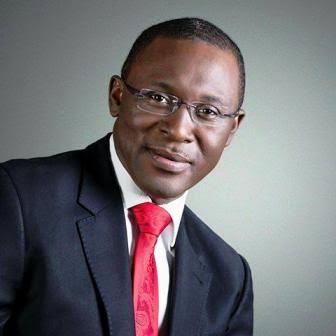
Eleven years ago, on October 28, 2015, Plateau State lost one of its brightest political stars. Senator Gyang Nyam Shom Pwajok, popularly known as GNS, died at the age of 49 in India after a battle with hepatocellular carcinoma, just months after the 2015 general elections.
He was the youngest senator in the 7th National Assembly, a former Director of Research and Chief of Staff to Governor Jonah Jang and a man who carried the hopes of a generation with humility, intellect and uncommon compassion for the people.
But titles do not define GNS. His words do. His ideas do. And his words on marble have outlived him, speaking even more loudly eleven years after his burial in Du, Jos South Local Government Area.
He once famously declared: “The political discourse especially in Plateau state have tended to divert attention from issues that encourage the welfare of citizens and focus on personality differences, the use of foul language, the manipulation of ethnic and religious sentiments to confuse the people. We must move away from this in order to be greater together.”
Those words were not mere campaign rhetoric. They were a diagnosis of the challenges confronting Plateau politics and a warning to a generation that was yet to understand the depth of his foresight.
Eleven years later, on 28 October 2026, can we honestly say that we have moved away from the tendencies he condemned?
Sadly, the answer is painful and points to our collective failure to heed his wisdom.
Personality over people’s welfare
The political discourse in Plateau State today is arguably worse than what GNS lamented. Issues affecting the welfare of citizens have been pushed into the background and neglected by those who seek power for its own sake.
What dominates our airwaves and social media platforms are personal attacks. Who abused whom on Facebook? Who left which party? Who betrayed whom?
Foul language has become an increasingly familiar feature of political discourse.
Social media warriors, allegedly motivated by meagre rewards, have turned Plateau’s political space into an arena of insults, fake news and threats. We celebrate noise and ignore substance, forgetting the very people whose interests politicians are supposed to represent.
GNS believed that politics must be about welfare, not warfare. He understood that Plateau cannot become greater while its people remain divided.
He believed in a politics that feeds the people, heals wounds and builds lasting bridges across divides.
Eleven years after his death, his blueprint remains relevant. Plateau needs to return to issue-based politics in which the welfare of citizens takes precedence over personal ambitions and political rivalries.
What is your plan for peace between farmers and herders, a peace process GNS personally sponsored when others were fanning the embers of division? What is your plan for education, mining, tourism and the dignity of labour?
These are the questions that should dominate political debates, rather than the endless exchange of insults and accusations that contributes little to the development of the state.
We must banish foul language from our politics. Anyone who insults an elder on radio or social media should reflect on whether such conduct is compatible with the responsibilities of leadership.
GNS did not need personal insults to make his arguments. Even during heated political campaigns, he debated ideas with grace.
Dangers of ethnic, religious manipulation
Even more dangerous is what GNS described as the manipulation of ethnic and religious sentiments to confuse the people.
Eleven years later, this divisive tendency has become an entrenched feature of political engagement.
Every election, appointment and crisis is increasingly given an ethnic or religious colouration. Tribe is pitted against tribe, particularly in Plateau State, while religion is used to deepen divisions.
The distinction between settlers and indigenes is also frequently exploited for political advantage.
The result is a population that is confused and divided, making it easier for unscrupulous individuals to manipulate public opinion and evade accountability for their actions.
GNS Pwajok was different. He was a detribalised bridge-builder, a man of peace, intellect and compassion who brought together people with different backgrounds, divergent views and competing ideologies, with the ultimate aim of uniting Plateau State.
That was part of his greatness. He was respected by friends and political opponents alike because he did not trade his integrity for popularity. He would rather sacrifice a political advantage than compromise his conscience and values.
His example reminds us that political differences should not destroy the bonds that unite us as a people. Plateau residents face many of the same challenges, regardless of their ethnic or religious affiliations.
The people are hungry, whether Christian or Muslim. Insecurity does not check a victim’s tribe before taking a life. Poverty does not ask for a person’s voter card before denying them opportunities.
These realities should compel political leaders to reject divisive rhetoric and focus instead on policies that improve living conditions, protect lives and promote peaceful coexistence.
A legacy that still challenges us
The words on marble challenge all of us, particularly journalists, young politicians and activists. The late GNS was a mentor to a younger generation that believed in the power of ideas, character and purposeful leadership.
He demonstrated that durability is more important than visibility, and that a name etched in people’s hearts through service lasts longer than one displayed on billboards through noise and self-promotion.
For journalists, his message is a reminder of the responsibility to prioritise issues that affect citizens’ welfare, demand accountability and resist attempts to turn public discourse into a battleground of personalities and sentiments.
For politicians, it is a call to place public service above personal ambition and to recognise that leadership is measured by the lives improved, the divisions healed and the opportunities created.
For young people and activists, it is an invitation to reject the temptation to become instruments of political hostility and instead champion ideas that advance peace, justice and development.
Eleven years after, the marble has not cracked. The words remain clear. The man who spoke them is gone, but his warning is louder today than it was in 2015.
On this 11th anniversary, the greatest honour we can pay GNS Pwajok is not merely to lay wreaths in Du, but to embrace and practise his words on marble with sincerity.
Let us move away from personality attacks, foul language and the manipulation of ethnic and religious sentiments.
Let us gravitate towards issue-based politics, respect for one another and a renewed commitment to the welfare of our people.
Only by doing so can we build the united, peaceful and prosperous Plateau that GNS envisioned and enable the state to become greater together.
May the soul of Senator Gyang Nyam Shom Pwajok continue to rest in perfect peace. And may his words on marble continue to guide us aright.
Amen.
Good men, we’re told, always leave the scene so early. GNS’ departure, indeed, proves thìs.. Rest well, my man..