



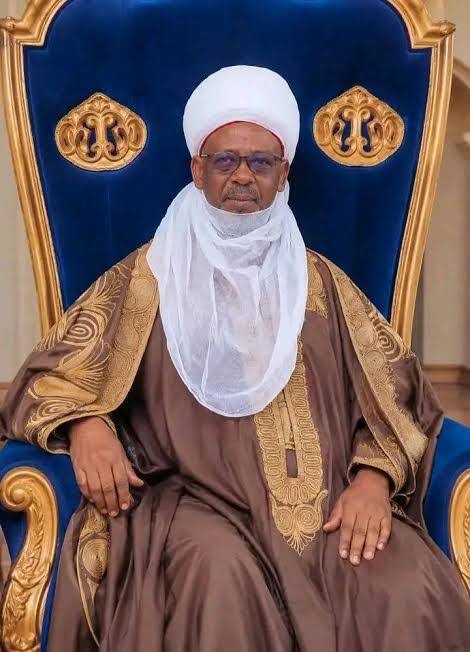
When Dr Muhammadu Haruna ascended the ancient throne of Wase Emirate in 2010 as the 13th Emir, he inherited not just a staff of office but also a storm of challenges.
Plateau State was engulfed in one of the worst cycles of ethno-religious violence in its history. Wase Local Government Area itself, a vast and fertile multi-ethnic border community sharing boundaries with Bauchi, Taraba and Nasarawa states, had witnessed more than 100 attacks on villages since 1998, according to the Emir’s account. Farmers and herders were increasingly at loggerheads, while trust among Hausa-Fulani, Tarok, Basharawa and other ethnic groups had deteriorated considerably.
Reflecting on the circumstances surrounding his emergence during his 10th anniversary celebration, the Emir recalled: “The beginning was very rough because of the crises that engulfed the entire Plateau then.”
Sixteen years later, the emir’s leadership has earned him recognition beyond Wase. He is increasingly regarded across Plateau State as a traditional ruler associated with peacebuilding, statesmanship and bridge-building.
Governor Caleb Mutfwang has described him as “a symbol of wisdom, peace and exemplary leadership”, while former Governor and now Senator Simon Lalong has called him “a pillar of wisdom, moderation and stability”. Leaders of the Nigeria Union of Journalists (NUJ), Jama’atu Nasril Islam (JNI) and Christian associations have also sought his counsel on matters affecting society.
His 16-year reign therefore provides an opportunity to examine the contributions, challenges and transformations associated with his leadership.
Peacebuilding, the fight against insecurity
Perhaps the most significant aspect of Dr Haruna’s reign has been his commitment to restoring peace and strengthening peaceful coexistence among the different communities within and beyond Wase Emirate.
From the beginning of his reign, he made peacebuilding a cardinal priority, recognising that without security and mutual understanding, meaningful development in education, healthcare, infrastructure and other sectors would remain difficult to achieve.
One of his notable initiatives was the historic Muslim and Christian Consultative Meeting held at the Jos Central Mosque in collaboration with the Arewa Christians and Indigenous Pastors Association (ACIPA). The meeting, which centred on the theme, ‘Understanding, Peace, Unity and Development’, brought together people of different religious backgrounds to discuss the need for peaceful coexistence.
The emir’s message was direct and uncompromising. He asked: “There is no gain in fighting ourselves, what have we achieved in all the destructions that have been taking place in the past over 20 years? As far as I am concerned as a leader of the Muslims, there is none.”
He consistently maintained that political interests should not be allowed to turn ordinary citizens against one another. He cautioned politicians against exploiting religious and ethnic differences for political advantage, reminding them that “only God gives power to whoever He pleases”.
He subsequently urged political leaders to stop using religion and ethnicity as instruments of division.
According to his account, relative peace returned to Wase between 2015 and 2020, creating an atmosphere in which development initiatives could begin to take root. Wase became one of the few local government headquarters in Plateau State where Muslims and Christians could organise joint meetings during Christmas and Sallah celebrations without significant tension.
His peacebuilding efforts have also extended to religious institutions. As Plateau State Chairman of Jama’atu Nasril Islam and Vice-President-General of JNI nationally, he has worked to reposition the organisation as an institution that promotes religious understanding, responsible leadership and peaceful coexistence.
In 2025, he inaugurated a reconstituted 19-member Executive Council of JNI in Plateau State, urging its members to embrace unity and responsible leadership.
He has consistently emphasised that peaceful coexistence is central to Islamic teachings, declaring: “As Muslims, we must cherish peace, live in peace and preach peace at all times, because peace is the true identity of our religion.”
This philosophy builds on the foundation laid by his late father, Dr Haruna Abdullahi, who worked with the then Archbishop of Jos, His Grace, Most Rev Ignatius Kaigama, to strengthen interfaith harmony in Plateau State.
The emir has also insisted that religious organisations must remain above partisan politics and serve the interests of all citizens, irrespective of their political affiliations. His position that “religious organisations must rise above partisanship to serve all” has helped reinforce his acceptability across different political administrations.
Beyond promoting interfaith harmony, Dr Haruna has emerged as one of the more vocal traditional rulers in Plateau South on the threat posed by banditry and insecurity.
In 2021, during a colloquium organised by the NUJ Plateau State Council in Jos, he raised the alarm over the deteriorating security situation in Wase, revealing the extent to which armed groups had affected communities and displaced residents.
“It is worrisome and disheartening that as I speak, terrorists are in control of the domain… 50 per cent of Wase land mass have been taken over by terrorists and a lot of people have left the village looking for greener pasture because of fear of being attacked,” he lamented.
He explained that Wase was blessed with fertile land and vast agricultural opportunities, but insecurity had prevented many farmers from accessing their farms. His disclosure drew attention to the security challenges confronting Wase and the need for stronger interventions by the Federal and Plateau State governments.
He has continued to advocate the establishment of permanent security bases around Bashar, Kadarko and the forest corridors of Wase, alongside support for vigilante groups and hunters working in collaboration with recognised security agencies.
He has also called for humanitarian assistance for internally displaced persons from Wase who fled to Jos and neighbouring states, including Bauchi and Taraba, in search of safety.
Education, traditional authority, good governance
With a PhD qualification, Dr Haruna has consistently identified education as an essential instrument for addressing illiteracy, poverty, insecurity and other social challenges. His advocacy has particularly focused on the education of pastoralist communities and the girl-child.
In 2024, during a stakeholders’ engagement organised by the Fulbe Development and Cultural Organisation (FUDECO) in Jos, the emir drew attention to the poor educational situation among Fulani communities, particularly pastoralists and girls.
Represented by the Galadiman Wase, he lamented that only 15.7 per cent of pastoralists had attained primary education, while 8.6 per cent had secondary education and just 2.6 per cent had tertiary qualifications.
He challenged FUDECO and the government to address the situation, stressing: “We must reflect on our past glory and re-evaluate our cultural behaviour… the educational pursuit of the Fulani, particularly girl-child education, is crucial for societal progress.”
Through his palace, he has continued to encourage the enrolment of Fulani girls in schools and support FUDECO’s 10-year target of improving educational opportunities within the community.
He also supports educational models that combine Islamic and Western education, believing that such an approach would equip young people in Wase with the knowledge and skills required to participate effectively in modern society while retaining their religious and cultural identities.
His interest in education is closely connected to his broader advocacy for the development of traditional institutions and their recognition within Nigeria’s constitutional framework.
During his 10th anniversary celebration and the marriage ceremony of his first daughter in 2020, the emir made a notable appeal for constitutional recognition of the responsibilities traditionally performed by traditional rulers.
He observed that traditional rulers were usually the first point of contact whenever communities experienced difficulties, yet their constitutional responsibilities remained unclear.
“Whenever there is a problem, everybody rushes to the traditional ruler, but ask me today what is my role based on the Constitution of Nigeria, I actually don’t know. But we do basically everything. For us to do more, we must be backed by law,” he stated.
He appealed to political leaders to provide the necessary legal framework to strengthen traditional institutions, adding that they should “back us up with laws so that we will continue to discharge the duties we have been doing for hundreds of years”.
His position reflects the continuing national debate over the constitutional recognition and responsibilities of traditional rulers, an issue that has featured in discussions surrounding constitutional amendments at the National Assembly.
The emir has equally identified responsible parenting as an important component of social stability and a way of addressing youth restiveness.
“One of the major societal challenges we are currently facing is lack of good parenting. We are shying away from our responsibilities as parents,” he warned.
His argument is that the family remains the foundation of society and that parents must take greater responsibility for the upbringing, moral development and education of their children.
Statesmanship beyond Wase, legacy of the throne
Over the past 16 years, Dr Haruna’s influence has extended beyond the geographical boundaries of Wase Emirate. His traditional position has increasingly placed him in the role of a mediator, adviser and voice of moderation in the state’s political and social affairs.
He has maintained cordial relationships with political leaders across party lines, reinforcing his reputation as a traditional ruler who welcomes people irrespective of their political affiliations.
In 2026, he reportedly gave his royal blessings to Senator Simon Lalong’s 2027 Senate ambition, describing him as “a true son of Wase who remains loved, respected and widely accepted”.
At the same time, he has maintained cordial relations with Governor Mutfwang, who has commended his commitment to dialogue, mutual respect and inter-ethnic understanding.
The emir has also remained a regular participant in interfaith peace summits, farmers-herders dialogues and programmes organised by the NUJ and other civil society organisations. His contributions to these engagements have helped project the traditional institution as an important partner in the search for peace, security and development.
Another notable aspect of his reign has been his effort to preserve the historical identity and prestige of Wase Emirate, one of the historic emirates of Northern Nigeria, with roots dating back to the era of the Sokoto Jihad.
Through the modernisation of palace administration and the preservation of traditional values, he has sought to maintain the relevance of the emirate while accommodating the demands of contemporary society.
Sixteen years on the throne is, therefore, not merely a measure of longevity but an opportunity to assess the legacy of a traditional institution under his leadership.
Dr Muhammad Haruna inherited a Wase confronted by fear, division and insecurity. His supporters point to the relative improvements in peaceful coexistence, his advocacy for the security of rural communities, his emphasis on education and his efforts to strengthen the traditional institution as important aspects of his reign.
Although Wase is not completely free from insecurity and other challenges, the emir’s commitment to dialogue has provided an avenue for different communities to engage one another. The continued interaction between Muslims and Christians, including in places such as Wase market, reflects the importance of sustaining peaceful relationships.
He has also given Wase a stronger voice in discussions taking place in Jos and Abuja, particularly concerning banditry, displacement and the challenges facing rural communities. His interventions have drawn attention to the plight of residents and the need for government action.
Equally significant is his consistent message that education, especially the education of girls and children from pastoralist communities, remains essential to overcoming poverty, ignorance and insecurity.
The Plateau State Council of the NUJ captured some of these qualities during one of his birthday celebrations when it described him as “a pillar of wisdom and exemplary leadership whose reign has continued to promote harmony, development and unity.”
As the emir marks 16 years on the throne, the occasion offers an opportunity to reflect on the responsibilities of traditional leadership in a society confronted by insecurity, social divisions and developmental challenges.
His reign demonstrates the importance of dialogue, cultural preservation, religious understanding and community engagement in strengthening the traditional institution.
May Allah grant Dr Haruna long life, good health and many more years of peaceful and transformative leadership over Wase Emirate.
Ran sarki ya dade! Allah ya ja zamanin sarki!