



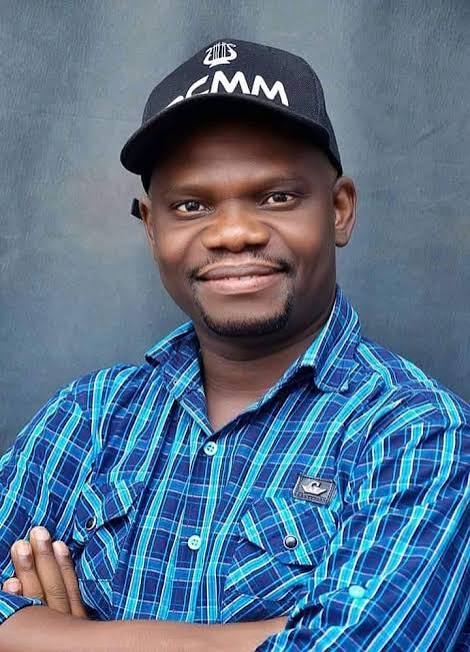
When a gospel minister becomes the subject of a political storm over a song celebrating the First Lady of Nigeria, the controversy inevitably goes beyond music. It raises fundamental questions about religious conviction, political participation, personal freedom and the responsibility of public figures to the people they serve. SAMSON ILIYA of our Entertainment Desk examines the controversy surrounding Plateau-born gospel musician and pastor, Ezra Jinang, whose latest release, ‘Maman Talakawa’, has triggered sharply divided opinions about the relationship between religion and politics
Religion and politics are among some of the most powerful forces shaping human behaviour. While one provides moral and spiritual direction, the other determines how society is governed. Religion teaches people how to relate with God, while politics provides the framework for living together as members of a society.
Throughout history, the two have often existed side by side. There is hardly any political system without a moral foundation, just as religion does not exist outside a social and political environment. The Pharaohs of ancient Egypt combined priestly and royal responsibilities.
In the Sokoto Caliphate, the emir exercised both political and religious authority. In the old Oyo Empire, traditional religious authorities were consulted before important decisions, including matters of war, were taken. Even today, oaths of public office in Nigeria traditionally end with the words, “So help me God.”
The problem, therefore, is not that religion and politics intersect. The real concern is how they interact and whether their relationship serves the common good.
In Nigeria, particularly in Plateau State, there have been instances where religion has provided politics with a moral compass. This happens when churches speak against corruption, mosques preach peace during elections, and religious leaders encourage their followers to vote according to their convictions rather than sell their votes. In such circumstances, religion helps to strengthen political accountability.
However, the relationship can also become destructive when politicians exploit religious differences to divide the electorate along Christian and Muslim lines, churches become campaign grounds, or religious sentiments are deployed to justify land grabbing and excuse failures of governance. In such situations, politics compromises the integrity of religion.
The fundamental question, therefore, is not whether religion and politics can coexist. They already do. Rather, it is whether the two can maintain a healthy balance without undermining their respective responsibilities.
This debate has resurfaced in Plateau State over the past week, not through a sermon or political rally, but through a song.
The song that triggered a storm
Ezra Jinang is a familiar name in Plateau State’s gospel music industry. Born in Kafi-Abu, Barakin Ladi LGA of Plateau State, and raised in Kombun, Mangu, he is the voice behind popular songs such as ‘Sweet Plateau’ and ‘Rayuwar Bege’, alongside several other musical productions that have helped shape Plateau gospel music over the past two decades.
Beyond music, Jinang is a lawyer, gospel minister and founder of the Centre for Intimate Worship and Kingdom Advancement (CIWKA) International Church in Jos. He also serves as Special Assistant on Entertainment to Plateau State Governor, Caleb Mutfwang.
Last week, ahead of the APC National Convention in Kaduna, Jinang released a new song titled ‘Maman Talakawa’, meaning ‘Mother of the Poor.’ Unlike his familiar gospel productions, the song was dedicated to Nigeria’s First Lady, Senator Oluremi Tinubu.
In the song, he extolled her as a compassionate mother who cares for the poor and demonstrates concern for the welfare of ordinary Nigerians. However, the release quickly generated controversy, with some netizens in Plateau State expressing sharply contrasting opinions.
This is not Jinang’s first venture into politically themed music. He had earlier released ‘Gida Gida’ for Caleb Mutfwang’s 2023 campaigns. However, his latest production has attracted a different level of attention because of its subject and the prevailing economic circumstances in the country.
The song has divided public opinion into two major camps, with one questioning the appropriateness of a gospel minister composing a praise song for a political figure, while the other insists that religious leaders should not be excluded from political participation.
Camp one: A pastor should not do this
The first and perhaps loudest criticism centres on morality and the responsibilities associated with religious leadership.
“How can a gospel singer and pastor compose a campaign song for a politician’s wife?” critics have asked.
For this group, the controversy is not necessarily about freedom of expression but about the expectations attached to Jinang’s religious calling. They argue that a gospel minister is expected to speak truth to power rather than become a praise singer for those in authority.
They also point to Nigeria’s prevailing socioeconomic realities, including petrol prices exceeding N1,400 per litre, the cost of a bag of rice approaching N90,000 and youth unemployment estimated at more than 53 per cent.
They further highlight the plight of Plateau communities whose residents remain displaced and confined to internally displaced persons’ camps in Mangu and Bokkos.
Against this background, they question whether it is appropriate to describe the president’s wife as ‘Mother of the Poor’ when many Nigerians are struggling to meet their basic needs.
One of the strongest expressions of this position came from Plangkat Manu, who published a strongly worded reaction on Facebook.
He stated: “Plateauians are dying. Families are burying their loved ones. Citizens are drowning in poverty. Communities are traumatised by insecurity. Nigerians are struggling to survive under the weight of economic hardship, leadership failures, and political negligence. Yet, in the middle of this excruciating pain and suffering, you have chosen to become a praise singer for the very political establishment whose corrupt leadership pattern is the architect of our afflictions.
“Haba, Man of God…. Where’s your conscience?”
For other critics, the song risks appearing insensitive to the suffering of ordinary Nigerians. They also raise questions about the possible contradiction between Jinang’s musical and political engagements and his pastoral responsibilities.
One question that has particularly resonated with this group is: “What will Pastor Ezra preach on Sunday?” They wonder what message he would deliver to members of CIWKA International Church who may be struggling to pay their children’s school fees after publicly celebrating the First Lady as the mother of the poor.
Some critics have consequently accused him of engaging in what they describe as ‘stomach infrastructure’, suggesting that his political involvement could be motivated by personal benefits rather than public service.
Camp two: He is a citizen first
On the other side of the debate are those who have defended Jinang, arguing that being a pastor does not strip an individual of the rights and responsibilities of citizenship.
One of the widely circulated defences came from a Facebook user, Chetden Chetden, who urged the public to approach the controversy with maturity.
He countered: “Let us be mature. Ezra Jinang did not stop being a pastor when he accepted appointment. He is using politics as an extended pulpit to serve the same people he prays for.
“He has not found a new god. He has found a bigger platform.
“If government invites him to sing, he is doing his professional duty. If his party, the PDP, works with APC at national events, that is politics, not apostasy.
“Pastors can be in politics. Lawyers should be in politics. Musicians must be in politics. Because if good men run away, bad men will rule.
“Let us learn to separate profession from politics, and anointing from partisanship.”
This group argues that religious leaders remain citizens with constitutional rights, including freedom of expression and association. Their religious calling should not automatically disqualify them from participating in political activities or expressing support for public office holders.
They also draw comparisons with secular musicians who openly associate with political parties and participate in political campaigns. If musicians such as Davido can perform for the PDP and Rara for the APC, they ask, why should a gospel musician be denied the freedom to compose a song celebrating the First Lady, particularly if he believes in her Renewed Hope Initiative?
For this camp, the distinction should be between professional engagement and religious conviction, rather than assuming that political participation automatically amounts to a betrayal of faith.
The pastor’s reply
As the controversy gathered momentum, Jinang himself responded to his critics. Rather than apologise or withdraw the song, he adopted a defiant position, insisting that his religious and political identities could coexist.
In a statement published on his official social media page, he declared: “I want all of you sponsored bullies against my person to know openly that I am a politician and a Pastor at the same time. This is my life not yours. If you don’t like it and you can not bear it please look for the nearest transformer and give it a hug. Watch out for more political posts and songs from Ezra Jinang.”
His response shifted the focus of the controversy. What initially began as criticism of a musical production became a wider debate about personal identity, religious responsibility and the freedom of religious leaders to participate in partisan politics.
Nevertheless, amid the exchanges between Jinang’s supporters and critics, a more measured intervention emerged from Pam Bitrus, whose widely shared Facebook post offered what could be regarded as a middle-ground position.
He advised Jinang to maintain a balance between his religious calling and political engagements, while protecting the credibility associated with his public and spiritual responsibilities.
Bitrus wrote: “My advice is simple: maintain the balance, protect your credibility, and never allow access to political power to weaken your spiritual convictions.
“Celebrate good leadership, but do not be afraid to speak the truth when leadership goes wrong. Honour people in authority, but remember that your ultimate allegiance is to God. Engage in politics, but do not let political affiliation determine the message you preach from the pulpit.
“At the end of the day, political offices will change, governments will come and go, and public applause will fade. What will remain is the testimony of the life you lived, the truth you stood for, and the souls you impacted.
“May your legal wisdom, pastoral calling, musical gift, and political influence work together for the good of humanity and the glory of God.
“May you never become so connected to the corridors of power that you lose the courage to stand for the truth. And may the voice that once sang the Gospel never lose its original purpose.”
Bitrus’ intervention appears to capture an important concern shared by many observers: political participation is not necessarily incompatible with religious leadership, but such involvement should never compromise the principles and values that define a person’s spiritual calling.
Can religion and politics maintain a balance? The answer is yes, but certain conditions must be fulfilled.
First, religion must guide politics rather than merely celebrate political power. Religious institutions perform an important public responsibility when they hold governments accountable, condemn corruption, advocate justice and speak against insecurity, regardless of the political party in power.
The interventions of church leaders and institutions in Plateau State, including COCIN and ECWA, during the crises of 2001, 2008 and 2018 demonstrate the importance of religious voices in demanding action and advocating peace. Their responsibility was not to sing praises to government but to challenge those in authority to protect lives and property.
Second, political participation must be driven by service rather than personal survival. A pastor who ventures into politics should be guided by the desire to contribute to society, not merely by the prospect of securing appointments, privileges or other personal benefits.
If Jinang composed ‘Maman Talakawa’ because he genuinely believes in the First Lady’s humanitarian interventions, he is exercising his freedom of expression. However, if political considerations or the desire to retain access to power influence his decisions, questions about his motivation and credibility become legitimate.
Third, the pulpit must retain its spiritual independence. A religious leader can participate in politics from Monday to Saturday, but when he mounts the pulpit on Sunday, his message should transcend partisan interests.
His congregation should be able to trust that the message they receive is guided by spiritual convictions rather than political affiliations. Members who are struggling with poverty, unemployment, insecurity and other difficulties deserve a minister who can speak honestly about their circumstances, irrespective of the political implications.
Jinang’s declaration that he is both a politician and a pastor reflects the reality that individuals can occupy different professional and public roles simultaneously. However, maintaining the integrity of both responsibilities requires discipline, maturity and a clear understanding of their boundaries.
The transformer test
Jinang’s instruction to his critics to “hug a transformer” reflects his anger at what he considers organised attacks against his person. While public figures are entitled to defend themselves against criticism, the language used in responding to dissent can also influence public perception.
Perhaps the more important transformer in this controversy is the one connecting religion and politics. When the relationship between the two is properly managed, it can generate positive energy for society. When it goes wrong, however, the consequences can be damaging.
Plateau State needs religious leaders who are sufficiently engaged in public affairs to speak against land grabbing, insecurity, hunger and the suffering of displaced communities in Bokkos and Mangu. It equally needs politicians whose religious and moral convictions will discourage corruption, abuse of office and the misappropriation of public resources.
Ultimately, the value of ‘Maman Talakawa’ will not be determined by the sweetness of its melody or the popularity of its composer. It will be measured against the experiences of the ordinary people whose interests the song celebrates.
If poor families in Jos South, traders in Mangu market and residents of internally displaced persons’ camps genuinely experience the compassion and support associated with the title, they may eventually identify with the song. If their circumstances remain unchanged, however, no gospel rhythm or political praise can compel them to embrace its message.
The pulpit and the political podium can coexist, but such a relationship must be founded on integrity, accountability and service to humanity.
Above all, the pulpit must never lose its independence or become subordinate to the podium.