


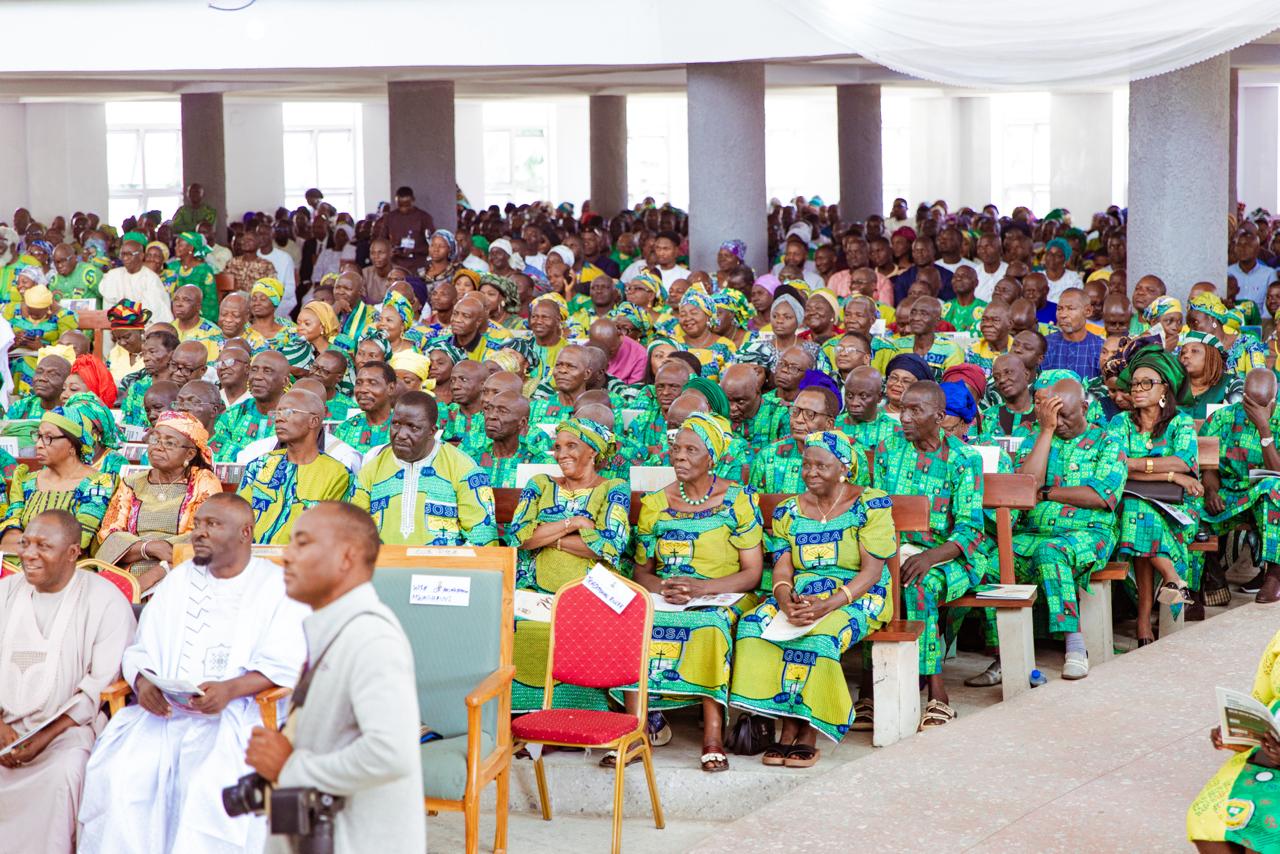

For generations, Gindiri’s schools have served as institutions of learning, character formation and leadership, producing men and women who have distinguished themselves in different fields across Nigeria. However, as their former students gathered to celebrate decades of friendship, shared experiences and achievements, the reunion also brought into sharp focus the urgent need to preserve the academic legacy of their alma mater. SEKYEN WALSHAK reports on the 34th annual convention of the Gindiri Old Students Association (GOSA), where nostalgia, calls for unity and renewed commitments to institutional revival converged around one overriding concern: restoring the declining academic standards of Gindiri’s schools
In the quiet community of Gindiri, Mangu Local Government Area of Plateau State, an enduring legacy has been built over generations, producing men and women whose influence stretches across Nigeria and whose contributions continue to shape communities, institutions and society.
Behind this legacy is more than a school. It is a family formed by people born to different parents but united by a shared academic experience, common values and memories that have endured long after they left the classroom.
With nostalgic feelings, former students returned through the unity gates of their alma mater, reconnecting with old friends, teachers and memories, as well as a bond that has continued to bring generations together.
It was this spirit of belonging that defined the 34th annual convention, dinner and awards night of the 2026 Gindiri Old Students Association (GOSA), held in Jos on Saturday and Sunday under the theme, ‘Building Bridges: Connecting the Past with the Present’.
But beyond the reunion, celebrations and recognition of outstanding members was a stronger message: the need to rescue the academic standards of the institutions that provided generations of GOSA members with their educational foundation.
The concern over the schools’ future also echoed the message of the keynote speaker, Prof. Plangsat Dayil, Deputy Dean, Faculty of Social Sciences, University of Jos and a proud alumna, who urged members to move beyond nostalgia and translate their shared history into responsibility.
Delivering the keynote address, Dayil recalled that Gindiri Boys’ Secondary School was established in 1950, while Gindiri Girls’ High School followed in 1958. She pointed out that the institutions were founded on Christian values, education, character formation and responsible living.
Dayil noted that the association’s motto, ‘For Light and Truth’, should be reflected in how members live, lead, manage resources and relate with one another.
According to her, GOSA’s heritage was built on faith, discipline, sacrifice, friendship and service, values that should not be reduced to ceremonial gatherings and annual celebrations.
She said that GOSA members must build bridges across generations by investing in mentorship, scholarships, improved laboratories, stocked libraries, functional technology and safe accommodation for current students.
She noted that the achievements and experiences of alumni could inspire younger students and help them see possibilities beyond their present circumstances.
“When a young girl or boy meets an engineer, lawyer, professor, entrepreneur, public servant, farmer or community leader who once sat in the same classroom, new possibilities suddenly seem attainable,” Dayil said.
She also challenged older alumni to listen to younger members and current students rather than merely impose their experiences and expectations on them.
She urged GOSA members to ensure that their interventions were guided by evidence and accountability, noting that they needed to understand the actual challenges facing students, teachers and the wider school community.
“One day, we too will become the past,” she reminded the gathering, stressing that future generations might never know the names of those who contributed to their success but would benefit from the bridges they built.
Dayil further called for greater inclusion within the association, warning that divisions based on graduation years, professional status, ethnicity, gender and personal interests could undermine the unity that brought members together.
She described a bridge built from only one side as incomplete, urging older and younger generations to work together to preserve the association’s values and secure the future of the schools.
A governor’s concern over academic decline
Governor Caleb Mutfwang, himself a proud alumnus of Gindiri, challenged members to demonstrate greater commitment to the survival and renewal of the schools, warning that the privileges and opportunities they had enjoyed must translate into meaningful contributions to the future of younger generations.
The governor expressed concern over the declining academic performance of the schools, particularly their recent West African Examinations Council (WAEC) results, describing the situation as unacceptable.
He urged the GOSA leadership and Board of Trustees to undertake a comprehensive review of the schools’ administration, leadership and academic operations to identify the challenges responsible for the decline and implement appropriate corrective measures.
Mutfwang maintained that the association could not remain indifferent while the academic standards of its alma mater continued to deteriorate.
He called for collective support for the Gindiri Renewal Project, stressing that the sacrifices of missionaries, teachers, administrators and founding generations who established and nurtured the institutions must not be allowed to go in vain.
For the governor, the true measure of GOSA’s achievements should not be the positions its members occupy or the recognition they receive, but the quality of institutions, opportunities and values they leave behind for the next generation.
The need to preserve that spirit of unity was also stressed by former Bauchi State Governor, Alhaji Dr. Ahmadu Adamu Mu’azu (CON) who called on Nigerians to rise above tribalism, religious intolerance and other divisions standing in the way of national development.
Muazu commended GOSA for demonstrating that people from different religious and ethnic backgrounds could coexist peacefully, cooperate and pursue common goals.
He urged Nigerians to recognise their shared humanity and place collective national interests above religious and ethnic sentiments, noting that genuine unity and mutual understanding were necessary for addressing the country’s challenges.
For GOSA, however, unity must go beyond peaceful coexistence to include compassion, generosity and practical service.
The Chairman of the Central Planning Committee, Prof. Josiah Mutihir, emphasised the need to strengthen the relationship between older and younger members of the association, particularly as younger alumni prepare to take up leadership responsibilities.
“We have noticed that it appears as if we are running on different platforms. The older ones and the younger ones, particularly the group of people they call Gen Z,” the university don said.
He added that the association must deliberately ensure that younger members understand the values and principles that have sustained GOSA over the years.
“Sooner or later, we may not be there anymore. They are the ones to continue. So, what are the things that are dear to GOSA? We want a situation whereby they know those things,” he said.
GOSA plans endowment fund, renewal project
The association’s National President, Arc. Samuel Jatau, who is the Secretary to the Governrment of the State, SGS, noted that GOSA was not established merely as a social platform for alumni to display their achievements, influence or social standing, but as a vehicle for selfless service and meaningful contributions to society, particularly towards the less privileged and their alma mater.
He observed that many who entered Gindiri as young boys and girls had grown into accomplished men and women, some now with children, grandchildren and great-grandchildren.
He said their achievements should inspire them to give back to the institution that laid the foundation for their success.
Jatau disclosed that the Gindiri Renewal Project was receiving attention, with necessary steps being taken to restore the schools to their former academic standing.
He added that GOSA was working towards establishing an endowment fund to support the renewal initiative, particularly the restoration of sound academic standards at Boys’ Secondary School (BSS) and Girls’ High School (GHS), Gindiri.
He pointed out that GOSA planned to engage the church authorities on the challenges facing the schools but believed that the governor’s intervention could help draw attention to the situation and encourage corrective action.
Jatau also sought the governor’s support for the Gindiri Renewal Project and the proposed endowment fund, explaining that sustaining the institutions would require a stronger financial base.
The commitment was further highlighted on Sunday during the 42nd annual reunion service of the Gindiri compound schools, which was attended by the National Chairman of the All Progressives Congress (APC) and alumnus, Prof. Nentawe Yilwatda.
The gathering brought together old students, church leaders, school authorities and other stakeholders to reflect on the legacy of the institutions and the need to secure their future.
Yilwatda assured the gathering of his commitment to improving the learning environment, announcing that a solar-powered energy system would be completed before the end of the year. He also pledged support for improved water supply and disclosed plans to establish an endowment fund in collaboration with Governor Mutfwang.
Yilwatda’s personal investment in the schools, particularly his role in renovating and transforming some classrooms, has also contributed to the efforts to restore the institutions.
He commended the founding fathers for laying a foundation of character, conviction and values, describing Gindiri as a formative community whose influence had extended beyond the classroom.
The Chaplain of the Ulster Church Chaplaincy, Rev. Dawuda Jakawa, said the reunion was an opportunity to reflect on the past, appreciate the present and look towards the future with hope.
“Today is more than a reunion; it is an opportunity to reflect on the past, appreciate the present, and look forward to the future with hope and thanksgiving,” he said.
From reunion promises to lasting transformation
However, Jakawa also outlined areas requiring urgent attention, appealing for the completion of the perimeter fence, landscaping and beautification of the school environment, provision of a Hummer bus, improved staff welfare and construction of a new pastorium.
These requests point to the wider challenges facing the institutions, where improving academic performance must go hand in hand with providing the facilities, security and working conditions needed to attract and retain committed teachers.
Beyond speeches, reunions, pledges and renovation projects, the real test will be whether these commitments translate into better teaching, improved student performance, adequate facilities and an environment where teachers and learners can thrive.
For an association whose members have crossed different bridges to positions of influence across the country, the challenge now is to build one back to the institution that gave them their beginning.
The reunion may have rekindled old bonds and brought the past and present together, but the future of Gindiri’s schools will depend on what their old students, government and the church are willing to do next.
This is very good report and excellent write up. Coming to think of it, this year 2026 is the 42nd annual reunion service or 34th annual reunion service?
This is my observation concerning the report.
Wow Weldon Gosa official am so proud to be GOSA member 2000