


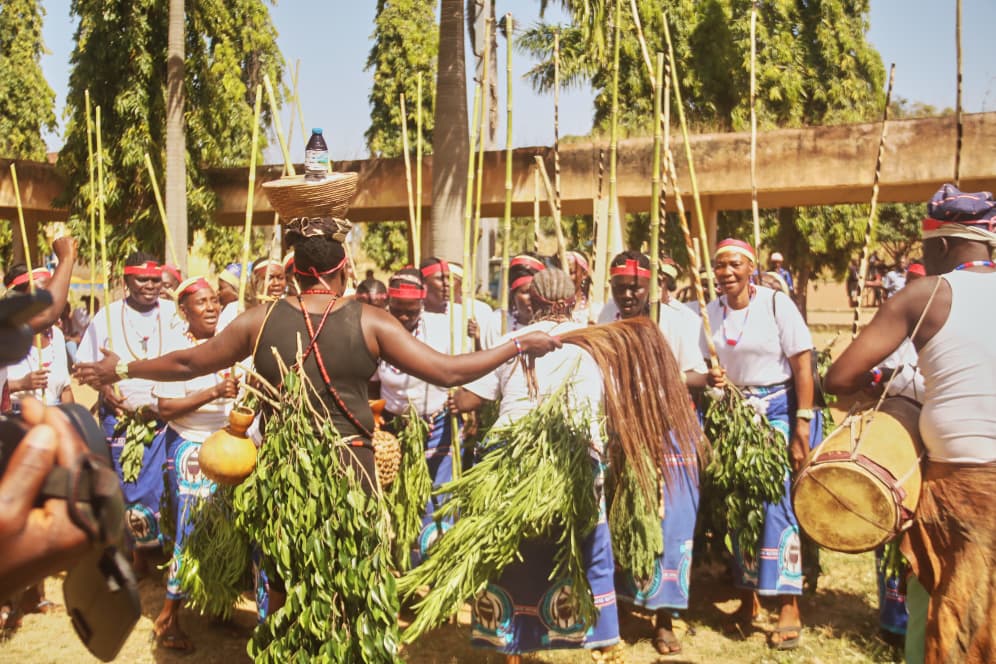
In a state where ethnic, religious and political differences have sometimes tested the bonds of coexistence, a cultural festival in Jos offered a refreshing reminder that people can find common ground in their shared heritage. Through traditional music, dance, food, language and storytelling, the Ngas people used Pusdung to demonstrate how culture can transcend boundaries, bring generations together and turn strangers into friends. In this report, SAMSON ILIYA explores the significance of the festival, the people preserving its traditions and the powerful message behind its theme
Culture is the way people live.
It is not just dance and dressing. It is not merely what we wear on a festival day and remove the following morning.
It is deeper than that. It is the air we breathe as a people, the invisible code that tells us how to behave, speak, love, mourn and celebrate.
It is the language a child first speaks before learning English, mathematics or even how to write their name. That first language is more than words.
It is his mother’s voice calling him to eat, his father’s voice calling him to the farm and the proverbs his grandmother whispers to him at night, carrying the wisdom of a hundred years in a single sentence.
It is the food a mother prepares, not just to fill the stomach but to tell a story. When an Ngas mother cooks bwal, prepares ding king and dong meat, she is doing more than cooking. She is teaching her children: this is our taste, this is our land and this is what our soil provides.
The imperative of culture
When a Berom mother prepares her delicacies or a Taroh mother cooks hers, they are all doing the same thing: passing down identity through the cooking pot.
It is the story a grandfather tells by the fireside. In those days, there was no television, telephone or Google. The fireside was our school, cinema and library. Around that fire, children learnt about their ancestors, why they must respect elders, why they must not steal and why they must protect their land. Those stories were not merely entertainment; they were education.
It is the way we greet. In Ngas land, greeting is not just saying “good morning.” It is an expression of respect, sometimes accompanied by bending down and asking after one’s father, mother, farm and health. A child who fails to greet has not merely been rude; he has disregarded an important cultural value.
It is the way we marry. Marriage is not simply a union between a boy and a girl. It is a relationship between two families, two villages and two histories. It involves bride price, blessings, dancing and the joining of families.
It is the way we farm. Before the rains come, we pray. After the harvest, we give thanks to God. Farming is not just work; it is worship and our connection to the land that feeds us.
It is the way we worship. Whether in church, mosque or traditional shrine, we worship in ways inherited from our forefathers, through songs, drums and reverence.
It is the way we mourn. When a great man dies, we do not simply bury him quietly. We sing, drum and cry, celebrating his life because, in our culture, death is not necessarily the end. It is a homecoming.
And it is the way we celebrate. When a child is born, we dance. When the harvest is good, we dance. When a festival such as Pusdung comes, we dance because, in our culture, joy is not hidden; it is shared.
Culture is our identity. It tells the world: this is who we are and this is where we come from.
A man can lose his money, his house and even his land. But if he still has his culture, he retains his roots.
A man without culture is like a tree without roots. The wind can carry him anywhere. He will speak any language, wear any clothing and follow any trend because he has nothing firmly anchoring him.
That is why every community protects its culture. From the Ngas in Pankshin to the Berom in Jos South, from the Taroh in Langtang to the Afizere in Jos East, culture is the invisible thread that holds people together across generations.
It connects the old man in the village with the young boy in Lagos, even though they may never have met. It connects the woman in Kanke with the student in Jos, despite their different lifestyles.
When they hear the same drum, speak the same language or eat the same food, they recognise something fundamental: they belong together.
And when we share our culture with others, it achieves something even greater: it builds unity. It turns strangers into friends and neighbours into family.
When a Berom man comes to Pusdung and dances to Sumbi, he is no longer a stranger. He is a brother. When an Ngas woman attends a Berom festival and enjoys their food, she is no longer merely a visitor. She becomes part of the celebration.
That is the power of culture. It does not divide. It unites.
Every people is known by its culture. It is reflected in the language we speak, the food we eat, the clothes we wear, the songs we sing and the way we bury our dead and celebrate the living.
For the Ngas people of Pankshin, Kanke and other parts of the world, that identity is not merely history or something to be read in a book.
It is alive in the beating of the Sumbi drum, the woven bat cloth, the taste of ding king and bubal, and the dance steps passed from grandmother to grandchild, father to son and mother to daughter.
But culture is not only about who we are. It is also about how we live together.
That is why this year’s Pusdung carries the theme: ‘Culture Unites Us’.
In Plateau State, where politics, religion and insecurity have often created divisions, Pusdung is sending a powerful message: we may disagree on many things, but we can still dance to one drum.
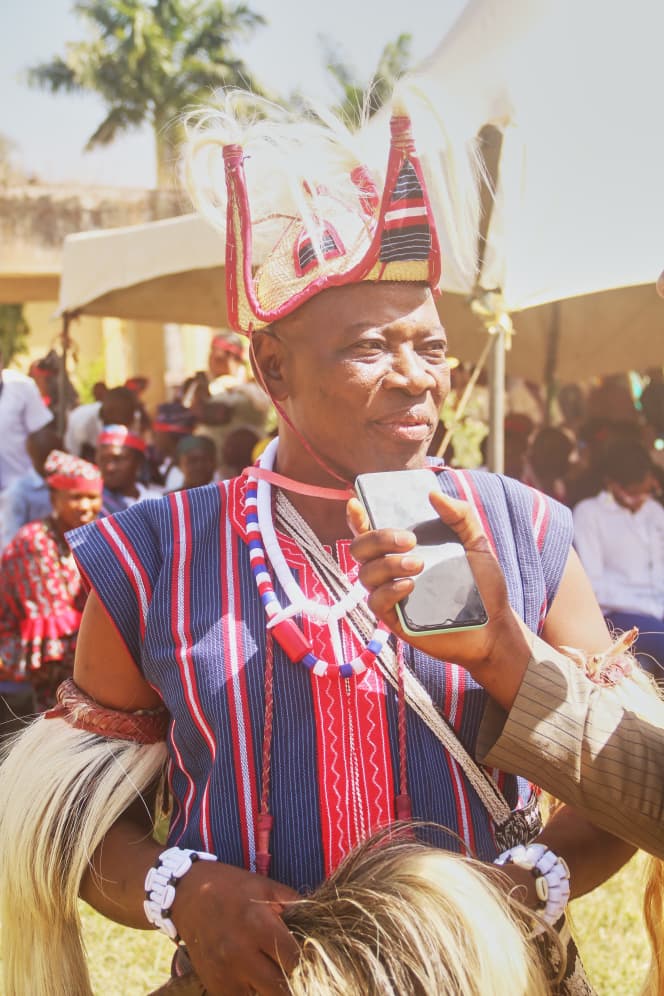
What Pusdung represents, why it came to Jos
Pusdung is the biggest cultural festival of the Ngas people of Plateau State, particularly those from Pankshin and Kanke local government areas.
In the Ngas language, Pusdung means a festival of gathering, thanksgiving and homecoming. It is an occasion when Ngas sons and daughters, both at home and in the diaspora, return to celebrate their identity.
The festival is celebrated to thank God for the harvest, life and protection; preserve the people’s identity through their language, dance, food, dressing and history; promote unity; and showcase Ngas heritage to the world.
The main Pusdung celebration takes place in Pankshin, the ancestral homeland of the Ngas people. However, recognising that many Ngas people live outside their traditional homeland, different zones, including Jos Zone, organise their own editions.
The reason Pusdung is being celebrated in Jos is simple but significant.
Many members of the Ngas nation living in the city hardly find the time or resources to travel to their villages with their children. The country’s prevailing economic conditions have made such journeys increasingly difficult.
Transport is expensive. Work schedules do not always permit leave, schools have their own calendars, and life in the city is demanding.
Consequently, year after year, an Ngas child born in Jos may grow up without ever visiting Pankshin, hearing the Sumbi drum performed live, tasting the traditional food of his ancestors or witnessing how his people dance, dress and celebrate.
Such a child risks growing up as a stranger to his own culture. That is why Pusdung was brought to Jos.
The intention is to give Ngas people living in the city an opportunity to experience the beauty of their culture with their children without necessarily travelling to their ancestral villages.
A father who cannot afford to travel to Pankshin can now take his son to Rocha’s Foundation School. A mother who has not visited home in five years can bring her daughter to watch the women dance, listen to the flute and taste bwal.
By experiencing these traditions first-hand, the children are more likely to retain a connection with their heritage.
When a child sees something with his own eyes, hears it with his own ears and dances to its rhythm, the experience becomes part of him.
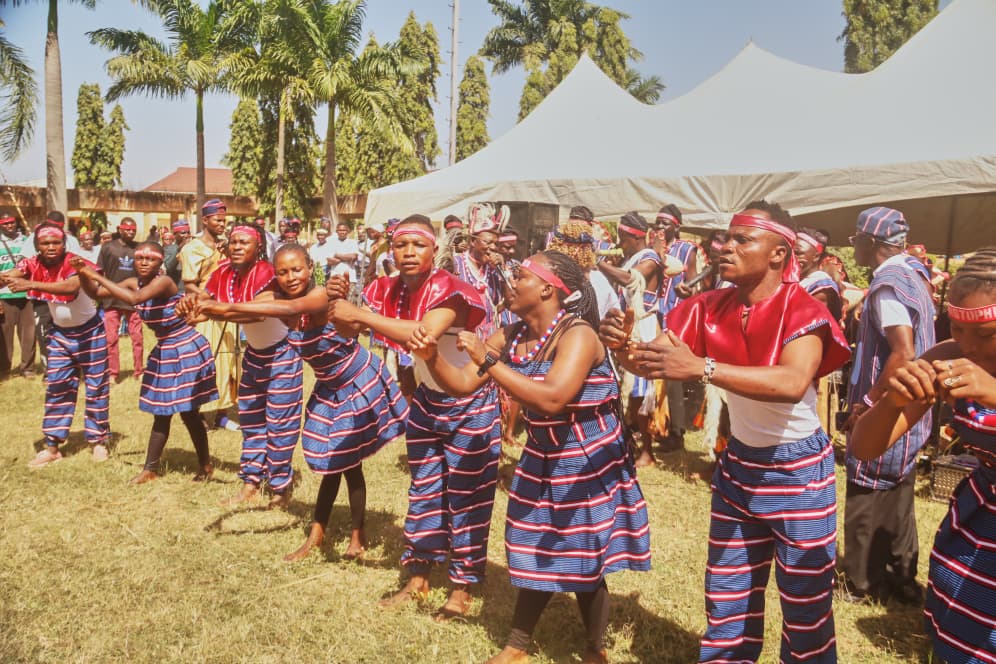
It’s really culture in action. Building bond of unity in ngas land, plateau, and Nigeria.